The 125 ton baler stands as the ultimate entry point for medium-to-high volume metal recycling operations. It delivers commercial-grade compression right where facilities need it most. However, unprocessed scrap consumes valuable yard space far too quickly. Materials ranging from loose metal shavings to bulky 25-liter oil drums drastically drive up transport overhead. Left uncompacted, these irregular materials also lower overall smelting efficiency during the critical melting phase.
This article gives plant managers and procurement teams an objective, specification-driven framework. We will help you evaluate and shortlist the right metal baling press for your yard. You will learn exactly how to match machine capabilities to operational realities. By following these guidelines, you can ensure maximum productivity and avoid costly equipment mismatches.
Key Takeaways
Optimal Density-to-Cost Ratio: A 125-ton capacity typically produces standard 300x300mm blocks (weighing 50-70kg), maximizing payload density for shipping.
Material Versatility: Engineered to compress copper wire, aluminum extrusions, steel shavings, and challenging items like waste oil drums or dismantled car shell fragments.
Operational Flexibility: Buyers must choose between side-push, forward-out, or turn-out discharge methods based on their existing conveyor or forklift workflows.
Site Infrastructure dictates Drive Type: While 15kw-30kw electric motors are standard, optional diesel engine drives are necessary for off-grid yard applications.
Why 125-Ton Press Force is the Industry Benchmark for Mid-Size Yards
A reliable hydraulic metal baler producing 125 tons of main cylinder pressure hits a precise sweet spot. Processing facilities often handle highly diverse metals daily. They simply cannot justify the massive floor space of a 250-ton machine. They also want to avoid extreme electrical power draws. A 125-ton machine tare weight typically ranges between 10 to 11 tons. It occupies a modest footprint while delivering immense, reliable power to the processing line.
Standardized output matters deeply for downstream smelting operations. The resulting high-density bales commonly measure 300x300mm. These specific dimensions allow operators to feed material directly into standard smelting furnaces. Dense blocks significantly reduce burn-off loss during the initial heating phase. They also improve overall melt rates, ensuring better resource recovery and faster turnaround times.
Recycling yards constantly face high-resistance materials. A robust scrap metal baler easily processes rigid, uncompromising scrap. In fact, 125 tons of force serves as the absolute baseline requirement. You need this specific power to efficiently flatten structural aluminum and thick stainless steel scrap. It also crushes empty oil drums entirely flat without putting excessive strain on the main hydraulic cylinders.
Core Technical Specifications and Customization Options
Building a highly capable yard requires understanding specific machine configurations. You must tailor your equipment to match local site conditions. Standardized models often lack the precise features needed for specialized processing.
Hydraulic System and Drive Configurations
Robust hydraulic setups keep production running smoothly. Standard configurations often feature massive 800-liter oil tanks. Large fluid volumes ensure superior thermal stability during extended, demanding shifts. You must choose the right power source for your specific geographic location. Standard electric motors typically range from 15kw to 30kw. They offer reliable, consistent power for grid-connected facilities. Conversely, optional diesel engine drives provide immense flexibility. They serve perfectly for remote locations or mobile yard operations lacking strong industrial power grids.
Integrated Shearing Blades
Scrap rarely arrives in perfectly uniform sizes. Therefore, shearing blades integrated directly into the chamber lid and sides provide critical value. This clever engineering feature pre-cuts oversized materials like long pipes or thick window extrusions. The high-carbon blades slice through excess metal just as the heavy lid closes. This automatic action prevents mechanical jams entirely. It also ensures consistent, even bale formation inside the primary compression chamber.
Bale Discharge Methods (The "Push-Out" Options)
Operators must efficiently remove finished bales from the machine. Manufacturers offer several distinct discharge methods. You should select the one matching your specific yard workflow.
Discharge Method | Best Operational Fit | Key Advantage |
Side-Push Out | Automated conveyor integration | Maximum operator safety and seamless block routing |
Forward-Out | Linear, high-speed processing lines | Straightforward ejection for rapid cycle times |
Turn-Out (Manual/Flipping) | Lower throughput operations | Highly cost-effective for direct forklift retrieval |
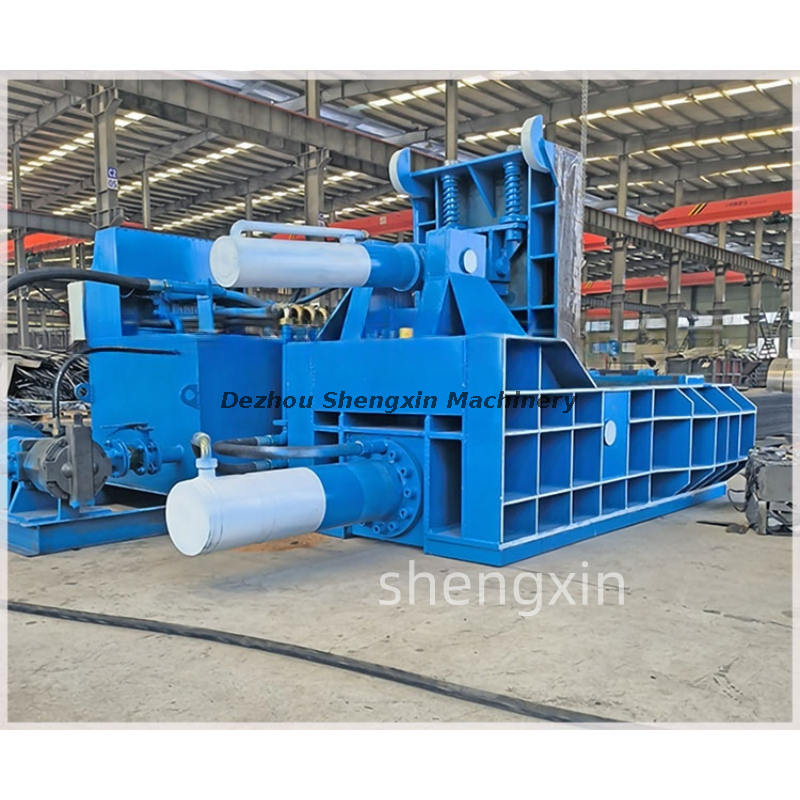
The Step-by-Step Baling Process Explained
Understanding the exact operational sequence helps yards plan labor effectively. A high-efficiency scrap press machine follows a precise, repeatable workflow. This systematic approach guarantees optimal compaction, safe handling, and maximum hourly throughput.
Loading: Operators feed loose material into the open chamber. Yards use manual labor, heavy grabs, or automated conveyors. Uniform material distribution remains absolutely critical here. Even loading prevents severe cylinder misalignment during the heavy compression stroke.
Sealing and Pre-Compression: The lid cylinder actuates rapidly, sealing the heavy chamber shut. Simultaneously, the integrated shearing blades automatically trim any excess scrap overhanging the chamber edges.
Multi-Directional Compression: Both side and main cylinders engage simultaneously. They drive the jagged scrap into tight, standardized block dimensions. This dual-axis pressure removes all internal air gaps rapidly.
Door Release and Ejection: A dedicated locking cylinder opens the heavy discharge door. The powerful main cylinder then pushes out the finished 50-70kg bale.
Auto-Cycle Reset: The sophisticated hydraulic system automatically resets all internal rams. It prepares instantly for the next batch, drastically minimizing manual intervention between cycles.
Mitigating Risks: Maintenance, Safety, and Longevity
Heavy machinery demands strict operational discipline. You must protect your physical investment through proactive, daily care. Ignoring standard maintenance schedules leads quickly to catastrophic equipment failure.
Preventing Mechanical Jams: Operators face uneven loading as their most common daily challenge. Failing to distribute scrap evenly causes massive uneven internal pressure. This dangerous imbalance risks severe deformation of the internal ram guides. You should always train your loading team to level materials before closing the hydraulic lid. Simple visual inspections prevent hours of expensive downtime.
Hydraulic Health: A powerful hydraulic baler relies entirely on fluid integrity. We highly recommend installing integrated oil coolers and heaters. Continuous, rigorous operation naturally degrades hydraulic fluid viscosity over time. Temperature regulation is simply non-negotiable for serious processing yards. You need highly stable fluid dynamics to maintain the full 125-ton pressing force across an entire 8-hour shift.
Operator Safety Features: Workplace safety always comes first on the yard floor. You should look exclusively for mandatory compliance markers. CE and ISO certifications prove rigorous third-party testing. Ensure your machine includes heavy-duty protective enclosures around all moving parts. You also need double-locking mechanisms strictly enforced on the chamber lid. Finally, easily accessible emergency stop buttons must sit directly within immediate operator reach.
Level the incoming scrap manually or mechanically before activating the main lid.
Monitor hydraulic fluid temperatures hourly during intense summer operations.
Test all emergency stop circuits thoroughly at the start of every shift.
Inspect chamber wear plates weekly for excessive gouging or thinning.
Selecting the right manufacturing partner matters just as much as the machine specifications. Heavy machinery shipped overseas faces distinct installation risks. You need a vendor capable of bridging the geographic gap effectively.
Post-Sale Technical Support: You should prioritize vendors offering dedicated "remote maintenance teaching." Comprehensive video installation guides eliminate stressful guesswork during initial assembly. A quality supplier will gladly guide your local team step-by-step through the vital commissioning phase. They should use video conferencing to verify fluid levels and electrical connections.
Wear Parts Accessibility: The chamber's interior wear plates will inevitably degrade over time. Integrated shearing blades also lose their sharp edge after thousands of cycles. You must evaluate manufacturers based heavily on the long-term pricing of spare parts. Always inquire if the factory includes the first set of replacement molds or blades free of charge. Accessible spares keep your line moving smoothly.
Warranty and Service SLAs: A standard one-year warranty serves as an industry baseline. However, lifetime remote technical support proves to be the true differentiator. You need a dedicated supplier who answers complex technical questions years after the initial purchase. Excellent engineering support guarantees maximum operational uptime for your metal recycling machine.
Conclusion
Finding the perfect compression machine streamlines your entire yard workflow. You can easily boost throughput by matching equipment features to your daily realities. Investing in a 125-ton scrap metal baler requires aligning the machine’s discharge method, drive type, and lid-shearing capabilities directly with the yard's specific layout.
We prompt procurement teams to map out their exact target daily tonnage. You must also evaluate available power grid capacity before requesting customized quotes or technical drawings from suppliers. Taking these careful steps ensures long-term processing success.
Align the machine's specific discharge method directly with your existing conveyor or forklift layout.
Choose the correct drive type, picking diesel engines only if industrial power remains strictly unavailable.
Verify lid-shearing capabilities to handle overly long aluminum extrusions safely.
Map out your specific target daily tonnage accurately before contacting overseas suppliers.
Assess your exact power grid capacity before requesting final technical drawings.
FAQ
A: A 125-ton baler efficiently processes a wide variety of materials. It easily handles aluminum extrusions, copper wire, and dense steel shavings. It also easily crushes light industrial waste, including empty 25-liter oil drums and dismantled car shell fragments.
Q: Can the bale size be customized for specific smelting furnaces?
A: Yes, absolutely. Chamber boxes and final bale dimensions can often be modified by the manufacturer prior to ordering. Standard sizes usually sit at 300x300mm, but suppliers can adjust these dimensions to match your specific furnace mouth requirements.
A: Emphasize even loading inside the chamber at all times. Avoid feeding overly thick material that actively exceeds the machine's integrated shear capacity. Finally, conduct routine hydraulic pressure checks to ensure the lid closes with full parallel force.
A: Yes, it is a highly viable and common optional extra. Manufacturers frequently install diesel drives for processing facilities lacking reliable industrial three-phase power infrastructure. This setup works perfectly for remote, off-grid, or fully mobile yard applications.


