For scrap yards and recycling facilities, upgrading from manual gas cutting to a hydraulic alligator shear is a critical transition. It shifts operations from high-risk, labor-intensive processes to systematic, high-throughput metal recovery. Selecting the wrong equipment can lead to operational bottlenecks, excessive blade wear, or safety compliance failures. This guide provides a vendor-neutral framework to evaluate specifications, assess operational risks, and calculate the true ROI of integrating a new mechanical cutting unit into your existing recycling line. You will learn how to match equipment tonnage to your exact material requirements. We will also explore crucial safety standards and frontline operator tactics. These insights ensure you maximize both processing speed and long-term equipment durability.
Key Takeaways
Capacity over-estimation is a common pitfall: Sizing must account for throat force, not just blade length.
Safety requires mechanical enforcement: Relying solely on operator caution is insufficient; hydraulic hold-downs are mandatory for kick-back prevention.
Blade lifecycle dictates operating costs: Utilizing 4-sided reversible blades and adopting specific cutting techniques (e.g., deep throat cuts) drastically reduces consumable expenses.
Workflow integration matters: A crocodile shear functions best as a pre-processing unit before baling or as an extraction tool for high-value components.
You maximize profits primarily through precise material separation. Scrap yards frequently receive heterogeneous assemblies. These components mix high-value metals alongside low-grade steel. Operators use a scrap metal shear to meticulously strip copper from heavy radiators. They also utilize the machine to isolate precious catalytic converter dust. Isolating these pure materials directly increases the final scrap payout. Clean, separated metals always command a premium market price.
Operational efficiency improves dramatically during pre-processing workflows. You should frame this equipment as a necessary precursor to metal balers. Facilities process massive volumes of long extrusions, thick pipes, and twisted rebar. Direct baling of irregular shapes often causes severe equipment jams. A robust crocodile shear uniformly sizes these chaotic materials first. This preliminary step prevents baler blockages. It also significantly increases the final bale density. Dense bales reduce your shipping costs and optimize transport logistics.
Mechanical equipment holds a massive cost and safety edge over thermal cutting. Many yards still rely on oxy-acetylene torches. Upgrading eliminates entirely the recurring costs of consumable fuels. You remove volatile gas cylinders from your facility. This transition eradicates extreme fire hazards. It also drastically reduces operator fatigue. Workers no longer wear heavy thermal gear or inhale toxic metallic fumes. Mechanical cutting is fundamentally faster, safer, and cleaner.
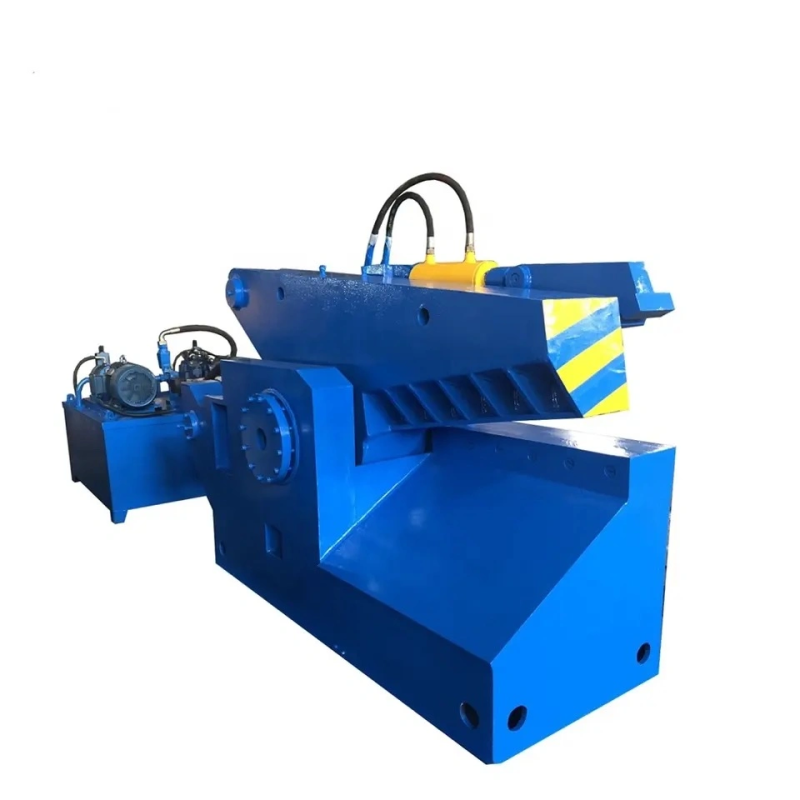
Evaluating a metal cutting machine requires a strict focus on technical specifications. The maximum throat cutting force dictates everything. Tonnage represents the raw hydraulic power applied at the jaw hinge. We generally divide these machines into three distinct capacity tiers.
Machine Tier | Approximate Tonnage | Ideal Application Profile |
Benchtop / Light Duty | 40-Ton | Non-ferrous materials, thin copper tubing, light aluminum extrusions. |
General Duty | 100-Ton | Mixed scrap, standard pipes, automotive exhaust components. |
Heavy Duty | 300-Ton+ | Cutting thick solid steel rounds, structural I-beams, heavy rebar. |
You must understand cutting physics. Force diminishes significantly toward the tip of the blade. The leverage decreases as you move further from the pivot pin. A machine rated for 100 tons at the throat might only deliver 30 tons at the blade tip. You must size the equipment based on throat capacity.
Blade length and geometry define your maximum workpiece dimensions. Common working lengths span from 8 inches to 40 inches. You must prioritize 4-sided reversible blades. Manufacturers forge these from regrindable hardened steel. Reversible designs minimize long-term maintenance costs. You simply rotate the blade to a fresh edge when one side dulls.
Consider your power source and mobility needs carefully. Three-phase electric stationary units dominate indoor operations. They provide relentless power for high-volume processing. Conversely, diesel-powered portable units offer unmatched flexibility. Crews tow them directly to remote demolition sites for on-site dismantling.
Finally, evaluate the available cycle modes. Single-stroke control gives operators precision. The blade descends only while the foot pedal remains depressed. Continuous auto-cycling suits high-volume uniformity. The jaw opens and closes automatically. You simply feed material into the rhythm.
Equipment Topology: Alligator Cutting Machine vs. Guillotine Shears
Recycling yards usually choose between two primary topologies. The alligator cutting machine competes directly against heavy guillotine shears. You must match the topology to your material feed.
Alligator models utilize a hinged jaw design. They boast a very compact operational footprint. They offer high versatility for long or irregular shapes. You can easily process bent pipes, tangled cables, and warped extrusions. They require a much lower initial capital expenditure. However, they carry distinct limitations. Manual feeding inherently limits your daily throughput compared to automated conveyor systems. They also struggle with heavy, wide steel slabs.
Guillotine shears apply massive vertical striking force. Engineers design them specifically for heavy structural steel processing. They easily accommodate continuous high-volume conveyor feeding. Despite these strengths, they pose a high barrier to entry. They demand extensive civil foundation work before installation. They completely lack agility. You cannot use them efficiently for precise dismantling of smaller components.
Feature Comparison | Alligator Topology | Guillotine Topology |
Cutting Action | Scissor-like hinged jaw | Vertical dropping ram |
Footprint & Installation | Compact, minimal prep required | Massive, requires deep concrete foundations |
Material Specialization | Irregular long shapes, non-ferrous | Wide steel plates, heavy ferrous structural beams |
Feeding Mechanism | Manual or simple forklift feed | Automated heavy-duty conveyors |
Frontline Realities: Optimizing Blade Life and Output
Theoretical specifications mean little without proper operator technique. You must train your frontline workers to maximize output and protect equipment. Integrating a powerful metal shear requires strict adherence to proven operational rules.
The "Throat Cut" Rule: Advise operators to feed dense materials deeply into the jaw hinge. We call this area the throat. Maximum hydraulic leverage exists precisely at this pivot point. Operators must never pierce thick materials using the blade tip. Tip piercing causes catastrophic blade snapping and stretches the hinge pins.
Avoiding "Binding" Issues: Thin metals often fold instead of cutting. They jam tightly between the upper and lower blades. We call this binding. It halts production and damages the blade edges. You must proactively adjust the blade clearance gap. Tighter tolerances cleanly slice thin gauge materials.
Handling Bulky Hollow Scrap: Operators encounter unique challenges with large tanks or thick pipes. You cannot just crush them directly. Field tactics require making edge stitch cuts first. You split the hollow cylinder open. Next, lay the metal flat across the table. Finally, compact it down to maximize transport density. Some crews call this rolling the metal like a burrito.
Consistent training on these techniques reduces consumable expenses. It prevents unexpected downtime. A skilled operator listens to the machine. They adjust their feed rate based on hydraulic feedback. This synergy between human and machine defines a profitable yard.
Safety Compliance & Predictive Maintenance Standards
Industrial cutting environments present severe hazards. You must enforce strict mechanical safety protocols. Operating a heavy-duty scrap shear demands rigorous compliance. A minor lapse often results in catastrophic injury or extended machine downtime.
You must mitigate severe mechanical hazards aggressively. Unsecured long workpieces will violently bend during the shearing action. They often kick back toward the operator. Relying on human strength to hold materials is highly dangerous. You must install hydraulic or heavy mechanical hold-down devices. Vertical metal stops are also absolutely mandatory. These engineered controls absorb the violent material reactions.
High-pressure hydraulic lines introduce invisible hazards. Fluid operates at thousands of pounds per square inch. Pinhole fluid leaks can inject toxic oil directly through human skin. State the protocol clearly to all workers: never use bare hands to check for leaks. Always use a piece of cardboard to detect escaping fluid. Treat any injection injury as an immediate medical emergency.
Strict LOTO protocols protect maintenance personnel. Lock-out and tag-out procedures ensure complete energy isolation. You must lock the electrical panel. You must also bleed all residual hydraulic pressure. Operators must follow this procedure before changing blades or clearing severe metal jams.
Establish a rigorous predictive maintenance cadence. Do not wait for failure.
Perform daily lubrication of all pivot points, especially in continuous-cycle mode.
Routinely clear sharp metal shards from the frame base to prevent mechanical binding.
Check the blade gap weekly using proper feeler gauges.
Inspect hydraulic hoses for abrasions where they rub against the metal chassis.
Verify the functionality of emergency stop buttons before every single shift.
Conclusion
Purchasing the right equipment transforms your recycling operations. Always base your decision on the hardest, thickest material you intend to cut regularly. Do not size your machine based on average daily loads. Underpowered machines suffer frequent breakdowns. We recommend requesting detailed spec sheets from multiple manufacturers. Verify the precise throat tonnage and exact blade composition. Finally, test your toughest sample materials with vendors before finalizing procurement. Proper sizing, matched with rigorous maintenance, guarantees decades of profitable metal processing.
FAQ
Q: What is the lifespan of an alligator shear blade?
A: Blade lifespan depends heavily on frequency of use, material hardness, and design. You can extend it significantly by using a 4-sided reversible model. Operators simply rotate the blade when one edge dulls. Consistent lubrication and proper gap adjustments also prevent premature wear.
Q: Should I buy a new or used hydraulic alligator shear?
A: Used equipment offers strong budget advantages for higher tonnage requirements. However, buyers must demand comprehensive maintenance records before purchasing. You should thoroughly inspect jaw hinge wear and hydraulic cylinder seals. New units provide warranty protection and modern safety enclosures.
Q: Can a crocodile shear process catalytic converters?
A: Yes, it is highly effective for this task. Operators cleanly slice the outer shells to extract precious metal substrates. This mechanical separation avoids thermal degradation entirely. It maximizes the final recovery value of the internal components.
Q: How does an alligator shear integrate into a larger recycling line?
A: Position it as step one in your workflow. It handles coarse sizing and preliminary material separation. Operators break down bulky or mixed assemblies first. The processed material then feeds directly into heavy-duty shredding or baling equipment.


