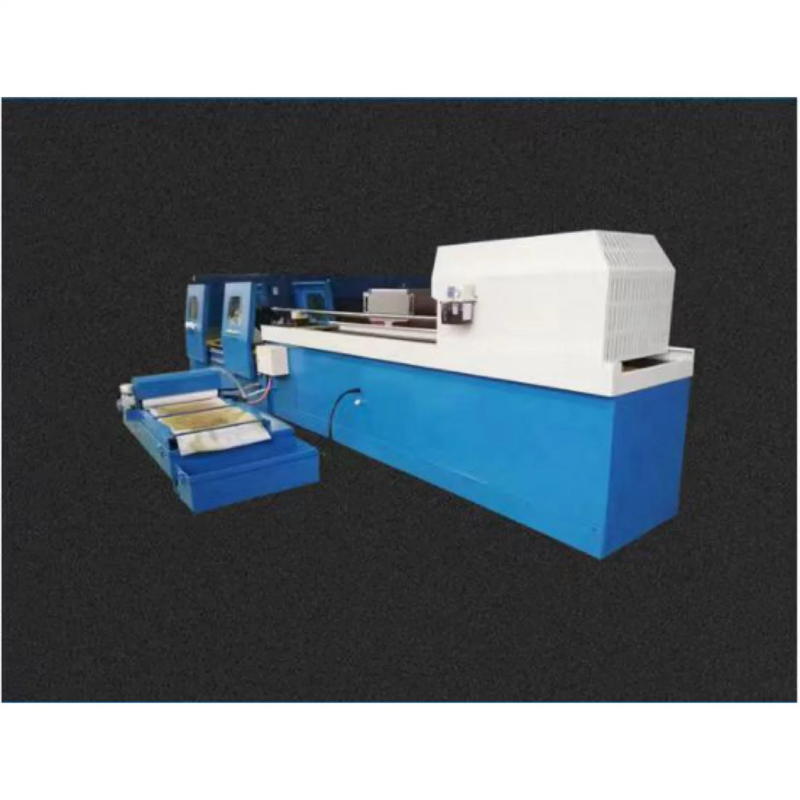
Selecting the right equipment for heavy-duty boring is a high-stakes decision. In sectors like aerospace, oil and gas, or power generation, an incorrect choice leads to significant financial and operational risks. A single scrapped workpiece, such as a large hydraulic cylinder or a landing gear component, can cost tens of thousands of dollars. The core challenge is the precision gap—maintaining exceptionally tight tolerances (IT6/IT7) and near-perfect straightness over extreme depths, often exceeding 10 meters. Achieving this level of accuracy requires more than just a standard CNC machine; it demands specialized engineering and robust construction. This guide serves as a technical roadmap for procurement officers and lead engineers. It will help you evaluate a Deep Hole Boring Drilling Machine based on critical performance metrics like throughput, rigidity, and total cost of ownership (TCO).
Key Takeaways
L/D Ratio is the Primary Constraint: Standard machines handle 4:1; heavy-duty applications often require specialized damping for 20:1 or higher.
Methodology Matters: Choose BTA for high-volume large diameters and Gundrilling for smaller, precision-critical holes.
Rigidity Over Speed: In heavy-duty boring, vibration control (chatter) is the leading factor in tool life and surface finish.
TCO vs. Sticker Price: Evaluate the machine based on scrap rate reduction and secondary process elimination (e.g., reducing the need for honing).
Defining the Technical Scope: Bore Depth vs. Reach
Before selecting any heavy-duty machinery, you must first precisely define your application's technical requirements. The term "deep hole" is not just about length; it's about the relationship between length and diameter, a critical factor that dictates machine architecture, tooling, and process stability. Misinterpreting these fundamental parameters can lead to investing in a machine that is either under-equipped for the job or over-specified and unnecessarily expensive.
Clarifying "Deep Hole" Parameters
In machining, a "deep hole" is formally defined by its depth-to-diameter ratio, commonly referred to as the L/D ratio. While general boring operations might have an L/D ratio of 4:1 or less, a true deep hole application begins when this ratio exceeds 10:1. For heavy-duty industrial components like hydraulic cylinders, propeller shafts, or heat exchanger tubes, L/D ratios of 100:1 or even higher are common. This extreme ratio introduces significant challenges, including tool deflection, chip evacuation, and vibration control, which standard machines are not built to handle.
Bore Depth vs. Total Reach
It's crucial to distinguish between bore depth and total reach.
Bore Depth refers to the actual length of the hole being machined. For example, machining a 2-meter deep hole in a 3-meter long workpiece.
Total Reach is the total distance the tool must travel from its starting point to the end of the cut. This includes any clearance or features the tool must bypass before it begins machining.
If you only need to machine a short hole deep inside a large workpiece, a machine with modular extension bars might suffice. However, for applications requiring a continuous, long bore, a dedicated long-bed machine architecture provides superior rigidity and alignment, minimizing the stacked tolerances and potential for deflection inherent in modular setups.
Tolerance and Straightness Requirements
Success in deep hole boring is measured by precision. Your technical specifications must clearly define the acceptable tolerance and straightness. These are often specified using International Tolerance (IT) grades. Heavy-duty applications frequently require tight tolerances, typically falling within the IT6 to IT9 range.
IT6/IT7: High-precision applications like aerospace components or hydraulic valve spools.
IT8/IT9: General heavy machinery, where robust performance is key but some tolerance is acceptable.
Beyond diameter tolerance, straightness and radial runout are critical. You must establish clear metrics for how much the bore can deviate from a perfect central axis over its entire length. This is often expressed in millimeters per meter (e.g., 0.1 mm/m).
Application-Specific Geometry
Not all bores are simple cylinders. Your application may require complex internal profiles. "Bottle Boring" is a specialized process used to create internal cavities or chambers that are larger than the entry hole, common in manufacturing actuators or complex valve bodies. This requires a machine with a CNC-actuated cutting tool that can expand and retract during the boring process. Identifying the need for such non-standard geometry early on is essential, as it significantly narrows the field of suitable machines.
Selecting the Machining Method: BTA, Gundrilling, or Trepanning
Once the technical scope is clear, the next step is to choose the most effective machining method. The three primary technologies for deep hole creation are BTA systems, Gundrilling, and Trepanning. Each has a distinct operational envelope defined by hole diameter, depth, and desired outcome. Selecting the right method is fundamental to achieving both productivity and precision in heavy-duty applications.
BTA (Boring and Trepanning Association) Systems
BTA drilling, also known as the Single Tube System (STS), is the workhorse for high-volume, large-diameter deep hole boring. It is generally the preferred method for diameters greater than 20 mm and can achieve incredible L/D ratios, sometimes as high as 400:1.
The key advantage of the BTA process is its highly efficient internal chip removal. High-pressure coolant is pumped to the cutting head through the space between the boring bar and the newly machined hole wall. The coolant then forces chips back through the hollow center of the boring bar, ejecting them away from the workpiece. This prevents chips from marring the surface finish or jamming the tool, allowing for significantly higher feed rates and metal removal rates compared to other methods. It is the go-to choice for manufacturing large hydraulic cylinders, oil and gas drill collars, and heavy-duty spindles.
Gundrilling for Precision
When the application demands superior surface finish and tight tolerances in smaller diameters (typically 1 mm to 50 mm), gundrilling is the superior choice. The gundrill tool has a unique single-flute design with internal coolant passages. High-pressure coolant flows through the tool to the cutting edge, flushing chips back along a V-shaped groove on the outside of the tool shank.
The process is self-guiding, relying on pads that burnish the hole as it's being cut, resulting in excellent straightness and a fine surface finish that can often eliminate the need for secondary operations like reaming or honing. Gundrilling is prioritized for applications like fuel injection components, medical implants, and mold making, where precision is paramount.
Trepanning for Material Efficiency
Trepanning is a smart alternative for creating very large diameter holes, especially when working with expensive materials like Inconel, Titanium, or high-strength steel alloys. Instead of machining the entire volume of the hole into chips, a trepanning tool cuts an annular groove, leaving a solid core of material that can be reused or sold as scrap.
This method significantly reduces machining time and power consumption. More importantly, the material savings can lead to a substantial reduction in total project cost. It is an ideal strategy for boring large-diameter tubesheets, forging blanks, and large-scale industrial rollers where the core material holds significant value.
Ejector (Twin-Tube) Systems
Ejector systems offer a flexible alternative to BTA systems, particularly for use on conventional CNC lathes or machining centers that are not equipped with the high-pressure sealing required for a true BTA setup. This twin-tube system uses a Venturi effect to draw coolant and chips back through the inner tube. While not as efficient as a dedicated BTA system, it provides a viable deep hole drilling capability without requiring a specialized machine, making it suitable for job shops or facilities that handle a mix of standard and deep hole work.
| Method | Typical Diameter Range | Key Advantage | Best For |
| BTA (STS) | 20 mm – 600 mm+ | High productivity and metal removal rate | High-volume production of large parts |
| Gundrilling | 1 mm – 50 mm | Excellent surface finish and straightness | Precision-critical, small-diameter holes |
| Trepanning | 50 mm – 1000 mm+ | Material cost savings by leaving a solid core | Large through-holes in expensive alloys |
| Ejector System | 20 mm – 180 mm | Adaptability to non-specialized machines | Mixed-production environments |
Critical Machine Specifications for Heavy-Duty Performance
The performance of a Deep Hole Boring Drilling Machine is not defined by a single feature but by the synergy of its core components. For heavy-duty applications, where forces are immense and precision is non-negotiable, specifications related to structural integrity, coolant delivery, and power are paramount. These elements collectively determine the machine's ability to combat vibration, manage heat, and maintain accuracy over long cycle times.
Structural Rigidity and Damping
Vibration, or "chatter," is the primary enemy of deep hole boring. It destroys surface finish, drastically reduces tool life, and can lead to catastrophic tool failure. The machine's first line of defense is its structural rigidity. Heavy-duty machines are built on massive, heavily-ribbed cast iron beds. Cast iron is the material of choice due to its excellent vibration damping properties, absorbing harmonic vibrations before they can compromise the cut.
For extreme L/D ratios (above 20:1), passive rigidity is not enough. Advanced solutions are required:
Damped Boring Bars: These bars contain an internal mass-damper system (often made of a dense material like Tungsten) that actively counteracts vibrations at the tool tip.
"Smart Dampers": Some modern systems use integrated sensors and actuators to provide real-time, active vibration control, adapting to changing cutting conditions.
High-Pressure Coolant & Filtration
In deep hole boring, coolant does more than just lubricate and cool; its primary job is chip evacuation. Without a powerful and consistent flow, chips will pack inside the hole, causing tool breakage and a ruined workpiece. A high-pressure coolant system delivering 70 bar (over 1,000 PSI) or more is non-negotiable for most heavy-duty BTA and gundrilling applications.
Equally important is the coolant's quality and temperature. A multi-stage filtration system is essential to remove fine particles that could damage the coolant pumps or the workpiece surface. Furthermore, a temperature-controlled coolant system (chiller) is critical for maintaining dimensional stability. It prevents thermal expansion of the workpiece and machine components, ensuring consistent tolerances from the first part to the last.
Spindle Power and Torque
Machining hardened materials like stainless steel, tool steels, or exotic alloys requires immense power. The machine's spindle must deliver sufficient torque at the optimal RPM range to overcome the cutting resistance of these tough materials without stalling. When evaluating a machine, look beyond the peak horsepower rating. Analyze the spindle's torque curve to ensure it provides ample torque at the lower RPMs typically used for boring large diameters in hard metals. An underpowered spindle will force you to reduce feed rates, crippling productivity.
CNC Integration and IoT Monitoring
Modern deep hole boring machines leverage advanced controls to protect the process. A tool failure deep inside a multi-ton workpiece is a disaster. To prevent this, leading machines integrate real-time monitoring systems. Vibration sensors mounted near the spindle or on the tool holder can detect the onset of chatter, allowing the CNC to automatically adjust feed rates or even stop the process before damage occurs. Similarly, tool wear monitoring, based on spindle load or acoustic emissions, can signal when an insert needs to be replaced, ensuring process security and preventing costly failures.
Material Compatibility and Tooling Strategy
The choice of machine and method is only half the battle. A successful heavy-duty boring operation depends on a tooling strategy that is perfectly matched to the workpiece material. Different alloys present unique challenges, from work-hardening to poor thermal conductivity, and the right tooling geometry, grade, and coating can make the difference between a profitable job and a pile of scrap.
Workpiece Material Challenges
Understanding the behavior of the material you are cutting is fundamental. Three common categories in heavy-duty applications present distinct problems:
Stainless Steel: Austenitic stainless steels (like 304 or 316) are notorious for work-hardening. If the tool dwells or the feed rate is too low, the material surface becomes significantly harder, making subsequent cutting extremely difficult.
Best Practice: Use a consistent, aggressive feed rate (often a 15% increase over mild steel) to stay ahead of the hardened layer. Utilize tools with sharp, positive rake angles and a tough PVD coating like TiAlN (Titanium Aluminum Nitride) to resist flank wear.
Cast Iron: While relatively easy to cut, cast iron produces abrasive, powder-like chips. This dust can cause excessive wear on the tool's guide pads and can contaminate machine slideways if not managed properly. The friction also generates significant heat.
Best Practice: Ensure robust coolant flow to flush chips effectively. Use carbide grades with high abrasion resistance and consider uncoated inserts, as coatings can sometimes fail under high friction.
Exotic Alloys (Titanium, Inconel): These materials are prized for their strength-to-weight ratio and heat resistance, but they are very difficult to machine. Their low thermal conductivity means heat does not dissipate into the chips; instead, it concentrates at the cutting edge, leading to rapid tool breakdown.
Best Practice: Use very high-pressure coolant directed precisely at the cutting zone. Employ lower cutting speeds to manage heat and select carbide grades specifically designed for high-temperature alloys.
Tooling Stability Rules
Tool stability is governed by physics. The longer the tool overhang, the more it will deflect and vibrate. A widely accepted guideline is the "1/4 Diameter Rule," which states that for basic stability, the boring bar's diameter should be at least 25% of its overhang length (the L/D ratio should not exceed 4:1). For steel bars, this is a firm limit. To exceed this, you must upgrade the bar material:
Steel Bars: Stable up to ~4:1 L/D.
Heavy-Metal (Tungsten Alloy) Bars: Stable up to ~6:1 L/D.
Solid Carbide Bars: Stable up to ~8:1 L/D.
Damped Bars: Required for ratios of 10:1 and beyond.
Insert Selection
The small, replaceable cutting insert is where the real work happens. Its geometry dictates chip control and surface finish.
Nose Radius: A smaller nose radius (e.g., 0.2 mm or .008") is ideal for finishing passes, as it reduces cutting forces and minimizes vibration. A larger radius is better for roughing because it is stronger, but it increases the risk of chatter.
Chip Breaker: The geometry ground into the top of the insert is designed to curl and break the chip into a manageable size and shape. For deep hole boring, the goal is to create short, comma-shaped or "6-shaped" chips that can be easily evacuated by the coolant flow. A long, stringy chip will inevitably lead to process failure.
Economic Evaluation: TCO, ROI, and Implementation Risks
Purchasing a heavy-duty deep hole boring machine is a major capital investment. The decision cannot be based on the initial sticker price alone. A thorough economic evaluation, centered on the Total Cost of Ownership (TCO), is essential to understand the true financial impact and ensure a positive return on investment (ROI). You must also be prepared for the operational risks and requirements that come with this specialized technology.
The TCO Framework
The TCO provides a holistic view of all costs associated with owning and operating the machine over its lifetime. It reveals the "hidden costs" that are often overlooked during procurement but have a massive impact on profitability.
The core components of TCO include:
Initial Investment: The purchase price of the machine, including delivery, installation, and commissioning.
Operational Costs: This includes setup time (labor), energy consumption (especially for high-power spindles and coolant pumps), and regular maintenance.
Tooling Costs: The consumption rate of carbide inserts, guide pads, and the eventual replacement of the boring bar itself.
Cost of Poor Quality: This is the most critical and often underestimated cost. It includes the material and labor value of scrapped workpieces, the time spent on rework, and the impact of production delays.
A simplified formula to compare options is:TCO = Initial Investment + (Machine Rate × Setup Time) + (Tooling Cost × Consumption) + (Scrap Rate × Part Value)
A more rigid, reliable machine may have a higher initial price but can deliver a lower TCO by significantly reducing scrap rates and tooling consumption.
Throughput vs. Flexibility
A key strategic decision is whether to invest in a dedicated deep hole boring machine or a more flexible, multi-tasking mill-turn center with deep hole capabilities.
Machine Type Comparison
| Factor | Dedicated Deep Hole Boring Machine | Multi-Tasking Mill-Turn Center |
| Throughput | Very High (Optimized for one task) | Lower (More setup and tool changes) |
| Flexibility | Low (Specialized for boring) | Very High (Can mill, turn, drill, etc.) |
| Precision | Extremely High (Designed for rigidity and alignment) | Good, but can be compromised by stacked tolerances |
| Ideal Use Case | High-volume, repetitive production of similar parts | Job shops, prototyping, complex parts requiring multiple ops |
For a production environment focused on parts like hydraulic cylinders, a dedicated machine will always deliver a lower cost per part. For a job shop making a wide variety of components, the flexibility of a multi-tasking center may be more valuable.
Implementation Risks
Integrating advanced boring technology comes with inherent risks that must be managed:
Operator Skill Gap: Deep hole boring, especially using BTA or Trepanning methods, is not a "push-button" operation. It requires a deep understanding of process parameters, chip formation, and troubleshooting. Investing in specialized operator training is not optional; it is essential for success.
Maintenance Requirements: The high-pressure coolant systems are the heart of these machines, and they are also the most demanding in terms of maintenance. The seals, pumps, and filtration systems require a rigorous preventive maintenance schedule to ensure reliability. Failure to maintain these systems will lead to costly downtime and process failures.
Conclusion
Choosing the right deep hole boring machine for heavy-duty applications is a complex but manageable process. By focusing on the right technical and economic factors, you can make an informed decision that enhances productivity and profitability for years to come. Remember to start with a clear definition of your needs, select the appropriate methodology, and never compromise on the machine's core structural integrity.
Your final decision should be guided by this checklist:
Confirm the L/D Ratio and Tolerances: Match the machine's capabilities directly to your most demanding parts.
Align the Method with the Goal: Use BTA for speed, gundrilling for precision, and trepanning for material savings.
Prioritize Rigidity and Damping: This is the foundation of quality and tool life in heavy-duty boring.
Analyze the TCO, Not Just the Price: Factor in scrap reduction, tooling life, and throughput to find the true best value.
The future of deep hole boring is moving towards greater automation, with AI-driven adaptive control systems that can adjust parameters in real-time to optimize performance and prevent failures. However, the fundamental principles of rigidity, precision, and process control will always remain. To ensure you make the best investment, we strongly encourage a detailed technical consultation with an application engineer to run a "Proof of Concept" on your specific workpieces and materials.
FAQ
Q: What is the difference between a standard boring machine and a deep hole boring machine?
A: The primary difference lies in the depth-to-diameter (L/D) ratio they can handle and their chip evacuation methods. Standard boring machines are effective for L/D ratios up to about 5:1. Deep hole boring machines are specifically designed for ratios of 10:1 and greater, featuring specialized high-pressure coolant systems (like BTA or gundrilling) to effectively flush chips from deep inside the workpiece, a critical capability that standard machines lack.
Q: How do I prevent vibration (chatter) in deep hole boring?
A: Preventing chatter involves a multi-faceted approach. First, use the most rigid boring bar possible for the L/D ratio, such as one made from heavy metal or solid carbide. For extreme depths, a damped boring bar is essential. Second, optimize your cutting parameters by using a smaller tool nose radius and adjusting feeds and speeds. Finally, ensure the workpiece is clamped securely and the machine itself has a robust, vibration-absorbing construction.
Q: When should I choose BTA over Gundrilling?
A: The decision is primarily based on hole diameter and production volume. Choose BTA (Boring and Trepanning Association) systems for larger diameters (typically over 20 mm) and high-volume production, as it offers much higher metal removal rates. Choose Gundrilling for smaller diameter holes (1-50 mm) where exceptional surface finish and straightness are the top priorities, even if it means a slower cycle time.
Q: Can I perform deep hole boring on a standard CNC lathe?
A: It is possible but highly limited. Standard lathes lack the bed length, structural rigidity, and—most importantly—the high-pressure, high-volume coolant system required for efficient deep hole boring. While an ejector (twin-tube) system can be adapted, you will face significant limitations in depth, feed rate, and process reliability compared to a dedicated deep hole boring machine. For any serious production, a specialized machine is necessary.
Q: What is the ideal coolant pressure for deep hole applications?
A: The ideal pressure depends on the hole diameter, depth, and material. As a general rule, most heavy-duty BTA and gundrilling operations require pressures ranging from 30 to 100 bar (435 to 1450 PSI). Smaller diameters and deeper holes demand higher pressure to ensure chips are forcefully evacuated from the cutting zone without packing. Insufficient pressure is one of the most common causes of tool failure.


