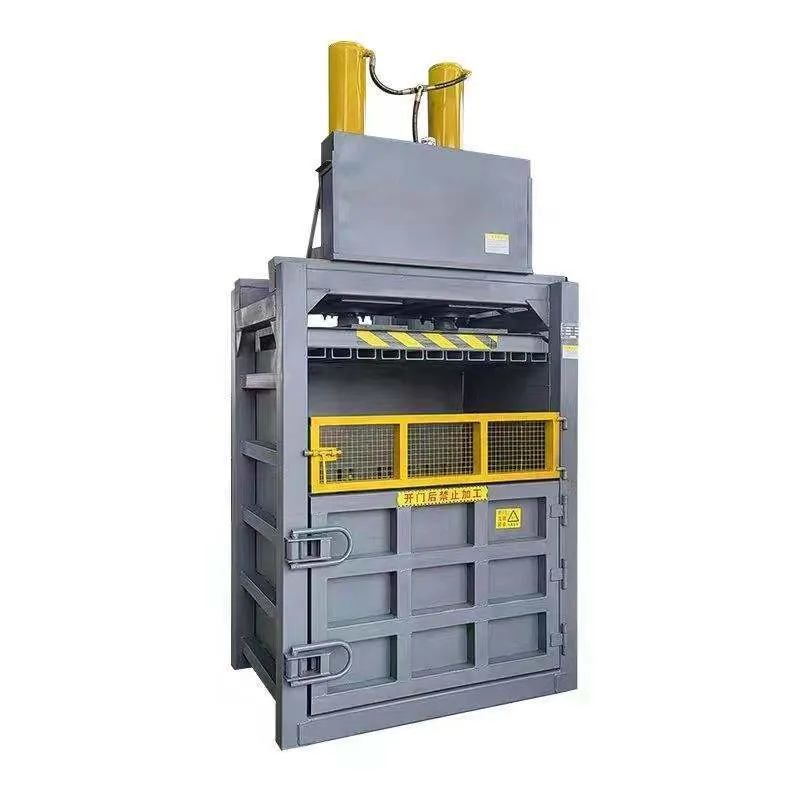
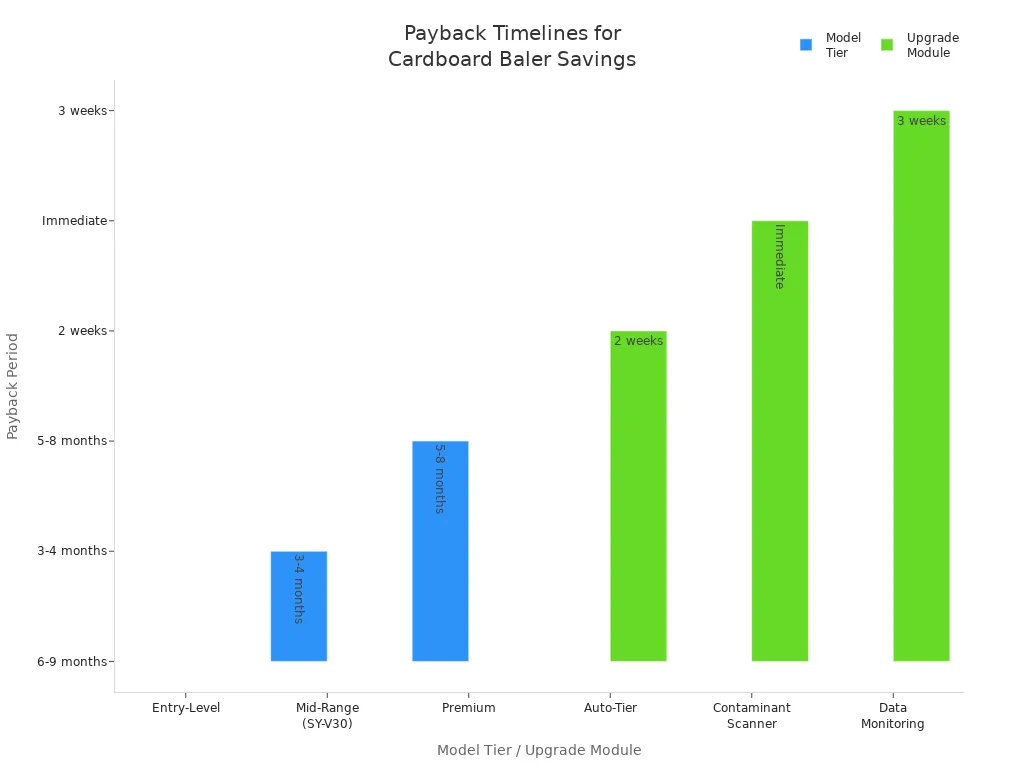
Yes, a baler machine cardboard can quickly cut your trash costs. When you use a baler machine cardboard, you compress cardboard waste into tight bales. This process shrinks the space your cardboard takes up, which means you pay less for trash removal. In many businesses, you start to see cost savings in just a few months. According to industry data, a mid-range baler like the SY-V30 can pay for itself in 3-4 months, and some upgrades let you save even faster.
| Model Tier | Payback Period for Cost Savings |
| Entry-Level | 6-9 months |
| Mid-Range (SY-V30) | 3-4 months |
| Premium | 5-8 months |
Take a moment to think about how much you spend on cardboard disposal today. You might find a baler machine cardboard could make a big difference in your bottom line.
Key Takeaways
A cardboard baler makes waste much smaller, up to 90%. This means you need fewer trash pickups. It also lowers how much you pay for trash removal, and it works quickly.
Many businesses find their baler pays for itself in a few months. This happens because they need fewer pickups and less work from employees. Sometimes, they can even sell the bales.
Picking the right baler type and size is important. It should fit your space and the amount of waste you have. This helps you save more money and work better.
Training workers and keeping the baler in good shape is important. This keeps the baler safe and working well. It also helps you save more money and have less downtime.
Baling cardboard helps recycling and keeps work areas cleaner. It also helps your business meet green goals.
Reduce Trash Costs
Baler Machine Cardboard Impact
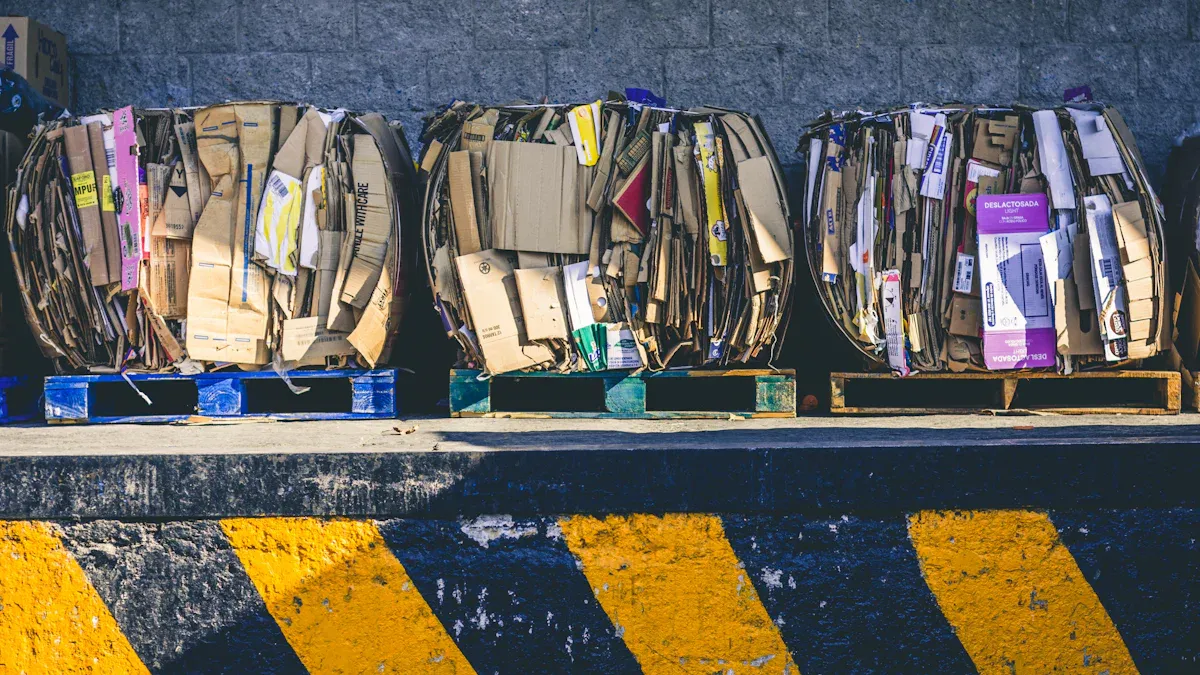
A baler machine cardboard changes how you deal with waste. When you use one, you press loose cardboard into tight bales. This can make your cardboard waste much smaller, up to 90% less. Some vertical balers can even shrink it by 95%. Think about a big pile of boxes that once filled a room. Now, it can fit on just one pallet. This big drop in size means you need less space for storage and waste.
You will see the good effects of a baler machine cardboard very quickly. Companies that start using one often see trash costs go down by about half. This is because you pay for fewer pickups and lower disposal fees. In many stores and factories, disposal fee savings are from 35% to over 75%. For example, a supermarket chain could cut monthly disposal fees from $38,000 to $14,200. That is a 63% savings.
Tip: Baling cardboard does more than save money. It also saves time. Your workers spend less time breaking down boxes and more time on other jobs.
The good things about a baler machine cardboard are not just about money. You help the environment by making recycling easier. Baled cardboard is cleaner and easier to sort, so recycling rates go up. You also keep more waste out of landfills, which lowers greenhouse gases. Many businesses use balers to meet green goals and show customers they care about the earth.
Here are some main benefits you get from using a baler machine cardboard:
Lower trash costs because you have less waste
Less space needed to store cardboard
Cleaner and safer work areas
Easier and better recycling
Better reputation for being green
Lower Pickup Frequency
When you use a cardboard baler, you do not need as many trash pickups. The baler presses your cardboard into tight bales. This lets you fit more waste into each dumpster or bin. Waste trucks do not need to come as often, so you pay less for hauling.
Cardboard balers cut down the number of pickups by making each load smaller.
You save money every time you skip a pickup.
Fewer pickups mean less interruption to your daily work.
You also help the planet because trucks make fewer trips.
A baler helps you make recycling easier. You can collect, bale, and store cardboard until you have enough for a full truck. This makes your recycling program work better and can even earn you money if you sell your bales.
Note: Businesses that make lots of cardboard, like distribution centers and supermarkets, save the most. Some cut their disposal fees by more than half after getting a baler.
The good things about a cardboard baler are more than just saving money. You also get a cleaner workspace, safer storage, and a stronger recycling program. By having fewer pickups, you make your waste system faster, cheaper, and better for the earth.
Cardboard Baler Savings Timeline
ROI Speed
You might wonder how fast a cardboard baler pays for itself. The answer depends on how much cardboard you throw away and what you pay for trash. Many businesses get their money back in less than a year. Some see savings in just a few months.
A baler presses cardboard into tight bales. This means you need fewer trash pickups. Fewer pickups lower your disposal fees. If your business has lots of cardboard, you save money even faster. For example, a busy supermarket or warehouse can pay off a baler in three to six months.
A baler also saves you money on labor. Workers spend less time breaking down boxes. They can do other jobs instead. Automatic balers make the job even faster. You get the same bale quality every time. This helps if you want to sell your bales. Selling bales brings in extra money and shortens the payback time.
Tip: If you make more cardboard waste, your baler pays for itself faster. High trash fees in your area also help you save money sooner.
Influencing Factors
Many things affect how fast you save money with a cardboard baler. Knowing these things helps you pick the best one for your business.
Cardboard Waste Volume: If you have lots of cardboard, you need more pickups. A baler makes the waste smaller, so you need fewer pickups. This helps you save money faster.
Local Disposal Fees: If trash fees are high where you live, you save more with a baler. High fees mean you get your money back quicker.
Bale Resale Value: Selling your bales gives you extra money. Good bale quality helps you get better prices.
Labor Costs: A baler means workers spend less time on cardboard. Automatic balers need even less work, so you save on labor.
Machine Capacity: Pick a baler that fits your daily waste. This keeps your work smooth and stops breakdowns.
Operational Costs: Think about power, repairs, and extra work. Knowing these costs helps you avoid surprises.
Safety Features: Good safety features keep your team safe. Fewer accidents mean less lost time and faster savings.
Space Savings: A baler keeps your work area neat. You use less space for waste, which helps with safety and order.
Environmental Impact: Using a baler helps you recycle more. It also lowers your carbon footprint. Many companies use this to meet green goals.
Here is a table that shows some main factors and how they affect your savings:
| Factor | Explanation |
| Machine Capacity | Pick a baler that matches your daily waste for best results and fewer breakdowns. |
| Operational Costs | Count power, repairs, and labor to avoid surprise bills. |
| Safety Features | Things like emergency stops and less noise keep workers safe and cut down lost time. |
| Resale Value of Bales | Selling bales at good prices helps you save money faster. |
Note: Do a waste check before you buy a baler. This helps you guess your waste and savings. Businesses with lots of waste and high fees save money the fastest.
A cardboard baler is a smart way to save money fast. If you know these factors, you can pick the right baler and start saving right away.
Cost Comparison
Before and After
You may ask how much money you can save with a baler. Before using a baler, loose cardboard fills dumpsters fast. You pay for more pickups and higher disposal fees. After you start baling, you press the cardboard into tight bundles. This means you need fewer pickups and pay less for trash removal.
Let’s look at an example. Imagine your business spends $1,000 each month on cardboard disposal. You switch to a baler. Now, you spend only $600 each month. That is a 40% savings. You also get more space in your storage area. Workers spend less time dealing with waste. You can even make extra money by selling baled cardboard to recyclers.
Here is a quick look at how different businesses benefit:
| Business Type | Implementation Detail | Cost Savings / Outcome |
| Retail Chain | Adopted balers for waste management | Reduced waste disposal costs by 40% and earned recycling revenue |
| Manufacturing Facility | Automated waste compaction | Achieved significant operational cost savings |
| E-commerce Company | Partnered with recyclers | Created new revenue stream and improved sustainability |
Tip: Baling cardboard saves money and helps keep your workspace clean and safe.
Real-World Example
A paper goods maker started using a high-capacity baler for its cardboard waste. The company cut scrap waste volume by over 60%. It also made extra money by selling the baled cardboard. An e-commerce giant put balers in its fulfillment centers. The company reached zero waste to landfill and cut waste disposal costs by almost 25%. These changes made the company more efficient and helped the environment.
You can expect to get your money back fast. Many businesses see a return on investment in less than 18 months. Some save enough each month to pay off the baler in under 10 months. If you handle a lot of cardboard, your savings can add up quickly.
Choosing a Baler
Types of Balers
When picking a baler, you should know the main types. The two most common are vertical and horizontal balers. Each one is good for different needs. They work for different spaces, costs, and how much cardboard you have.
Here is a quick comparison:
| Feature | Vertical Baler | Horizontal Baler |
| Cost | Lower cost and maintenance | Higher cost, more investment |
| Space Requirement | Compact, fits in small areas | Needs more floor space |
| Processing Capacity | Good for small to medium volumes | Best for large volumes, faster speed |
| Labor Requirement | More manual work | Less manual work, more automation |
A vertical baler is best if you do not have much space. It is also good if you do not have a lot of cardboard. You can set it up fast and teach your workers easily. A horizontal baler is better for big jobs. It is good if you have lots of cardboard to process quickly. It costs more, but it saves time and work.
Key Considerations
You should think about a few things before buying a cardboard baler:
Upfront Costs and Maintenance: Vertical balers cost between $10,000 and $25,000. They are easy to take care of and use less energy. Horizontal balers start at about $20,000. They need more care, but they handle more waste and save on labor.
Safety Features: Look for emergency stop buttons and safety guards. Interlocks stop the machine if a door is open. These features help keep your team safe.
Staff Training: Only trained workers should use a baler. Training teaches how to load cardboard and use safety gear like gloves and goggles. Workers also learn lockout steps for maintenance. Training helps everyone stay safe and sure of what to do.
Manufacturer and Model: Many trusted companies make good balers. Some top brands are Jining Shunyin Machinery, Marathon Equipment, Ver-Tech, and Harris Waste Management Group. These brands have models for both small shops and big warehouses.
Tip: Always pick a baler that fits your space, waste amount, and worker skills. The right baler saves money and keeps your workplace safe.
Quick Start Guide
Assess Cardboard Waste
You need to know how much cardboard your business produces before you choose a baler. Start by doing a waste audit. Weigh your cardboard waste every day for a week. Train your staff to sort and identify cardboard correctly. Take photos of your waste piles for records. Use a spreadsheet to track the weight and type of waste. Make sure your scales are accurate. Watch for seasonal changes that might affect how much cardboard you have. Keep checking your waste over time to spot any changes.
Tip: Involve your team by offering small rewards for accurate sorting and tracking. This helps everyone stay engaged and improves your data.
You should also look at your storage space. Decide if you need a vertical or horizontal baler based on how much cardboard you collect and how much room you have. Think about how often you want to make bales and how you will move them. If you recycle, track how much cardboard you send out each month. This helps you see your progress and find ways to improve.
Implement Baler Machine
Once you know your cardboard volume, pick a baler that fits your needs. Flatten and break down all cardboard before loading it into the baler. This step makes your bales denser and saves space. Always follow the safety steps when using the machine. Only trained workers should operate the baler. Use gloves, safety glasses, and other protective gear.
Follow these steps for best results:
Load flattened cardboard into the baler.
Close the door and start the baling cycle.
Wait for the machine to finish compressing.
Tie and remove the finished bale.
Repeat as needed.
Set up a regular maintenance plan. Check for damage, clean the area, and test safety features every day. Lubricate moving parts and inspect hydraulic systems each week. Keep a log of all checks and repairs. If you notice problems like jams or leaks, fix them right away or call a professional.
Note: Good training and regular care keep your baler safe and working well. This helps you save money and avoid downtime.
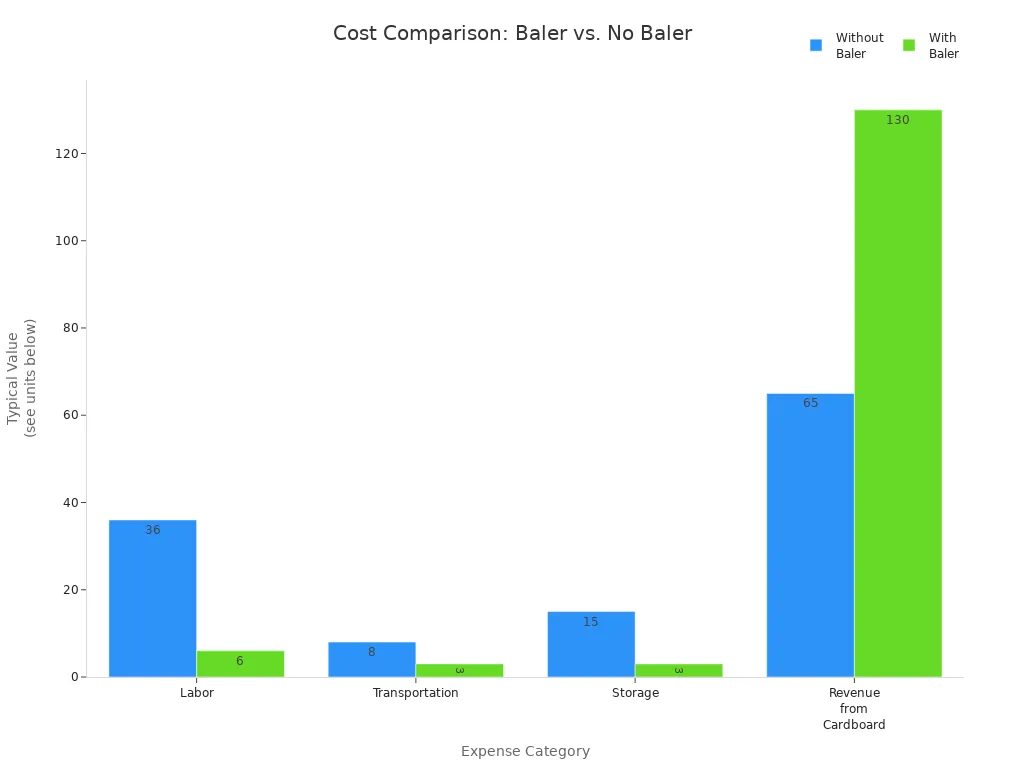
A baler machine for cardboard gives you a fast, effective way to cut trash costs and boost your bottom line. You gain these key benefits:
Improved shipping efficiency with fewer trips.
Better monitoring and control of your recycling process.
Cleaner, high-quality recyclable products.
Extra revenue from selling baled cardboard.
Lower labor costs from easier handling.
You can also create new income streams by selling baled cardboard, saving on hauling, and using freed space for business growth.
To get started:
Assess your cardboard waste volume and space.
Train your team on safe baler use.
Contact suppliers or request quotes to find the right machine for your needs.
Take action now to unlock savings and support your recycling goals.
FAQ
How much space do you need for a cardboard baler?
You need enough room for the baler and space to load and unload bales. A vertical baler fits in small areas. A horizontal baler needs more floor space. Always check the machine size before you buy.
Can you sell baled cardboard for extra money?
Yes! Many recycling companies pay for clean, baled cardboard. You can earn extra income by selling your bales. Check local prices and buyers to get the best deal.
Is it hard to train staff to use a baler?
No. Most workers learn to use a baler in a short time. Good training covers loading, safety steps, and bale removal. Always follow the safety rules for best results.
How often should you maintain your baler?
You should check your baler every day for damage or jams. Clean the area and test safety features. Schedule weekly checks for oil and moving parts. Regular care keeps your machine safe and working well.
What types of businesses benefit most from a baler?
Stores, warehouses, factories, and supermarkets see the biggest savings. If you have lots of cardboard waste, a baler helps you cut costs, save space, and recycle more.


