Processing bulky, high-strength scrap metal is a persistent bottleneck. It frequently dictates the overall profitability of your yard. Upgrading your equipment shifts your operations drastically. You move away from low-margin bulk transport. Instead, you enter the highly profitable arena of high-density commodity processing. Relying on outdated methods slows down production and eats into your margins.
Evaluating the right metal guillotine requires careful planning. You must balance cutting force and cycle efficiency against your specific site realities. It is not just about buying a bigger machine. It is about aligning your mechanical capabilities with market demands. This article explores essential mechanical concepts and practical implementation strategies. You will learn how to transform structural scrap into premium commodities safely and efficiently.
Key Takeaways
**Commodity Premium:** Processed, uniform-density scrap commands a 10–20% market premium over raw bulk material.
**Logistics Optimization:** High-capacity shearing reduces required storage space by up to 30% and lowers freight costs by maximizing truck payload efficiency.
**Equipment Distinction:** True hydraulic guillotine shears (often categorized as gantry or Q91 series) utilize straight-line progressive cutting, outperforming swing-beam or alligator shears on structural metals like I-beams and rail tracks.
**Deployment Variables:** Total operational success relies heavily on site preparation (pit vs. floor mounting) and integrating safety and feeding automation.
The Business Case: Why Heavy Scrap Demands a True Hydraulic Guillotine Shear
Relying on manual torch cutting for heavy structural scrap is a costly mistake. It is slow, dangerous, and highly dependent on skilled labor. Undersized alligator shears are equally problematic for heavy materials. They fail to deliver consistent sizing. They also suffer from accelerated equipment wear when pushed beyond their limits. These outdated methods drive up operating expenses. They leave you with uneven scrap pieces.
To solve this, modern yards employ the "Chef's Cut" principle. A hydraulic guillotine shear utilizes a progressive cutting angle. The blade descends at an 80 to 90-degree angle. This mimics a chef slicing down diagonally rather than crushing straight down. This cold-shearing technique works wonders. It requires significantly less overall hydraulic force. It minimizes blade wear over thousands of cycles. More importantly, it prevents the metal from melting or suffering extreme distortion.
Understanding industry terminology helps buyers make informed decisions. Manufacturers frequently interchange the terms "gantry shears" and "hydraulic guillotine shears". Both describe the exact same heavy-duty, straight-line vertical cutting architecture. For example, the robust Q91 series represents this heavy-duty class. In contrast, the Q15 series typically denotes lighter-duty equipment.
These machines offer uncompromising material-matching capabilities. A proper heavy duty shear handles the toughest metals in the yard. They easily process thick plate shearing, thick channel steel, rigid I-beams, and heavy scrap rails. They bite through these dense materials smoothly and continuously.
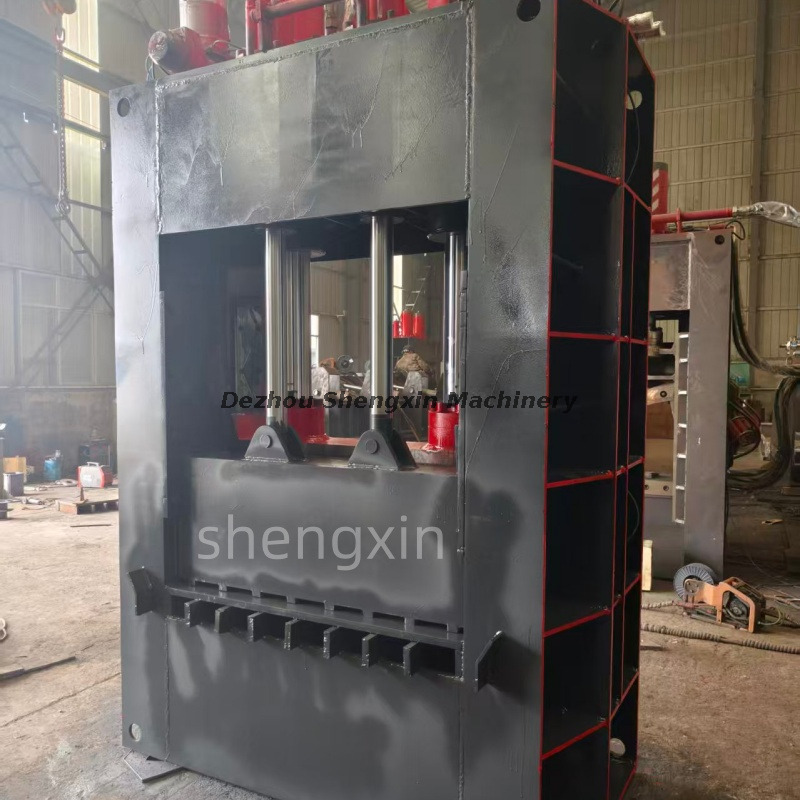
Economic Impact: Quantifying ROI on a Scrap Cutting Machine
Uniform material sizing profoundly affects downstream processing efficiency. Uneven scrap causes severe bottlenecks. It creates dangerous jam risks in high-capacity shredders. It slows down melting furnaces at the foundry level. Processing your metal into predictable chunks acts as a preventative measure. It protects expensive downstream machinery from catastrophic damage.
We must also frame this equipment as a powerful logistics optimizer. Unprocessed bulky scrap is mostly empty air. Compressing and sizing your scrap shrinks your required yard storage space by up to 30%. This spatial efficiency directly translates into freight economics. You can pack more weight into every single shipping container or truck trailer. Maximizing vehicle weight capacities typically yields up to a 20% savings on transportation costs. You move fewer trucks while shipping more actual tonnage.
The ultimate success criterion is direct revenue growth. Foundries and steel mills actively seek processed, uniform-density scrap. They pay more for it because it melts faster and more predictably. Selling this optimized material yields a verifiable 10 to 20% market premium. You earn significantly more compared to dumping unprocessed, mixed-size loads.
The chart below summarizes the typical economic improvements yards experience after installation.
| | | ROI Impact Summary Chart |
Operational Metric | Before Installation | After Installation | Net Improvement |
Yard Space Utilization | High clutter, loose piles | Dense, organized storage | Up to 30% space freed |
Freight Efficiency | Light loads, empty air space | Max payload weight achieved | Up to 20% cost reduction |
Commodity Sale Price | Base market rate | Premium foundry rate | 10% - 20% revenue increase |
Downstream Jam Risks | Frequent shredder stops | Continuous flow feeding | Significant downtime drop |
Deploying a robust scrap cutting machine turns logistics savings and commodity premiums into direct bottom-line profits.
Selecting the ideal machinery requires a structured evaluation process. You cannot guess the specifications. You must align the machine's capabilities with your daily operational demands.
Tonnage and Cutting Force Requirements: Tonnage dictates what you can physically cut. You must establish a baseline framework. A machine delivering 200 to 500 tons is sufficient for thin materials and light siding. However, true heavy-duty applications demand much more. Cutting scrap rails and thick structural frames requires an 800-ton to 2000-ton nominal pressure rating.
Throughput and Cycle Time: You must evaluate continuous versus single-cycle operations. High-tier continuous hydraulic systems operate incredibly fast. They can achieve 3 to 5 cuts per minute. This cycle speed allows you to process upwards of 50 tons per hour, depending heavily on material density.
Automation and Feeding Systems: Manual handling slows everything down. You must assess the integration of PLC controls. Look for side pre-compression capabilities. These push bulky loads into a dense log before the blade drops. Automated bi-directional conveyors also reduce manual handling significantly.
Energy Efficiency: Massive hydraulic force usually means high electrical consumption. Modern components mitigate this expense. Variable frequency drives (VFDs) optimize motor speeds. Energy recovery systems recycle hydraulic pressure. Together, they can reduce electrical consumption by 15 to 30%. They achieve this without sacrificing any hydraulic cutting force.
By rigorously assessing these four dimensions, you ensure your metal recycling shear handles your hardest materials efficiently.
Implementation Realities: Site Prep, Integration, and Safety
Buying the equipment is only half the battle. Proper site preparation dictates long-term success. The mounting architecture you choose impacts daily workflow heavily.
The table below breaks down the two primary mounting architectures.
Feature | Floor Mounted Architecture | Pit Mounted Architecture |
Deployment Speed | Fast. Minimal foundation work needed. | Slow. Requires major excavation. |
Maintenance Access | Excellent. Technicians can walk around the unit. | Restricted. Confined space challenges exist. |
Loading Efficiency | Requires loading ramps or elevated material handlers. | Highly efficient. Allows level loading directly from the yard floor. |
Civil Engineering | Standard reinforced concrete slab. | Extensive drainage planning and heavy concrete walls. |
Safety and compliance standards are non-negotiable. Modern scrap yards face strict regulatory scrutiny. You must emphasize the necessity of physical and digital safety guardrails. A qualified plate shearing machine must feature integrated safety cages. It must utilize optical light curtains to stop the blade instantly if a worker breaches the zone. Ensure the equipment meets regional compliance standards, such as OSHA, ANSI, or CE directives.
You must also address common operational bottlenecks. Undersizing the feeding box is a critical error.
Best Practice: Always match the feeding box cover dimensions to your yard's primary loading equipment. If your material handler grab size is larger than the box opening, you will spill material constantly.
Common Mistake: Ignoring cycle timing between the loader and the machine. If the machine cuts faster than the loader can feed, you suffer idle cycle times. Perfect synchronization prevents wasted electricity.
Vendor Shortlisting and Procurement Checklist
Choosing the right manufacturing partner secures your investment. Standard manufacturing lead times often hover around 45 working days. However, custom modifications extend deployment schedules. If you request blade length extensions or tailored hydraulic cylinder pressures, expect delays. Plan your civil engineering work to overlap with this production time.
Maintenance and lifecycle durability separate premium vendors from budget options. You must evaluate vendors based on the availability of heavy-wear replacement parts. Blades dull. Hydraulic seals degrade under extreme pressure. Your vendor must stock these parts reliably. Frame the equipment's reliability by looking for proven case studies. Ask vendors for examples of multi-decade machine lifespans operating in harsh environments.
Use the following procurement checklist before finalizing a purchase order for a guillotine shear:
Does the rated shear tonnage comfortably align with the thickest material in the yard's typical daily mix?
Is the manufacturing vendor capable of modifying the feed hopper to overcome specific site constraints?
Are verifiable ROI calculations provided based on your localized energy costs and your regional scrap premiums?
Does the vendor provide rapid dispatch for specialized technicians during unexpected downtime events?
Conclusion
A hydraulic straight-line cutting system is not merely a waste reduction tool. It acts as a primary revenue amplifier for high-volume recycling operations. Upgrading allows you to bypass the limitations of manual torches. You secure higher market premiums, slash transportation inefficiencies, and protect downstream shredding equipment.
To move forward, we recommend taking immediate action. Conduct a comprehensive site audit of your yard space. Measure your most problematic scrap dimensions directly. Finally, request a material-specific testing video or a detailed ROI payback model from your shortlisted manufacturers. By securing the correct structural data, you guarantee a highly profitable deployment.
FAQ
Q: What is the difference between a guillotine shear and an alligator shear?
A: A guillotine utilizes straight-line vertical cutting. It relies on a heavy frame to slice through thick, high-volume materials with extreme precision. An alligator shear uses a hinged-jaw motion. It is generally reserved for lighter, rough processing and lower production volumes.
Q: What tonnage is required to cut heavy scrap rails and I-beams?
A: Processing heavy structural scrap safely and continuously requires massive force. You should establish an 800-ton to 2000-ton+ nominal pressure threshold. Anything lower risks stalling the blade or causing rapid mechanical wear.
Q: Can a hydraulic guillotine shear be customized for specific yard layouts?
A: Yes. Reputable manufacturers confirm high adaptability. They can engineer the machine for either pit or floor mounting. They can also customize feeding box dimensions and integrate automated discharge conveyors to fit your existing workflow.
Q: What is the typical lead time and installation period for a heavy-duty scrap shear?
A: You should set realistic expectations. Standard production takes approximately 45 working days. You must also factor in international logistics and the time required for site civil engineering and concrete curing.


