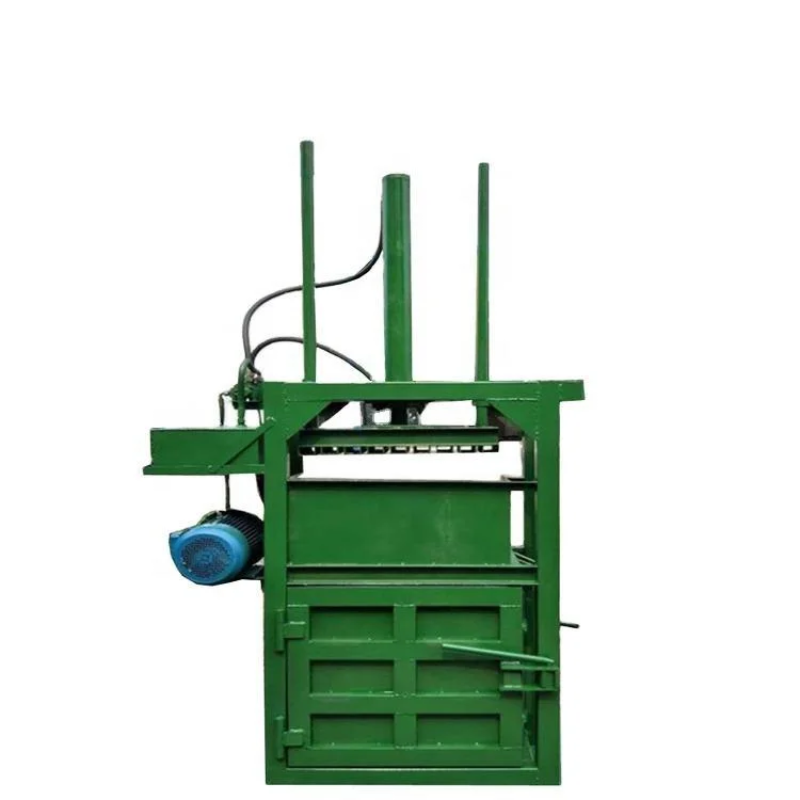
Facilities across various industries face an escalating crisis hidden in plain sight. Mountains of loose cardboard and plastic film often choke warehouse aisles. These unmanaged materials quickly drain your operational budgets. Rising waste hauling fees severely impact daily bottom lines. You also lose countless hours to hidden labor costs. Employees waste valuable time manually breaking down boxes and moving uncompacted trash.
You can change this dynamic completely. By transitioning from decentralized disposal to a consolidated vertical baler solution, you transform a pure expense into a manageable process. This upgrade often creates a revenue-generating workflow for your facility. Compacting recyclables keeps your workspace clean and highly productive.
We provide a transparent, criteria-driven framework in this guide. Facility managers and business owners can use it to evaluate their options. You will learn how to properly size and source the right equipment. This ensures your investment aligns perfectly with your waste management goals.
Key Takeaways
Vertical balers significantly reduce waste hauling frequency, directly lowering operational expenses.
Mill-sized bales of sorted cardboard or plastic can be sold to recyclers, creating a secondary revenue stream.
Selecting the right equipment requires balancing footprint constraints, daily material volume, and electrical requirements.
Partnering with a reliable OEM ensures access to compliant safety features, durable hydraulics, and long-term parts availability.
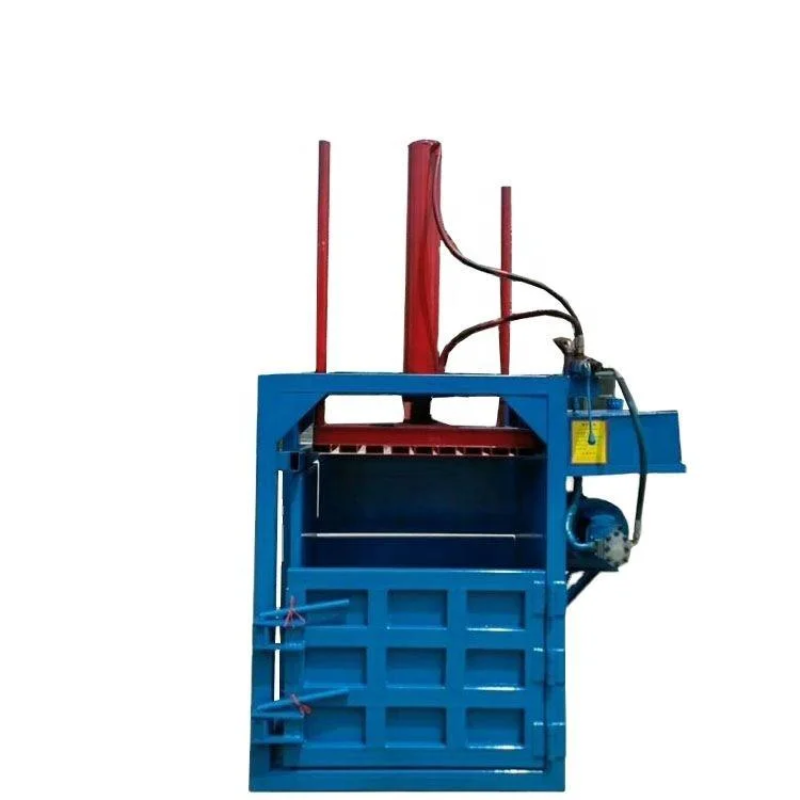
The Business Case: Financial Outcomes of a Vertical Baler Solution
Investing in compaction equipment requires a clear understanding of financial returns. Businesses often underestimate the true cost of unmanaged waste. Let us break down the tangible financial outcomes. We will explore how these machines directly impact your operational budgets.
Reducing Hauling Expenses
Loose waste takes up enormous space in commercial dumpsters. You essentially pay waste haulers to transport air. Compacting materials changes this equation dramatically. Most machines achieve a compaction ratio of roughly 10:1. This means ten dumpsters of loose boxes shrink into a single dense cube.
Fewer dumpster pickups translate to immediate monthly savings. If your hauler currently empties bins four times a week, compaction might reduce this to once a week. You immediately eliminate costly fuel surcharges and pickup fees. These savings compound month over month. Many facilities see hauling bills drop by over fifty percent.
Generating Recycling Revenue
Recycling mills actively purchase baled commodities. They prefer clean, uncontaminated materials. Old corrugated containers (OCC), shrink wrap, and PET bottles hold significant market value. Loose waste simply costs you money to remove. Baled waste, however, becomes a tradeable asset.
You can sell these uniform bales to local recycling brokers. The exact revenue potential depends heavily on regional commodity pricing. A mill-size bale of cardboard can weigh up to 1,000 pounds. When market prices are strong, each bale generates direct income. This secondary revenue stream effectively offsets the initial equipment investment over time.
Labor Efficiency
Manual waste handling destroys employee productivity. Staff members spend hours breaking down heavy cardboard boxes. They take multiple trips to outdoor dumpsters. This manual process is tedious and physically demanding. It takes workers away from their primary responsibilities.
Compare this to loading a batch into a cost-effective baler. Employees simply toss whole boxes into the machine. They close the gate and press a button. The machine does the heavy lifting automatically. This massive time reduction boosts overall warehouse efficiency. Your team can focus on fulfilling orders instead of managing trash.
Horizontal vs. Vertical Waste Balers: Evaluating the Right Fit
Choosing the right configuration is critical for your facility. You must evaluate your specific operational needs. Both horizontal and vertical designs serve distinct purposes in waste management. We will compare them across three primary operational dimensions.
Volume and Throughput Thresholds
Throughput volume dictates your machine style. A standard vertical waste baler is ideal for low-to-medium volumes. Facilities processing under 100 to 150 tons per month fall into this category. These models operate via manual batch feeding. Operators load materials, run a cycle, and repeat.
Horizontal machines handle entirely different demands. They are necessary for high-volume, continuous processing. Large distribution centers use them for automated conveyor feeding. If your facility generates tons of waste daily, a horizontal unit prevents bottlenecks. Vertical units, conversely, thrive in standard retail and manufacturing environments.
Floor Space and Facility Layout
Warehouse space is often a premium commodity. Horizontal machines require massive floor footprints. They span wide areas to accommodate long hydraulic cylinders and feed conveyors. This limits their viability in confined industrial spaces.
We must highlight the defining advantage of vertical models. They utilize overhead airspace perfectly. Their upright design requires a minimal operational footprint. You can easily tuck them into corners or tight receiving docks. This layout flexibility makes them the most popular choice for standard facilities.
Capital Investment
Budget constraints heavily influence equipment selection. Horizontal machines represent massive capital investments. They often require complex site modifications and costly structural installations. Their maintenance involves highly specialized technicians.
Vertical machines compare much more favorably for typical budgets. They offer a substantially lower barrier to entry. Facilities can optimize waste without a daunting six-figure capital expenditure. Installation is straightforward and rarely requires heavy facility modifications. They deliver high compaction performance for a fraction of the upfront cost.
| Evaluation Feature | Vertical Models | Horizontal Models |
| Monthly Volume Limit | Under 150 tons | 150+ tons (High Volume) |
| Feeding Method | Manual Batch Load | Continuous / Conveyor |
| Floor Space Required | Minimal (Vertical Airspace) | Extensive (Large Footprint) |
| Capital Barrier | Low to Moderate | High (Six-Figure Range) |
Sizing a Cost-Effective Baler for Small Business Operations
Selecting the right size prevents operational headaches later. You need a machine aligned precisely to your material generation. Oversized units waste money and space. Undersized units require too much operator interaction. Let us examine how to match equipment dimensions to your needs.
Matching Equipment to Material
Manufacturers categorize these machines by their chamber width. Standard sizes typically include 36-inch, 48-inch, and 60-inch models. The 60-inch variant is universally known as the "mill size" standard. Mill-sized bales fit perfectly into standard shipping trailers.
A small business baler, like a 36-inch model, is highly efficient. It works perfectly for tight stockrooms or small retail backrooms. However, smaller bales rarely generate premium market revenue. If your goal is maximizing payouts from paper mills, you must deploy a 60-inch model. Brokers prefer 60-inch bales because they optimize freight logistics seamlessly.
Electrical and Power Considerations
Your facility's electrical infrastructure limits your equipment options. It is crucial to address these power constraints early. Machines operate on either single-phase or three-phase electrical connections. Smaller 36-inch machines can sometimes run on standard single-phase power.
High-density compaction typically requires robust industrial setups. You generally need three-phase power for a 60-inch machine. Three-phase power ensures optimal cycle times and maximum cylinder pressure. It allows the hydraulic pump to operate smoothly under immense strain. Always consult your facility electrician before finalizing any equipment purchase.
| Standard Size | Best Application | Bale Weight (Approx. OCC) | Typical Power Needs |
| 36-Inch | Tight stockrooms, retail | 150 - 300 lbs | Single-phase |
| 48-Inch | Supermarkets, light industrial | 400 - 600 lbs | Single or 3-phase |
| 60-Inch (Mill Size) | Warehouses, distribution centers | 800 - 1,100 lbs | 3-phase required |
Key Evaluation Criteria When Specifying an OEM Vertical Baler
Not all machines feature the same build quality. Purchasing commercial recycling equipment requires strict vetting procedures. You want industrial durability and uncompromising safety features. We will explore the exact technical criteria you should demand from manufacturers.
Structural Integrity and Hydraulics
The core strength of the machine lies in its frame and fluid dynamics. You must look for specific traits in a reliable OEM vertical baler. Start by checking the structural steel frame thickness. Thin gauge steel flexes and warps under continuous compaction pressure.
You also must evaluate the hydraulic systems. Consider dual-cylinder versus single-cylinder designs carefully. Dual-cylinders pull the platen down evenly, preventing internal wear. Single-cylinder models are cheaper but often suffer from uneven load distributions. Always specify high-quality hydraulic pumps to ensure longevity and consistent crushing force.
Safety and Compliance Features
Industrial machinery inherently presents workplace hazards. Strict compliance features are absolute must-have evaluations. Never purchase a unit lacking verified OSHA and ANSI (Z245.5) compliance. These frameworks dictate standard protective measures for operators.
Look for robust safety interlock switches on all loading doors. These prevent the machine from operating while gates remain open. Automatic bale ejection systems keep operators from manually wrestling heavy bales. Prominent emergency stop mechanisms are critical. They allow immediate shutdown if materials jam or hazardous situations arise.
Implementation Realities: Installation and Adoption Risks
Buying the machine is only the first step. You must plan carefully for physical installation and team adoption. Poor planning leads to damaged floors, delayed startups, and safety incidents. We have outlined the major realities you will face during implementation.
Site Preparation
Delivery logistics require careful advance coordination. These machines are incredibly heavy and notoriously top-heavy. You must verify door height clearances before the delivery truck arrives. Standard interior doors rarely accommodate tall cylinder housings.
You must also arrange proper unloading equipment. Standard pallet jacks cannot safely move a vertical unit. You need heavy-duty forklift requirements for unloading and positioning. Ensure your warehouse floor can support both the forklift and the machine weight combined.
Pre-installation checklist items include:
Verifying dock plate weight capacities.
Measuring ceiling heights to accommodate upward cylinder extensions.
Confirming electrical disconnect locations are within arm's reach.
Securing concrete anchor bolts to stabilize the machine permanently.
Operating Clearances
Positioning the machine directly against a tight corner rarely works. You must factor in the full swing radius of the front baler doors. Operators need ample room to swing these heavy doors wide open. Blocked doors make tying off wire nearly impossible.
Furthermore, consider the floor space required for bale removal. Once the machine ejects a finished cube, you need maneuverability. You must leave adequate space for pallet jacks or forklifts to scoop the load. A minimum of four to six feet of clear frontal space is standard industry practice.
Staff Training and Safety Protocol
Your team determines the ultimate success of this new workflow. You must emphasize the importance of formalized operator training. Uninformed workers can easily jam the chamber or damage the wire guides.
Strict lock-out/tag-out (LOTO) procedures are non-negotiable. Maintenance staff must isolate power completely before clearing jams. We recommend establishing routine daily inspections. Operators should check hydraulic fluid levels and inspect door hinges before their shifts. This simple protocol prevents catastrophic equipment damage and ensures complete worker safety.
Conclusion
Vertical balers effectively bridge the gap for modern facilities. They replace inefficient loose waste dumping with structured compaction. They remain far more accessible than highly complex automated horizontal systems. Consolidating your recyclables reclaims floor space and cuts hauling fees dramatically.
We advise taking strategic next steps before purchasing equipment. First, conduct a one-week waste audit at your facility. Track your loose waste volume and document the specific material types. Next, determine your local recycling rebate rates for OCC and plastic. Finally, request site assessments and comprehensive ROI projections from qualified equipment vendors.
FAQ
Q: How much space is required to operate a vertical baler?
A: A standard 60-inch model requires roughly an 8-by-6 foot footprint. However, you must include operational clearance. You need at least four to six feet of clear space in front. This extra room allows for the full door swing radius and safe bale removal using a forklift.
Q: What materials can a standard vertical waste baler process?
A: They easily process common commodities like OCC (cardboard), plastic shrink film, PET bottles, and aluminum cans. They handle everyday packaging waste exceptionally well. However, you will need specialized heavy-duty models for highly resilient materials like tires, metals, or dense foam.
Q: How long does it take to see a return on investment (ROI)?
A: Most businesses achieve full ROI within 12 to 24 months. This timeline depends heavily on your specific waste volume. It is directly contingent on hauling fee savings and current local recycling rebate rates for baled commodities.
Q: Do I need specialized training to operate a vertical baler?
A: Basic operation is straightforward and push-button simple. However, documented safety and operational training is legally required. ANSI and OSHA mandates require you to train employees on loading protocols, wire tying, bale ejection, and emergency procedures to ensure compliance.


