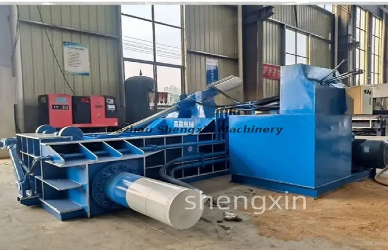
A cardboard box baler is a specialized machine designed to compress cardboard waste into compact, uniform bales. This process is essential in recycling and waste management, as it helps significantly reduce the volume of cardboard, making it easier to store, transport, and recycle. In industries such as retail, manufacturing, and logistics, large amounts of cardboard packaging accumulate daily, and a baler helps streamline this waste disposal process. By compressing the material into tight bales, balers not only save valuable storage space but also optimize transportation efficiency. This enables businesses to minimize waste management costs and contribute to sustainability by facilitating more effective recycling efforts. Ultimately, the use of a cardboard box baler supports both environmental goals and operational efficiency, making it a crucial tool in modern waste management.
Feeding the Cardboard into the Baler
1.How Cardboard is Loaded into the Baler’s Chamber
The first step in the baling process is feeding the cardboard into the baler’s chamber. In most cases, cardboard waste is gathered from various sources like shipping departments, retail spaces, or warehouses and brought to the baler. The material is typically flattened or broken down into manageable sizes before being fed into the machine.
Once the cardboard reaches the chamber, the baler’s feeding system takes over. The material is pushed into the baling chamber by either manual or automated means. The goal is to evenly distribute the cardboard to ensure consistent compression and a uniform bale. A properly loaded chamber maximizes the efficiency of the baling process and ensures that the final bale is tightly compressed.
2.Manual vs. Automated Feeding Systems
Manual Feeding Systems
Design: In manual feeding systems, the operator physically feeds the cardboard into the baler. This process often requires workers to manually load the cardboard into the machine, sometimes by hand or using simple tools like a conveyor belt.
Best For: Small-scale operations or places with limited cardboard waste. It is typically used in settings with lower volume or where automation is not feasible.
Advantages:
Simple to use and low cost
Flexibility in handling different types of cardboard
Disadvantages:
Requires more labor, which can increase operational costs
Slower processing time compared to automated systems
Greater potential for inconsistent loading and uneven bales
Automated Feeding Systems
Design: Automated feeding systems use conveyors, sensors, and mechanical arms to load cardboard into the baler. These systems can automatically move, stack, and position the material for optimal compression. Some systems even use sorting technologies to ensure only cardboard is fed into the baler.
Best For: Large-scale operations with high volumes of cardboard waste, such as recycling centers, large manufacturing plants, or warehouses with continuous packaging output.
Advantages:
Faster and more efficient, reducing labor costs
Consistent feeding and optimal material placement, leading to uniform bales
Less risk of injury to workers due to reduced manual handling
Disadvantages:
Higher initial cost for setup and maintenance
Requires more complex technology and a skilled workforce to operate
Compression Process
1.How the Hydraulic System or Mechanical Force Compresses the Cardboard
The compression process begins once cardboard enters the baler’s chamber. In hydraulic balers, a pump generates high-pressure fluid to power cylinders, which move the ram to compress the material. Hydraulic systems are more powerful and efficient, making them ideal for compacting tougher materials like thick cardboard. In mechanical balers, a motor or flywheel drives the ram to compress the material. While simpler and more affordable, mechanical balers are typically used for lighter, lower-volume materials and require more maintenance.
2.The Role of the Ram in Compacting the Material into a Bale
The ram is the main component responsible for applying pressure to the cardboard. It moves forward, pushing the material into the chamber, reducing its volume and compacting it into a dense bale. In hydraulic balers, the ram’s movement is precise and adjustable, allowing for controlled compression of various materials. This ensures a uniform, dense bale that is easier to handle, store, and transport. A well-functioning ram ensures that air pockets are eliminated and the bale is tightly packed, optimizing space and improving the quality of the final product.
Tying the Bale
1.How the Bale is Secured After Compression
Once the cardboard is compressed into a dense bale, it is secured using a tying system. This system binds the bale to keep it intact during handling, storage, and transport. After compression, the bale is ejected, and the tying mechanism wraps around it, ensuring it stays together. The most common tying methods use wire, twine, or plastic straps.
2.Types of Tying Systems
Wire Tying System:
Description: Wire is tightly wound around the bale and twisted to secure it.
Advantages: Strong, durable, and provides a tight hold, ideal for heavier bales.
Disadvantages: Time-consuming and requires caution due to sharp edges.
Twine Tying System:
Description: Twine is wrapped around the bale and knotted to secure it.
Advantages: Cost-effective and easy to handle, used for lighter bales.
Disadvantages: Less durable than wire and offers looser compression.
Plastic Strap Tying System:
Description: Plastic straps are wrapped around the bale for secure binding.
Advantages: Strong, weather-resistant, and safer to handle.
Disadvantages: More expensive than twine and less tightly compressive than wire.
Ejecting the Bale
1.The Process of Ejecting the Finished Bale from the Baler
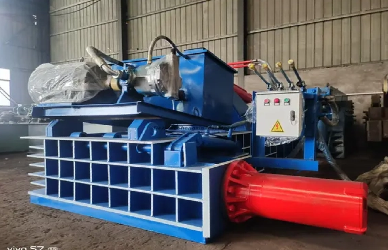
Once the cardboard has been compressed and securely tied, the finished bale needs to be ejected from the baler for storage, transport, or further processing. In most balers, the ejection process is automatic. After the bale has been compressed and tied, the baler’s ram or a separate ejector mechanism pushes the bale out of the chamber. The compacted bale is usually pushed onto a conveyor or directly to a storage area.
The bale may exit the baler either vertically or horizontally, depending on the machine’s design. After ejection, the process is complete, and the baler is ready for the next cycle of compression.
2.The Role of Automated Systems in Removing the Compacted Bale
Automated systems play a key role in the ejection process, particularly in high-volume operations. Once the bale is formed and secured, the automated system ensures smooth and efficient removal. Features like conveyors, pneumatic or hydraulic ejectors, and robotic arms are often employed to handle the ejection.
Conveyors: These systems transport the bale to a designated area after it is ejected, making the entire process more efficient and minimizing the need for manual labor.
Pneumatic or Hydraulic Ejectors: Some balers use pneumatic or hydraulic pressure to push the bale out of the chamber with minimal effort, increasing speed and reducing wear on mechanical parts.
Robotic Arms: In highly automated setups, robotic arms can be used to handle and move the ejected bale to the next stage in the process, such as stacking, bundling, or storing.
Key Components Involved in the Process
1. Hydraulic System
The hydraulic system powers the baler by generating high pressure through a pump and transferring it to cylinders that move the ram. This system ensures precise, powerful compression of materials.
Contribution to Efficiency: It provides consistent and controlled force, allowing for high-density bales and efficient handling of tough materials, extending the baler’s lifespan.
2. Ram
The ram is responsible for compressing the material inside the chamber. It moves forward to apply pressure, compacting the material into a dense bale.
Contribution to Efficiency: The ram ensures uniform compression, preventing air pockets and producing tight, high-quality bales that are easier to store and transport.
3. Bale Chamber
The bale chamber holds the material during compression. Its size and design vary but are crucial in allowing efficient material flow and compression.
Contribution to Efficiency: A well-designed chamber optimizes material flow, reducing jams and improving compression speed. Larger chambers handle higher volumes, ideal for large-scale operations.
Contribution to Efficiency: Reliable tying ensures bales remain intact during handling and transport. Automated systems reduce labor costs and improve throughput.
4. Tying Mechanism
The tying mechanism secures the compressed bale using wire, twine, or plastic straps. Some balers automate this process, improving speed and consistency.
FAQ:
1.What types of cardboard can be processed by a cardboard box baler?
A cardboard box baler can handle various types of cardboard, including corrugated cardboard and boxboard, commonly found in recycling operations.
2.How does a cardboard box baler help in reducing waste volume?
By compressing cardboard into dense bales, a baler reduces its volume, making it easier to store, transport, and recycle, leading to less space being used.
3.Are cardboard balers difficult to operate?
Modern cardboard balers are designed for ease of use, with automatic or semi-automatic systems that simplify operation, requiring minimal operator intervention.
4.How often should a cardboard box baler be maintained?
Regular maintenance, typically every 3-6 months, ensures smooth operation. This includes checking hydraulic fluid, cleaning the machine, and inspecting key components like the ram and tying mechanism.
Conclusion
In conclusion, the working process of a cardboard box baler involves several key steps: feeding the cardboard into the chamber, compressing it using hydraulic or mechanical force, securing the bale with a tying system, and finally ejecting the compacted bale for easy handling and transport. Each component, from the hydraulic system to the ram, bale chamber, and tying mechanism, plays a crucial role in ensuring the efficient and effective operation of the baler. The use of a cardboard box baler is vital in waste management, as it helps significantly reduce the volume of cardboard waste, optimizing storage and transportation. Furthermore, balers contribute to sustainability efforts by streamlining recycling processes, reducing landfill waste, and supporting more efficient use of resources. In today’s environmentally conscious world, using a baler is an essential step towards more efficient waste handling and recycling, making it a key tool for businesses committed to sustainability.


