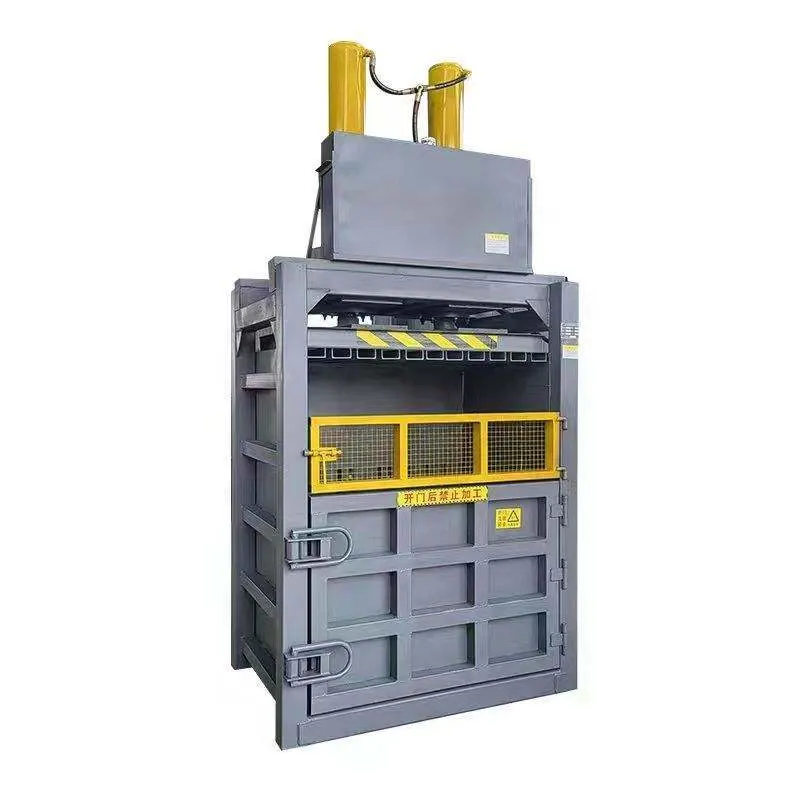
Balers are specialized machines designed to compress waste materials into compact, manageable bales. These bales are easier to handle, store, and transport, making balers crucial in industries such as recycling, agriculture, and manufacturing. In recycling, balers help compress paper, plastics, and metals into uniform bales, which simplifies their processing and transportation. In agriculture, they are used to compact hay, straw, and other crop residues into bales for efficient storage and feeding. In manufacturing, balers handle scrap materials, reducing waste and improving overall efficiency. Balers come in different types and sizes, with hydraulic and mechanical versions that cater to specific needs. By improving material handling, reducing waste volume, and supporting sustainability, balers are indispensable in modern waste management and resource optimization.
How Balers Work
1.The Process of Compressing Materials into Bales
Balers operate by compressing waste materials into compact, uniform bales using mechanical or hydraulic force. The process begins when the material is fed into the baler’s chamber. The baler’s ram, driven by either hydraulic pressure or mechanical force, pushes the material against the wall of the chamber. As more material is added, the force increases, reducing the material’s volume and increasing its density. Once the material is compressed, the bale is tied—usually with wire, twine, or plastic—before being ejected from the chamber. This compression reduces waste volume, making it easier to handle, store, and transport.
2.Overview of Hydraulic and Mechanical Balers
There are two main types of balers based on their operating systems:
Hydraulic Balers: These balers use hydraulic pressure to compress materials. A hydraulic pump generates high pressure, which is transmitted to hydraulic cylinders that move the ram. This allows for powerful compression and is ideal for handling tougher materials like scrap metal, plastic, and cardboard. Hydraulic balers are efficient and capable of producing high-density bales.
Mechanical Balers: These balers operate using mechanical force, often powered by a flywheel or a motor-driven system. Mechanical balers are generally simpler and more affordable than hydraulic ones but may be less efficient at compressing dense materials. They are commonly used in smaller-scale operations or for materials that do not require as much force to compact.
3.Key Components of a Baler
Hydraulic System: In hydraulic balers, the hydraulic system is essential for generating the force needed to compress the material. It includes a pump, valves, and hydraulic fluid that work together to control pressure and movement.
Rams: The ram is the moving part that pushes the material into the chamber and compresses it. In hydraulic balers, the ram is driven by hydraulic cylinders that provide the necessary force for compression.
Chamber: The chamber is where the material is compacted. It is designed to withstand high pressure and can vary in size depending on the type of material being processed and the size of the baler.
Tying Mechanism: After compression, the bale must be secured to maintain its shape. The tying mechanism uses wire, twine, or plastic bands to bind the bale, ensuring it remains intact during storage and transportation. In automated balers, the tying process is fully integrated into the system and operates without manual intervention.
Types of Balers
1.Vertical Balers vs. Horizontal Balers
Vertical Balers
Design: Vertical balers feature a vertically oriented chamber where materials are fed from the top, and the ram compresses them downward.
Best For: Small-scale operations with limited space, such as retail or small recycling centers.
Advantages: Space-efficient, low initial cost, simple operation.
Disadvantages: Lower capacity and smaller bales compared to horizontal balers.
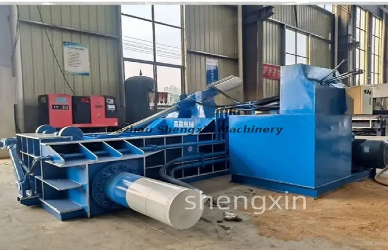
Horizontal Balers
Design: Horizontal balers have a chamber where materials are fed from the front, with a horizontal ram compressing the material.
Best For: Large-scale recycling centers or facilities handling high volumes of materials.
Advantages: High throughput, larger bales, better efficiency.
Disadvantages: Requires more space and higher initial costs.
2.Specialized Balers for Different Materials
Paper Balers
Designed to compact paper and cardboard waste, commonly used in recycling centers or manufacturing.
Plastic Balers
Built to handle plastics such as bottles, film, and containers, often featuring shredding mechanisms.
Metal Balers
Reinforced for scrap metal, these balers can apply high pressure to compress dense materials like steel and aluminum.
Textile Balers
Specialized for compacting fabric and textile waste, often found in clothing recycling industries.
Agricultural Waste Balers
Designed for hay, straw, and crop residues, these balers are built to handle bulky agricultural materials.
3.Comparison of Manual vs. Automated Balers
Manual Balers
Design: Requires operators to control material feeding, compression, and tying manually.
Best For: Small businesses with low-volume needs.
Advantages: Lower cost, simple operation.
Disadvantages: Higher labor requirements, slower operation.
Automated Balers
Design: Automated systems handle feeding, compression, and tying, reducing manual labor.
Best For: High-volume facilities or large-scale operations.
Advantages: Increased efficiency, reduced labor costs.
Disadvantages: Higher upfront cost, more complex maintenance.
Benefits of Using Balers
1.Space Efficiency and Compact Storage
Balers significantly reduce the volume of materials by compressing them into dense, uniform bales. This compact storage makes it easier to store large quantities of waste or recyclable materials in a smaller space, freeing up valuable floor area. It also facilitates more organized storage, which helps optimize warehouse or recycling facility layouts.
2.Increased Efficiency in Recycling and Waste Management
Balers enhance the efficiency of recycling and waste management operations by automating the process of compressing and bundling materials. With a baler, large volumes of paper, plastics, metals, and textiles can be processed quickly, improving throughput. The uniform bales produced are easier to handle, sort, and transport, enabling smoother recycling processes and reducing manual labor requirements.
3.Cost Savings in Transportation and Handling
By compressing materials into smaller, more compact bales, balers reduce the volume of waste, lowering transportation and handling costs. Fewer trips are required to transport the same amount of material, saving on fuel and labor costs. Additionally, the compact bales are easier to stack and store, making them more efficient to transport and store in bulk. This results in substantial cost savings for businesses involved in waste management, recycling, or manufacturing.
Common Problems with Balers
1.Jamming
Jamming is a frequent issue with balers, often caused by improper material loading, clogged feeders, or materials that are too thick or tough for the machine. When materials are not evenly loaded or are too dense, they can obstruct the chamber or feeder mechanism, halting the baling process. Overloading the machine or using unsuitable materials can exacerbate this problem.
2.Hydraulic System Issues
Hydraulic system failures can stem from low fluid levels, leaks, or issues with the hydraulic pump. Low or contaminated fluid can reduce pressure, making it harder for the baler to generate the force needed for compression. Leaks in hoses or seals can also cause fluid loss and compromise the machine's performance, leading to slower or uneven ram movement.
3.Mechanical Failures
Mechanical problems in balers can include issues with the ram, motor, conveyor systems, or the tying mechanism. Worn-out parts like seals, cylinders, and gears can reduce the baler's efficiency, causing inconsistent compression or failure to tie bales correctly. Over time, wear and tear from constant operation can result in increased downtime and higher repair costs.
Preventative Maintenance to Ensure Long-Term Performance
Regular maintenance is crucial to preventing common baler problems and ensuring long-term performance. Key actions include:
Routine Inspections: Regularly inspect components such as the ram, seals, hydraulic system, and tying mechanism for wear and damage. Address any issues before they lead to more serious problems.
Hydraulic Fluid Checks: Monitor fluid levels and quality to ensure efficient pressure. Replace or top off hydraulic fluid as needed and clean filters regularly to prevent contamination.
Clearing Jams: Ensure that materials are properly sorted and loaded into the baler. Regularly clean out the feeder and chamber to prevent build-up that may lead to jamming.
Lubrication: Keep moving parts, such as the ram and motor, properly lubricated to prevent excessive wear. Follow manufacturer recommendations for lubrication schedules.
Component Replacement: Replace worn or damaged components, such as seals, cylinders, and valves, to maintain the baler’s efficiency and avoid breakdowns.
FAQ:
1.How do balers improve recycling efficiency?
Balers compact recyclable materials into uniform bales, making them easier to transport and process, improving overall recycling efficiency.
2.Can balers handle all types of waste?
Balers can handle various materials, including paper, plastics, metals, textiles, and agricultural waste, though specialized balers may be needed for certain types.
3.What is the difference between a vertical and a horizontal baler?
Vertical balers are more compact and suitable for smaller operations, while horizontal balers are designed for higher-volume processing, ideal for large recycling centers.
4.How can I prevent my baler from jamming?
Regular cleaning, proper material loading, and routine maintenance of feeder mechanisms and hydraulic systems can help prevent jams and blockages.
Conclusion
In conclusion, balers are invaluable machines for efficiently compressing materials in various industries, including recycling, waste management, and agriculture. While they provide numerous benefits such as space efficiency, increased recycling effectiveness, and cost savings in transportation, they are also susceptible to common issues like jamming, hydraulic system failures, and mechanical wear. However, these problems can be mitigated with regular maintenance and proactive care. By performing routine inspections, monitoring hydraulic fluid, and addressing issues such as component wear and material blockages early, businesses can ensure the long-term performance and reliability of their balers. Proper maintenance not only prevents costly repairs but also maximizes the efficiency of baling operations, ultimately contributing to smoother workflows and better resource management.


