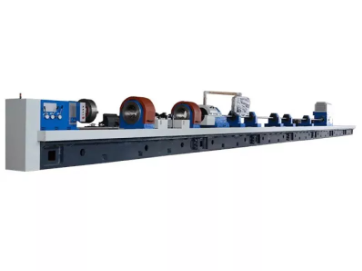
In high-stakes manufacturing, creating a perfectly straight, round, and accurately sized hole deep inside a metal workpiece is a formidable engineering challenge. Success requires a delicate balance between material removal speed and maintaining absolute geometric integrity. The core conflict arises when standard drilling processes, optimized for speed, inevitably fail to meet the tight tolerances required for critical assemblies like hydraulic cylinders or aerospace components. This often leads to part rejection and significant financial loss. The key objective for any engineer or procurement manager is selecting the right process and equipment to minimize scrap rates, reduce secondary operations, and optimize the Total Cost of Ownership (TCO). This guide breaks down the critical differences between deep hole boring and drilling to help you make that decision confidently.
Key Takeaways
Drilling is a "creation" process (from solid), while Boring is a "refinement" process (enlarging/correcting).
Deep Hole Boring is essential for correcting "hole wander" and ensuring concentricity in workpieces where the Length-to-Diameter (L/D) ratio exceeds 10:1.
Tolerances: Drilling typically achieves ±0.05–0.1 mm; Boring can reach ±0.01 mm or better.
Equipment: High-precision applications often require a dedicated Deep Hole Boring Drilling Machine to handle chip evacuation and tool rigidity.
Fundamental Mechanics: Multi-Point Drilling vs. Single-Point Boring
Understanding the core differences between drilling and boring begins with their fundamental mechanics. Though both create cylindrical holes, their tools, objectives, and resulting geometries are vastly different. One process prioritizes creation and speed, while the other focuses exclusively on refinement and precision.
Drilling Dynamics
Drilling is the process of creating a hole from solid material. It uses multi-point cutting tools, like twist drills or gun drills, where two or more cutting edges (lips) engage the workpiece simultaneously. The primary goal of drilling is efficient material removal. The tool rotates and advances into the material, shearing away chips to form the initial hole. Its performance is measured by the material removal rate (MRR), which dictates the speed of the operation. While effective for creating holes quickly, this multi-point engagement generates complex cutting forces that can make the tool unstable over long distances.
Boring Dynamics
Boring, in contrast, is a finishing or semi-finishing process that never starts from solid material. It exclusively enlarges and improves an existing hole, which is typically created by drilling, casting, or forging. The tool used is a boring bar, which holds a single-point cutting insert. This single point of contact gives the operator precise control over the hole's final diameter and geometry. The focus of boring is not MRR but achieving superior geometric accuracy, including straightness, roundness, and concentricity with other features on the part.
Material Removal Methods
The method of material removal directly impacts accuracy. In drilling, the combined forces on the multiple cutting edges can be difficult to balance. If one cutting edge dulls faster than another or encounters a hard spot in the material, the forces become asymmetrical. This imbalance causes the drill to deflect from its intended path, a phenomenon known as "drill wander." The deeper the hole, the more pronounced this deviation becomes.
Boring’s single-point cutting tool generates a predictable, primarily radial cutting force. This force pushes the boring bar away from the surface being cut. A rigid machine and a stable boring bar can counteract this force effectively, allowing the tool to follow a true axial path. This provides unparalleled radial control, making it possible to correct the positional errors introduced during the initial drilling phase.
The Machining Sequence
In high-precision workflows, drilling and boring are not competing processes; they are sequential partners. The workflow almost always follows a specific order:
Drilling: A hole is first drilled slightly undersized. This step is performed quickly to remove the bulk of the material.
Boring: The boring operation follows to enlarge the hole to its final diameter. This step corrects any straightness or concentricity errors from drilling and achieves the required dimensional tolerance and surface finish.
This two-step approach leverages the strengths of each process. It uses drilling for what it does best—rapid material removal—and reserves boring for its unique ability to deliver uncompromising geometric precision.
Accuracy and Surface Finish: The Evaluation Framework
When evaluating drilling versus boring, the decision often comes down to the required levels of accuracy and surface quality. These parameters are not subjective; they are defined by internationally recognized standards and measurable characteristics. Understanding this framework is key to specifying the right process for a component's functional requirements.
Dimensional Tolerances
Dimensional tolerance refers to the permissible variation in a part's size. It is often defined by International Tolerance (IT) grades, where a lower number indicates a tighter tolerance.
Drilling: A standard twist drill in a stable setup can typically achieve tolerances within the IT10 to IT13 range. This translates to a dimensional accuracy of approximately ±0.05 mm to ±0.1 mm for common hole sizes. While sufficient for clearance holes for bolts, it is inadequate for bearing fits or precision assemblies.
Boring: Boring is capable of much higher precision. A well-executed boring operation can readily achieve IT6 to IT8 grades, corresponding to tolerances of ±0.01 mm or even tighter. This level of accuracy is essential for achieving standard press fits and sliding fits as defined by ISO standards like H7 or H8.
Surface Roughness (Ra)
Surface roughness, often measured as Ra (Roughness average), quantifies the fine-scale texture of a machined surface. A smoother surface has a lower Ra value.
Drilling: The surface left by a drill is often relatively coarse due to the nature of chip formation and rubbing at the tool's margin. Typical Ra values for drilling range from 3.2 to 6.3 μm (125 to 250 μin).
Boring: Because boring uses a single cutting edge with optimized geometry (nose radius), it produces a much smoother surface. Boring can consistently achieve Ra values between 1.6 and 3.2 μm (63 to 125 μin). For even finer finishes, a subsequent process like reaming or honing might be used, but boring provides a superior starting point.
Geometric Integrity
Beyond simple diameter and finish, boring excels at correcting geometric deviations. This is arguably its most critical function.
Roundness & Cylindricity: Drilling can produce holes that are slightly out-of-round or tapered due to tool wear and unstable cutting forces. Boring corrects these errors by generating a true circle at every point along the hole's axis, resulting in excellent cylindricity.
Straightness: The most significant geometric error in deep drilling is the lack of straightness, which creates a "banana-shaped" hole. Boring with a piloted bar or on a highly rigid machine can re-establish a straight axial path, effectively salvaging a part that would otherwise be scrap.
Comparison Table: Drilling vs. Boring at a Glance
This table summarizes the key operational differences between the two processes.
| Attribute | Drilling | Boring |
| Primary Purpose | Creating a hole from solid material (Creation) | Enlarging and correcting an existing hole (Refinement) |
| Tooling | Multi-point cutting tool (e.g., twist drill, gun drill) | Single-point cutting tool (boring bar with insert) |
| Typical Speed | High material removal rate | Lower material removal rate; focus on finish |
| Tolerance (IT Grade) | IT10 - IT13 | IT6 - IT8 |
| Surface Finish (Ra) | 3.2 – 6.3 μm | 1.6 – 3.2 μm |
| Geometric Correction | None; can introduce errors (wander, roundness) | Excellent; corrects straightness, roundness, position |
Deep Hole Challenges: Why L/D Ratio Dictates the Process
As a hole gets deeper relative to its diameter, the physics of machining changes dramatically. Standard tools and techniques begin to fail, and specialized processes become necessary. The Length-to-Diameter (L/D) ratio is the single most important factor that dictates whether a standard drilling operation is feasible or if a deep hole process involving boring is required.
Defining "Deep"
In machining, a "deep hole" is generally defined as one where its depth is more than 10 to 20 times its diameter (L/D > 10:1). At these ratios, several challenges emerge that are negligible in shallow holes: tool deflection, chip evacuation, and heat management. Machining a 20mm diameter hole that is 500mm deep (an L/D of 25:1) presents a completely different set of problems than machining one that is only 50mm deep (L/D of 2.5:1).
The Problem of Deflection
A standard twist drill is relatively short and stiff. When used for shallow holes, it remains stable. However, as the L/D ratio increases, the drill must become longer and more slender to reach the required depth. This slenderness makes it highly susceptible to bending and deflection under cutting forces. The drill starts to "wander" off its true axis, resulting in a curved or misplaced hole.
Specialized deep hole drilling processes like BTA (Boring and Trepanning Association) and Gun Drilling were developed to counteract this. These tools are guided by guide pads that burnish against the inside of the hole they are creating. This self-guiding action helps them maintain a much straighter path than a twist drill, but some deviation is still inevitable.
Chip Evacuation & Heat
In a deep hole, chips have a long and narrow path to exit. If they are not effectively removed, they can pack together in the drill's flutes, a problem known as "chip nesting." This packing increases torque, can cause tool breakage, and mars the surface finish of the hole. Furthermore, trapped chips prevent coolant from reaching the cutting edge, leading to excessive heat buildup. This thermal expansion can cause the tool to seize inside the workpiece.
Deep hole drilling systems solve this by using high-pressure internal coolant. Coolant is pumped through the center of the drill at pressures up to 100 bar (1,500 PSI). It flows to the cutting edge to cool and lubricate, then forcefully flushes the chips out through external flutes or a central return channel.
Corrective Boring
Even with advanced drilling techniques like BTA, a very deep hole may still have some degree of wander. For critical applications like hydraulic cylinder barrels, oil and gas drill collars, or large crankshafts, even a small deviation is unacceptable. This is where deep hole boring becomes indispensable.
After the initial deep hole is drilled, a long-reach boring bar is used to perform a finishing pass. This operation acts as a corrective measure. The rigid bar, often supported at multiple points, is guided by the machine's true axis, not by the slightly imperfect drilled hole. It re-machines the inside diameter, restoring straightness and ensuring the hole is perfectly concentric from one end to the other.
Selecting the Right Deep Hole Boring Drilling Machine
The success of any deep hole machining operation depends as much on the machine tool as it does on the cutting tool. The extreme L/D ratios involved in deep hole boring and drilling place immense demands on machine rigidity, damping, and alignment. Attempting these operations on inadequate equipment is a recipe for tool breakage, scrapped parts, and unacceptable cycle times.
Machine Rigidity
A standard CNC lathe or machining center is designed for versatility, but it often lacks the specialized rigidity needed for deep hole work. When a long, slender boring bar (with a high overhang) is used, it acts like a tuning fork, amplifying any vibration. This vibration, known as "chatter," leads to a poor surface finish, dimensional inaccuracies, and can cause the cutting insert to fracture. A dedicated Deep Hole Boring Drilling Machine is built with exceptionally massive and well-damped structures—like a heavy-duty headstock, wide guideways, and a robust tailstock or steady rests—specifically to absorb these vibrations and ensure a stable cutting process.
Integrated Capabilities
For optimal efficiency, modern manufacturers seek machines that can perform multiple operations in a single setup. An ideal deep hole machining system offers integrated capabilities. It can perform the initial high-speed drilling (using a BTA or gun drill system) and then seamlessly transition to the precision boring operation without moving the workpiece. This single-setup approach is crucial because it eliminates the risk of concentricity errors that can occur when a part is transferred between machines. It drastically reduces setup time and ensures all features are perfectly aligned.
TCO Drivers
The initial capital expenditure (CapEx) for a dedicated deep hole machine is higher than that of a general-purpose CNC lathe. However, a decision based solely on purchase price can be misleading. It is crucial to evaluate the Total Cost of Ownership (TCO). A specialized machine drives down TCO in several ways:
Reduced Cycle Times: By optimizing speeds and feeds for both drilling and boring, it completes parts faster.
Lower Scrap Costs: Its inherent rigidity and precision dramatically reduce the rate of non-conforming parts.
Elimination of Secondary Operations: It often produces a finished bore in one setup, avoiding the need for separate grinding or honing steps.
Lower Tooling Costs: Stable cutting conditions extend the life of expensive cutting inserts and boring bars.
When these long-term savings are factored in, the initial investment often yields a rapid and significant return.
Automation and Monitoring
In deep hole operations, the cutting zone is hidden from the operator's view. You cannot see what is happening 2 meters inside a steel bar. This makes advanced monitoring systems essential. Modern deep hole machines incorporate real-time sensors that monitor spindle torque, tool vibration, and coolant pressure. If the system detects a spike in torque indicating a chipped insert or packed chips, it can automatically retract the tool before catastrophic failure occurs. This level of automation is critical for running lights-out operations and preventing the loss of high-value workpieces and expensive tooling.
Industry Applications and Design for Manufacturability (DFM)
The principles of deep hole boring and drilling are applied across numerous industries where precision, strength, and reliability are paramount. Understanding these applications helps in appreciating the necessity of these processes. Furthermore, applying Design for Manufacturability (DFM) principles can significantly reduce the cost and complexity of producing these critical components.
Aerospace & Defense
In the aerospace and defense sectors, component failure is not an option. Deep hole processes are essential for parts where concentricity and straightness directly impact performance and safety.
Landing Gear: The main cylinders of aircraft landing gear are long, thick-walled tubes that must withstand immense shock and pressure. Deep hole boring ensures the internal bore is perfectly straight and has a fine surface finish for hydraulic seals.
Barrel Manufacturing: The bores of cannons and large-caliber firearms must be exceptionally straight and uniform to ensure projectile accuracy. This is achieved through a sequence of gun drilling, boring, and rifling.
Energy Sector
The oil, gas, and power generation industries rely on components that operate under extreme pressure and temperature.
Drill Collars: These heavy, thick-walled pipes are part of the drill string in oil and gas exploration. They require a long, straight central bore for drilling mud to pass through.
Heat Exchanger Tube Sheets: These are massive plates drilled with thousands of precise holes. Each hole must be accurately located and bored to ensure a leak-proof seal with the tubes that pass through it.
DFM Pro-Tips
Engineers can make manufacturing easier and more cost-effective by considering the machining process during the design phase. Here are some key DFM tips for deep holes:
Prioritize Through-Holes: Whenever possible, design a through-hole instead of a blind hole. A through-hole allows chips and coolant to exit easily from the far end, greatly simplifying the machining process and reducing the risk of chip packing.
Avoid Over-Specification: Do not specify a bored finish when a drilled finish will suffice. If a hole is simply for clearance or weight reduction, the extra cost of boring is unnecessary. Reserve tight tolerances and fine surface finish callouts for functionally critical surfaces like seal bores or bearing journals.
Standardize Hole Diameters: Designing with standard or common hole diameters across multiple components can significantly reduce costs. It minimizes the inventory of specialized drills, boring bars, and inserts a machine shop needs to carry, leading to economies of scale.
Implementation Realities: Risks and Success Criteria
While the theory behind deep hole boring is straightforward, successful implementation requires mastering several practical challenges. Tooling stability, material behavior, and operator expertise are critical variables that can determine the success or failure of an operation. A clear decision-making framework is also needed to choose between developing in-house capabilities or partnering with a specialist.
Tooling Stability
The primary enemy of any long-overhang boring operation is vibration, or "chatter." An unstable boring bar produces a poor finish and can lead to tool failure. Managing this requires a multi-faceted approach:
Bar Material: For moderate L/D ratios (up to 4:1), steel shanks are sufficient. For deeper applications, carbide-reinforced shanks offer greater stiffness.
Damping Systems: For extreme L/D ratios (up to 10:1 or more), boring bars with internal tuned mass dampers are essential. These passive systems contain a heavy mass suspended in fluid that vibrates out of phase with the tool, effectively canceling out the chatter.
Material Variables
The workpiece material has a profound effect on deep hole boring. Some materials are significantly more challenging to machine than others.
Work-Hardening Alloys: Materials like stainless steels (e.g., 316) and superalloys (e.g., Inconel) have a tendency to harden during machining. If the cutting parameters are not correct, the surface becomes harder than the cutting tool, leading to rapid tool wear and failure. Maintaining a consistent chip load is crucial.
Titanium: This material has low thermal conductivity, meaning heat concentrates at the cutting edge instead of being carried away by the chip. High-pressure, high-volume coolant is non-negotiable to prevent overheating and tool failure.
Operator Expertise
Even the most advanced machine is only as good as its setup. Precision in deep hole boring starts before the first chip is cut. An experienced operator understands the importance of meticulous setup. This includes ensuring the workpiece is perfectly aligned with the machine's spindle centerline. Any initial misalignment will be amplified over the length of the bore, negating the benefits of the process. Concentricity is not just a result of the cutting process; it is a direct consequence of a precise and rigid setup.
Shortlisting Logic: A Decision Matrix
Deciding whether to invest in in-house capacity or to outsource to a specialist is a strategic choice. A simple decision matrix can help guide this logic:
| Factor | Consider Outsourcing If... | Consider In-House Investment If... |
| Volume & Frequency | Low volume, infrequent, or one-off projects. | Consistent, high-volume production runs. |
| Required Expertise | Jobs involve exotic materials or extreme L/D ratios. | Your team has or can develop the necessary skills. |
| Capital Availability | Limited capital budget for new equipment. | Sufficient capital for a long-term strategic investment. |
| Supply Chain Control | Lead times are flexible and less critical. | You need full control over production schedules and quality. |
Conclusion
The choice between drilling and boring is not a matter of one being superior to the other; it is about selecting the right tool for the right stage of the job. Drilling excels at the rapid creation of holes from solid material, prioritizing speed and volume. Boring is the essential refinement process, designed to correct the inherent inaccuracies of drilling and deliver exceptional precision, straightness, and surface finish.
For any manufacturing operation that regularly produces components with high L/D ratios and tight geometric tolerances, the conclusion is clear. You should use drilling for initial, high-speed material removal. You must then transition to boring for achieving final precision, ensuring straightness, and creating critical functional surfaces. Ultimately, investing in a dedicated Deep Hole Boring Drilling Machine is not just an equipment purchase; it is a strategic investment in quality, efficiency, and long-term scalability, empowering you to take on the most demanding manufacturing challenges.
FAQ
Q: Can boring be done without a pilot hole?
A: No, boring cannot create a hole from solid material. It is fundamentally a process for enlarging or refining a pre-existing hole. This initial hole must be created first by another method, most commonly drilling, but it can also be a feature of a casting or forging. The boring bar requires this pilot hole to enter the workpiece and begin its cutting action.
Q: What is the maximum L/D ratio for standard boring?
A: The maximum L/D ratio depends heavily on the boring bar's material and whether it has a damping system. A solid steel bar is typically limited to a 4:1 ratio before chatter becomes a serious issue. Carbide bars can extend this to around 6:1. For ratios up to 10:1 or even 14:1, specialized boring bars with internal tuned mass dampers are required to absorb vibration and ensure a stable cut.
Q: How does deep hole boring differ from honing?
A: Deep hole boring is a geometric correction process. It uses a single-point tool to make a hole straight, round, and to the correct size. Its primary goal is to fix errors in shape and position. Honing, on the other hand, is a final surface finishing process. It uses abrasive stones to produce a specific cross-hatch pattern on the inside of a bore, improving surface smoothness and oil retention. Honing can slightly improve roundness but cannot correct a hole's straightness or position.
Q: Is a gun drill a boring tool or a drilling tool?
A: A gun drill is definitively a drilling tool. Although its name can be confusing, its function is to create a long, straight hole from solid material, not to enlarge an existing one. It is a specialized, self-guiding drill that uses high-pressure coolant through the tool to flush chips. It is often the first step in a process that is later refined by deep hole boring to achieve the final, precise specifications.


