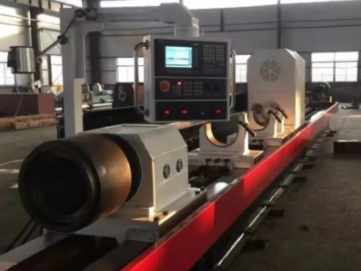
Deep hole boring pushes the boundaries of precision machining. It forces engineers to balance incredibly tight tolerances with extreme length-to-diameter (L/D) ratios. This delicate act is where many operations falter. When unresolved issues like vibration and poor chip removal arise, the consequences are severe. They lead to high scrap rates, frequent tool breakage, and costly unplanned downtime, directly impacting profitability. These challenges are not insurmountable, but they demand a deep understanding of both the physics at play and the equipment designed to control them. This guide provides a technical framework for evaluating your processes and equipment. You will learn how to make strategic adjustments to optimize your Deep Hole Boring Drilling Machine performance, turning a difficult task into a repeatable, stable, and profitable operation.
Key Takeaways
Vibration Control: Effective dampening requires a combination of tool geometry, machine rigidity, and specialized boring bar materials (e.g., carbide-reinforced or tuned bars).
Chip Management: Continuous evacuation is dependent on the synergy between coolant pressure, flow rate, and chip-breaker geometry.
Selection Criteria: Choosing a machine based on spindle stability and guide system precision is more critical than raw horsepower for deep-hole applications.
ROI Focus: Reducing cycle times through optimized parameters yields higher long-term value than minimizing initial tooling spend.
The Technical Roots of Instability in Deep Hole Boring
Success in deep hole boring hinges on controlling two primary physical challenges: harmonic vibration and chip packing. These are not minor inconveniences; they are fundamental forces that can derail an entire production run. Understanding their origins is the first step toward implementing effective solutions.
Understanding Harmonic Vibration
Every machining setup has a natural frequency. When the frequency of the cutting action matches this natural frequency, the system begins to resonate. This phenomenon, known as harmonic vibration or "chatter," is amplified dramatically in deep hole boring. The extended overhang of the boring bar acts like a long lever, magnifying even the slightest vibrations. The result is a poor surface finish, often with a distinct wavy pattern. More critically, chatter destroys dimensional accuracy, making it impossible to hold tight tolerances. It also accelerates tool wear, leading to premature failure of expensive cutting inserts and boring bars.
The Physics of Chip Packing
As a boring tool cuts deeper into a workpiece, the path for chip evacuation becomes longer and more restricted. Standard flood coolant methods are completely ineffective at depths exceeding a 10:1 L/D ratio. The chips, confined within the bore, begin to accumulate. Coolant flow struggles to push them out against friction and gravity. This "chip packing" or "bird-nesting" can rapidly escalate. It increases cutting forces, generates excessive heat, and can score the newly machined surface. In a worst-case scenario, the packed chips can seize the tool, causing catastrophic breakage of the boring bar and potentially scrapping a high-value workpiece.
Success Criteria
Defining success in deep hole boring goes beyond simply meeting the final blueprint tolerances. A truly stable and profitable process has several key characteristics:
Predictable Tool Life: You should be able to reliably predict how many parts a cutting edge can produce before it needs to be replaced. Unpredictable tool failure is a sign of an unstable process.
Process Repeatability: The first part should be identical to the last part without constant operator intervention and adjustments.
Consistent Surface Finish: The surface finish inside the bore must be consistent throughout its entire length, free from the marks of chatter or chip scoring.
Efficient Cycle Times: A stable process allows you to run at optimized speeds and feeds, minimizing the time required to produce each part.
Achieving this level of stability requires a systematic approach that addresses both the hardware and the process parameters.
Mitigating Vibration: Hardware and Parameter Strategies
Vibration is the primary enemy of precision in deep hole boring. Taming it requires a multi-faceted strategy that involves selecting the right hardware, optimizing cutting parameters, and ensuring the entire setup is rigid and secure. The goal is to either absorb the vibrational energy or shift the operating frequency away from the system's natural resonance point.
Boring Bar Selection
The boring bar is the most critical component in controlling vibration. Its material and construction determine its stiffness and ability to dampen vibrations. The choice depends heavily on the L/D ratio of the operation.
Boring Bar Material Comparison for L/D Ratios | Material | Typical L/D Ratio | Advantages | Disadvantages |
| Steel | Up to 4:1 | Cost-effective, readily available. | Low stiffness, prone to vibration at higher ratios. |
| Heavy Metal (Tungsten Alloy) | Up to 6:1 | Denser than steel, offers better inherent damping. | More expensive than steel, moderate stiffness increase. |
| Solid Carbide / Carbide Reinforced | Up to 10:1+ | Extremely high stiffness (modulus of elasticity), superior vibration resistance. | Highest cost, can be brittle if mishandled. |
Advanced Dampening Technologies
For the most demanding L/D ratios (often above 6:1), even a solid carbide bar may not be enough. This is where advanced dampening technologies become essential. These systems are built directly into the boring bar itself.
Passive Dampening: These bars contain a pre-tuned mass damper—a heavy weight suspended in a high-viscosity fluid or on polymer mounts. When the bar starts to vibrate, the internal mass moves out of phase, effectively canceling out the harmonic vibrations.
Active Dampening: A more sophisticated approach uses sensors to detect the onset of vibration. A controller then activates piezoelectric actuators to generate counter-vibrations in real-time, actively stabilizing the tool. These systems offer the best performance but come at a significant cost.
Integrating these technologies into your Deep Hole Boring Drilling Machine setup is a game-changer for extreme-depth applications.
Cutting Physics
Hardware alone is not the solution. You must adjust cutting parameters to work with the machine's dynamics. Simply slowing down is often counterproductive. The key is to find a "sweet spot" where the cutting frequency does not excite the machine's natural frequency.
Best Practices:
Vary Spindle Speed: If chatter occurs, incrementally increasing or decreasing the RPM can shift the cutting frequency out of the harmonic zone. A 10-15% change can often be enough to stabilize the cut.
Adjust Feed Rate: A higher feed rate increases the chip load on the cutting edge. This can sometimes create a more stable cutting condition by increasing the cutting force and "pre-loading" the boring bar, reducing its tendency to vibrate.
Use Appropriate Tool Nose Radius: A smaller nose radius reduces cutting forces and the likelihood of chatter. However, it may compromise surface finish and tool strength. A balance must be struck based on the application's requirements.
Workpiece Stabilization
The final piece of the vibration puzzle is the workpiece itself. Long, slender workpieces can vibrate just as much as the boring bar. It is crucial to provide adequate support along the length of the part. Using steady rests or traveling rests prevents the workpiece from deflecting under the cutting forces. Precision alignment is paramount; any misalignment between the headstock, tailstock, and steady rests will introduce stress and instability into the system, leading to dimensional errors and vibration.
Mastering Chip Removal: Fluid Dynamics and Tooling
Effective chip removal is non-negotiable in deep hole boring. While vibration affects precision, failed chip evacuation causes immediate and catastrophic failure. The entire process relies on a robust system that can reliably flush chips out of a long, confined space. This requires a deep understanding of coolant systems, fluid dynamics, and tool geometry.
Coolant Delivery Systems
The method of delivering coolant to the cutting edge and removing chips is critical. The two primary systems used in dedicated deep hole boring machines are the BTA system and the gundrill system. For boring larger diameters, the BTA system is dominant.
BTA (Boring and Trepanning Association) System: This is an internal chip removal system. High-pressure coolant is pumped through the space between the boring bar and the bore wall. The coolant flows to the cutting head, picks up the chips, and then forces them back through the center of the boring bar and out of the machine. It is highly efficient for larger diameter holes and is the standard for high-production deep hole boring.
External Spray Methods: Used in standard lathes or machining centers, this involves spraying high volumes of coolant at the mouth of the hole. This method is only effective for very shallow holes (L/D < 5:1) and fails quickly as depth increases, as it cannot overcome the back pressure and friction inside the bore.
Pressure vs. Volume
In deep hole boring, high-pressure coolant is essential. It's a common misconception that simply increasing the volume (gallons per minute) of coolant is sufficient. The reality is more complex.
High Pressure: Pressure (measured in PSI or bar) provides the force needed to propel chips out of the long bore. It must be high enough to overcome the friction of the chips against the bore wall and the back pressure created by the long column of fluid. Systems often run from 300 to 1,500 PSI or more.
High Volume: Volume (measured in GPM or L/min) ensures there is enough fluid to carry the mass of chips being generated. Insufficient volume will result in a thick slurry of chips and coolant that is difficult to move, leading to packing.
The ideal system provides both high pressure and high volume, tailored to the specific diameter and depth of the hole being machined.
Chip Breaker Geometry
The shape of the chip is just as important as the coolant system. Long, stringy chips are a nightmare for evacuation. They can wrap around the boring bar, clog the evacuation channel, and cause a "bird's nest." The goal is to produce short, manageable, "C" or "6" shaped chips that can be easily flushed out. This is achieved through the geometry of the cutting insert.
Designing the Ideal Chip:
Chip Breakers: Inserts for deep hole boring feature specially designed grooves and lands on their top surface. These features force the chip to curl tightly and break against the workpiece or the insert itself.
Edge Preparation: The preparation of the cutting edge (e.g., a hone or a T-land) affects chip formation and tool strength. A proper edge prep helps manage cutting forces and directs the chip into the breaker.
Feed Rate Influence: The feed rate directly impacts chip thickness. Too low a feed rate produces thin, stringy chips that are difficult to break. Increasing the feed can thicken the chip and promote proper breaking.
Monitoring Systems
Because chip packing can happen rapidly and without warning, advanced monitoring systems are a crucial safety net. They provide real-time feedback on the cutting conditions inside the bore.
Torque Sensors: These sensors monitor the load on the spindle motor. A sudden spike in torque is a clear indication that chips are beginning to pack and cutting forces are rising. The machine's CNC can be programmed to stop the feed or retract the tool when a preset torque limit is exceeded.
Flow Meters: By monitoring the flow rate of the returning coolant and chip slurry, these systems can detect a blockage. If the flow rate drops suddenly, it means the chip evacuation channel is clogged.
These systems transform the process from a reactive to a proactive one, preventing catastrophic failures before they happen.
Evaluating a Deep Hole Boring Drilling Machine for Your Facility
Choosing the right machine is the foundation for a successful deep hole boring operation. Unlike general-purpose lathes, a dedicated Deep Hole Boring Drilling Machine is engineered from the ground up to handle the unique stresses of high L/D ratio machining. Evaluating one requires looking beyond horsepower and spindle speed to the core attributes that ensure stability and precision.
Machine Rigidity and Bed Design
The machine's base is its first line of defense against vibration. Any vibration generated at the tool tip can be either absorbed and dissipated by a massive, well-designed machine bed or amplified by a light, flimsy one.
Material and Construction: Look for machines with cast iron or polymer concrete bases. These materials have excellent damping properties, far superior to fabricated steel weldments.
Bed Design: A wide, heavily-ribbed bed provides the torsional and bending stiffness needed to support the workpiece and boring bar without deflection. Box ways are often preferred over linear guides for their superior contact area and damping capacity in these heavy-duty applications.
Spindle and Guide Way Accuracy
Precision begins at the spindle. Any error here will be magnified at the end of a long boring bar.
Spindle Runout: Total indicated runout (TIR) should be minimal. High-quality spindles with precision bearings are essential to ensure the tool rotates perfectly on its axis.
Thermal Stability: Machining generates heat, which can cause components to expand and misalign. Look for features like chilled spindles and thermal compensation systems in the CNC that actively counteract thermal growth during long boring cycles.
Guide Way Straightness: The ways that guide the boring bar carriage must be perfectly straight and parallel to the spindle centerline over the entire travel of the machine. Any deviation will result in a tapered or bowed hole.
Automation and Integration
Modern CNC controls offer powerful features that are particularly valuable for deep hole boring. These capabilities move beyond simple G-code execution to intelligent process monitoring and control.
Real-Time Load Monitoring: As mentioned previously, the ability to monitor spindle torque or feed force is critical. A machine with integrated load monitoring can automatically adjust parameters or stop the process to prevent tool breakage.
Adaptive Feed Control: This advanced feature allows the CNC to automatically adjust the feed rate in real-time based on the measured cutting load. If it detects a light cut, it speeds up; if it detects a heavy cut or the beginning of chip packing, it slows down. This optimizes cycle time while maintaining process security.
Vendor Support and Implementation
Deep hole boring is a specialized discipline. The value of a machine vendor extends beyond the hardware itself. Their application engineering support can be the difference between a successful implementation and a frustrating struggle.
Application Expertise: Does the vendor have experienced engineers who understand your specific materials and applications? They should be able to provide proven recommendations for tooling, speeds, feeds, and coolant parameters.
Turnkey Solutions: For complex projects, consider vendors who offer a complete turnkey solution, including the machine, tooling, fixtures, and a guaranteed process. This shifts the implementation risk from you to the vendor.
Training and Support: Ensure the vendor provides comprehensive training for your operators and maintenance staff. Prompt and reliable after-sales support is crucial for minimizing downtime.
The Economics of Deep Hole Boring: TCO and ROI
Evaluating the financial viability of a deep hole boring operation requires looking at the Total Cost of Ownership (TCO) and Return on Investment (ROI), not just the initial purchase price of the machine. The true cost and value are revealed in the long-term operational efficiency and risk mitigation.
Beyond Purchase Price
Several significant costs extend beyond the initial capital expenditure for the machine.
Energy Consumption: High-pressure coolant pumps are power-hungry. The energy required to run a 1,000 PSI system continuously can be a substantial operating expense. Factor this into your cost-per-part calculation.
Specialized Consumables: Deep hole boring relies on high-performance tooling. Dampened boring bars, specialized inserts, and high-quality cutting oil are more expensive than standard tooling but are essential for process stability.
Filtration and Maintenance: Keeping the high-pressure coolant system clean and effective requires robust filtration systems and regular maintenance. The cost of filters and maintenance labor should be included in the TCO.
Cycle Time Optimization
This is where investment in the right technology pays off. A stable process, free from vibration, allows you to run at significantly more aggressive parameters. A machine and tooling system that can solve chatter might allow you to increase the feed rate by 50% or more. Over thousands of parts, this reduction in cycle time translates directly into a lower cost-per-part and increased shop capacity. The ability to run faster and more reliably is often the single biggest contributor to a strong ROI.
Risk Mitigation
What is the cost of a single catastrophic failure? In deep hole boring, workpieces are often made from expensive materials like Inconel, titanium, or specialized alloys. Scrapping a near-complete part due to a tool crash can cost thousands of dollars in material and prior machining time. "Smart" features like torque monitoring and adaptive feed control are not just for optimization; they are insurance policies. The ROI of these features is realized every time they prevent a crash, saving a valuable workpiece and an expensive boring bar. This risk mitigation is a critical, though sometimes overlooked, component of the overall economic picture.
Conclusion
Successfully navigating the challenges of deep hole boring is an exercise in synergy. It is the symbiotic relationship between a rigid, precise machine and a carefully tuned set of process parameters. Neither element can compensate for major deficiencies in the other. A stable machine provides the foundation upon which optimized speeds, feeds, and coolant strategies can be built. Conversely, even the best machine will fail if paired with incorrect tooling or a flawed chip evacuation plan. By addressing the core physics of vibration and chip removal, you can transform this demanding process into a predictable and profitable core competency.
For operators and procurement heads, the path forward is clear. Prioritize technical evidence and thorough trial runs over simplistic manufacturer claims. The right investment in technology and process knowledge pays dividends through reduced cycle times, lower scrap rates, and long-term operational stability.
FAQ
Q: What is the maximum L/D ratio achievable without specialized dampening?
A: Using a standard steel boring bar, the practical limit is around a 4:1 length-to-diameter ratio. With a solid carbide bar, this can be extended to approximately 6:1. Beyond that, vibration becomes a significant issue. To reliably machine at ratios of 10:1 or higher, specialized dampened boring bars are almost always required to absorb harmonic vibrations and maintain surface finish and accuracy.
Q: How does material hardness affect chip removal strategies?
A: Material properties dictate chip formation. Ductile materials like aluminum or mild steel tend to produce long, continuous chips that require aggressive chip breaker geometries and high coolant pressure to break and evacuate. Harder, brittle materials like cast iron or hardened steels naturally form smaller, broken chips, making evacuation easier. However, these abrasive materials can cause more wear on the tool and guide pads.
Q: Can a standard lathe be retrofitted to perform like a dedicated Deep Hole Boring Drilling Machine?
A: While a standard lathe can perform shallow boring operations, it cannot be effectively retrofitted to match a dedicated machine's performance at high L/D ratios. Dedicated machines have superior rigidity, purpose-built high-pressure coolant systems integrated through the spindle, and specialized guide bushings. A lathe lacks the foundational rigidity and the sealed, high-pressure fluid delivery system essential for reliable chip evacuation from deep holes.
Q: What are the first signs of vibration-induced tool wear?
A: The earliest signs often appear on the cutting insert's flank face (the side below the cutting edge). Look for uniform flank wear under stable conditions. If you see micro-chipping along the cutting edge or uneven, rapid wear patterns, it's a strong indicator of chatter. Another sign is a change in the sound of the cut, which may become louder or develop a distinct "humming" or "squealing" noise as vibration sets in.


