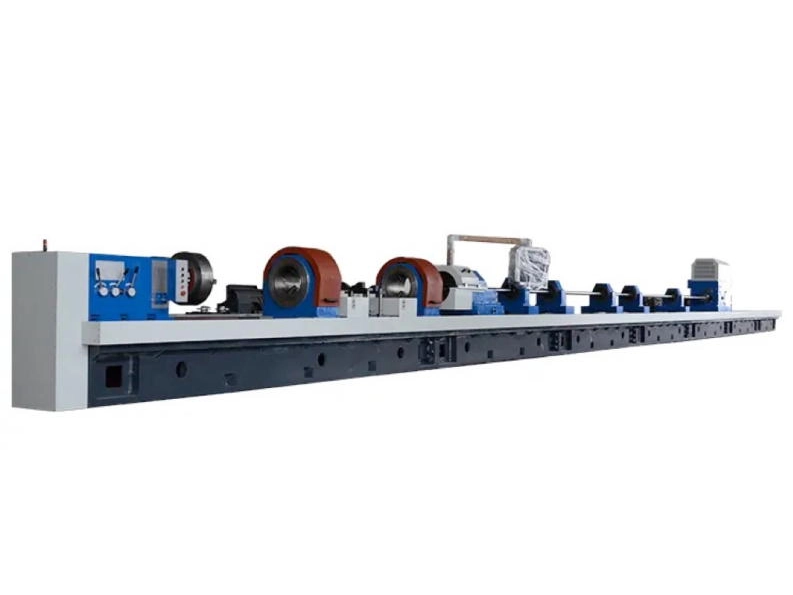
Deep hole drilling is a specialized machining process used to create holes with a high length-to-diameter ratio. This technique is crucial in various industries, including aerospace, oil and gas, and automotive, where precise and deep holes are often required for components like fuel injectors, hydraulic cylinders, and geological probes.
Deep hole drilling differs significantly from conventional drilling methods. It employs unique tools and techniques to handle the challenges posed by the depth of the holes, such as chip removal, cooling, and tool wear. This process is essential for creating high-precision holes that meet stringent specifications for diameter, straightness, and surface finish.
In this article, we will explore the deep hole drilling technique, its applications, and the various methods and technologies used in this specialized field.
What is deep hole drilling?
Deep hole drilling is a specialized machining process designed to create holes with a high length-to-diameter ratio, typically exceeding 10:1. This technique is essential for applications requiring precision and depth, such as in the aerospace, automotive, and oil and gas industries. The process involves the removal of material from a workpiece to create deep, narrow holes that meet specific dimensional and geometrical tolerances.
The deep hole drilling process is distinct from conventional drilling due to the unique challenges posed by the depth of the holes. These challenges include effective chip removal, cooling of the tool and workpiece, and minimizing tool wear and deflection. To address these challenges, deep hole drilling employs specialized tools, techniques, and technologies that differ significantly from those used in standard drilling operations.
Deep hole drilling is a critical process in various industries, including aerospace, automotive, and oil and gas. It’s used to create fuel injection nozzles, hydraulic cylinders, and geological probes, among other applications. The process is characterized by its ability to produce holes with a high length-to-diameter ratio, often exceeding 10:1, and requires specialized tools and techniques to address the challenges posed by the depth of the holes.
Applications of deep hole drilling
Deep hole drilling is a crucial process in various industries, including aerospace, automotive, and oil and gas. In the aerospace industry, it’s used for manufacturing components like fuel injectors and engine shafts, where precision and reliability are paramount. The automotive industry employs deep hole drilling for parts such as crankshafts and camshafts, ensuring optimal performance and longevity.
The oil and gas industry relies on deep hole drilling for exploration and production activities. This includes drilling geological probes to assess potential oil and gas reserves and creating deep wells for extraction. The technique is also used in the manufacturing of downhole tools and equipment, which are essential for drilling and completing wells.
Other applications of deep hole drilling include the production of medical devices, where precision and cleanliness are critical, and the manufacturing of military and defense components. In these applications, deep hole drilling ensures the integrity and functionality of the parts, meeting the stringent standards required in these industries.
Deep hole drilling techniques and technologies
Deep hole drilling techniques and technologies have evolved to address the unique challenges posed by the depth of the holes. These challenges include effective chip removal, cooling of the tool and workpiece, and minimizing tool wear and deflection. Specialized tools, such as gun drills, ejector drills, and BTA (Boring and Trepanning Association) drills, are used to achieve the desired precision and efficiency.
Gun drilling involves a single-tube system where coolant is supplied through the drill to the cutting edge, effectively removing chips and cooling the tool. This method is suitable for deep holes with a length-to-diameter ratio of up to 100:1. Ejector drilling, on the other hand, uses a double-tube system with a central rod that ejects chips and coolant from the hole. This method is effective for holes with a length-to-diameter ratio of up to 30:1.
BTA drilling is a highly efficient method for deep hole drilling, capable of producing holes with a diameter range from 10mm to 250mm and a length-to-diameter ratio of up to 100:1. This technique uses a double-tube system with the cutting action occurring at the end of the drill. The outer tube supplies coolant, while the inner tube removes chips. BTA drilling is known for its high material removal rate and is commonly used in large-scale industrial applications.
In addition to these techniques, advancements in drilling technologies, such as high-speed machining, multi-axis CNC drilling, and laser-assisted drilling, have further enhanced the capabilities of deep hole drilling. These technologies offer improved precision, efficiency, and flexibility, making deep hole drilling a vital process in modern manufacturing.
Challenges in deep hole drilling
Deep hole drilling presents several challenges that differ from conventional drilling methods. These challenges include effective chip removal, cooling of the tool and workpiece, and minimizing tool wear and deflection. The depth of the hole often leads to issues with chip packing, where chips become lodged in the hole and obstruct the cutting process. This can result in tool breakage, poor surface finish, and inaccurate hole dimensions.
Cooling is another critical challenge in deep hole drilling. The depth of the hole makes it difficult for coolant to reach the cutting edge, leading to increased tool temperature and potential tool failure. Inadequate cooling can also affect the workpiece, causing thermal distortion and compromising the integrity of the part.
Tool wear and deflection are additional challenges in deep hole drilling. The prolonged cutting process and the high pressures involved can lead to rapid tool wear, affecting the precision and efficiency of the drilling operation. Tool deflection, caused by the cutting forces and the long length of the drill, can result in inaccurate hole dimensions and poor surface finish.
To address these challenges, deep hole drilling employs specialized tools and techniques, such as gun drilling, ejector drilling, and BTA drilling. These methods incorporate features designed to improve chip removal, enhance cooling, and minimize tool wear and deflection. Additionally, advancements in drilling technologies, such as high-speed machining, multi-axis CNC drilling, and laser-assisted drilling, offer improved precision, efficiency, and flexibility in deep hole drilling operations.
Conclusion
Deep hole drilling is a specialized machining process that plays a critical role in various industries, including aerospace, automotive, and oil and gas. The technique involves the use of specialized tools and methods to address the unique challenges posed by the depth of the holes, such as chip removal, cooling, and tool wear.
Advancements in drilling technologies, such as high-speed machining, multi-axis CNC drilling, and laser-assisted drilling, have further enhanced the capabilities of deep hole drilling. These technologies offer improved precision, efficiency, and flexibility, making deep hole drilling a vital process in modern manufacturing.
As industries continue to demand higher precision and efficiency in their manufacturing processes, deep hole drilling will remain an essential technique. Ongoing research and development in drilling technologies will likely lead to further advancements in deep hole drilling, enabling even more complex and demanding applications in the future.


