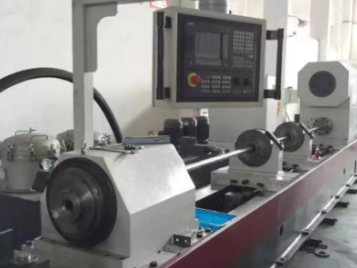
In the aerospace industry, there is no room for error. The performance and safety of every aircraft depend on the absolute precision of its components, where a microscopic flaw can lead to catastrophic failure. This uncompromising standard makes specialized manufacturing processes indispensable. Deep hole drilling, a technique for creating holes with high length-to-diameter (L/D) ratios, has evolved from a niche manual task into a cornerstone of modern aerospace production. Today, CNC-driven deep hole boring and drilling machines address the dual pressures of ensuring flight safety and meeting demanding production schedules. This guide explores the critical applications, technical foundations, and strategic considerations for deploying this essential technology in aerospace engineering.
Key Takeaways
Precision Limits: Deep hole machines achieve straightness and surface finishes (Ra) that standard machining centers cannot replicate at depth.
Technology Split: Gun drilling is the standard for small diameters (<50mm), while BTA (Boring and Trepanning Association) systems dominate larger, high-output aerospace components.
Material Efficiency: Trepanning capabilities allow for the recovery of expensive aerospace alloys (Titanium, Inconel) by removing a solid core rather than converting it to chips.
Critical Applications: Primary uses include landing gear cylinders, turbine shafts, and high-pressure fuel systems.
Technical Foundations: Gun Drilling vs. BTA in Aerospace
Deep hole drilling is not a one-size-fits-all process. The choice between the two primary methods, gun drilling and BTA systems, depends on the hole diameter, required production volume, and the specific component being manufactured. Both are designed to achieve exceptional straightness and surface finish at depths where conventional drilling would fail.
Gun Drilling Systems
Ideal for smaller diameters, typically ranging from 1mm to 50mm, gun drilling is a highly precise process. It uses a long, fluted tool with a single cutting edge. The defining characteristic of gun drilling is its coolant delivery method: high-pressure coolant is pumped through an internal channel in the drill shank directly to the cutting tip. This fluid serves three purposes: it lubricates the cutting edge, cools the tool and workpiece, and forcefully flushes chips back along an external V-shaped flute on the tool. This efficient chip evacuation prevents jamming and ensures a clean, accurate bore.
Common Aerospace Applications:
Turbine Blade Cooling Channels: Tiny, intricate holes that allow bleed air to cool the blades from within, enabling higher engine operating temperatures.
Hydraulic and Fuel Lines: Small-diameter, long-reach holes in manifolds and injector bodies.
Sensor and Actuator Holes: Precision bores for housing sensitive instrumentation and control components.
BTA (Boring and Trepanning Association) Systems
When hole diameters exceed 19mm and production rates are high, BTA systems become the preferred method. In contrast to gun drilling, the BTA process delivers coolant externally, flooding the cutting area around the outside of the drilling tool. The pressure differential forces chips and used coolant back through the inside of the drill tube and out through the machine's spindle. This internal chip evacuation allows for significantly higher feed rates and metal removal rates, making it highly efficient for larger components. The robust design of BTA tooling also provides superior rigidity for maintaining straightness in large-diameter bores.
Common Aerospace Applications:
Landing Gear Struts: Large, deep bores in high-strength steel and titanium for hydraulic cylinders.
Engine Rotor Shafts: Hollow shafts that reduce weight while maintaining torsional strength.
Actuator Cylinders: Main cylinders for flight control surfaces like flaps and ailerons.
Performance Benchmarks
Modern deep hole boring and drilling machines routinely achieve length-to-diameter ratios of 100:1, with some specialized applications pushing this to 200:1 or more. Bore straightness is a critical metric, often held to tolerances of 0.025mm per 250mm of depth. This level of precision is virtually impossible to achieve with standard twist drills or machining centers, which suffer from tool "wander" at much shallower depths.
Comparison of Gun Drilling and BTA Systems | Feature | Gun Drilling | BTA System |
| Typical Diameter Range | 1mm – 50mm | 19mm – 200mm+ |
| Coolant Flow | Internal to tool tip | External around tool |
| Chip Evacuation | External (V-groove) | Internal (through tool tube) |
| Metal Removal Rate | Lower | High (5-7x faster) |
| Primary Use Case | High precision, small diameters | High volume, large diameters |
Critical Aerospace Applications for Deep Hole Boring Drilling Machines
The unique capabilities of a Deep Hole Boring Drilling Machine make it essential for manufacturing flight-critical components where structural integrity, weight reduction, and hydraulic performance are paramount.
Engine and Propulsion Systems
Turbine & Rotor Shafts
Engine shafts must transmit immense torque while withstanding extreme temperatures and rotational forces. Boring a deep, concentric hole through the center of these shafts, often made from heat-resistant superalloys (HRSAs) like Inconel, significantly reduces weight without compromising structural integrity. This process demands exceptional straightness to maintain rotational balance and prevent vibration at high RPMs.
Fuel Injector Bodies
Modern jet engines rely on the precise atomization of fuel for combustion efficiency. The internal passages of fuel injector bodies contain multiple small-diameter, intersecting holes that must have a superior surface finish (low Ra value). A smooth finish ensures laminar fuel flow, preventing turbulence that could disrupt the spray pattern. Gun drilling is the only viable method for producing these features with the required accuracy and finish.
Landing Gear and Actuation
Shock Struts and Cylinders
Landing gear components are arguably some of the most highly stressed parts of an aircraft. They are typically machined from high-strength steel or titanium alloys. The main cylinders and shock struts require deep, perfectly straight bores to house hydraulic pistons and seals. Any deviation in straightness or roundness can cause seal failure, hydraulic leaks, and compromised landing gear performance.
Contour Boring
Many aerospace hydraulic cylinders are not simple straight bores. They often require internal profiles, such as changing diameters, tapers, or specific chambers, to manage hydraulic pressure during extension and retraction. CNC-controlled deep hole boring machines can perform contour boring, using specialized tooling to create these complex internal geometries in a single setup, ensuring perfect concentricity and alignment.
Structural and Hydraulic Components
Wing Spars and Ribs
The skeletal structure of an aircraft's wings and fuselage is held together by thousands of high-strength fasteners. The holes for these fasteners, especially in long structural components like wing spars, must be drilled with high precision to ensure proper load distribution. Specialized multi-axis gun drilling machines are used to create these holes accurately over long distances.
Hydraulic Valve Blocks
Hydraulic manifolds, or valve blocks, are the nerve centers of an aircraft's hydraulic system. They are solid blocks of metal with a complex network of internal fluid paths created by drilling intersecting holes. The accuracy of these intersections is critical to prevent internal leaks and ensure proper valve function. The process must also produce burr-free intersections, which is a key capability of advanced deep hole drilling processes.
Overcoming Aerospace Challenges: Material Integrity and Precision
Manufacturing aerospace components involves more than just creating a hole; it requires doing so without compromising the material's inherent properties. This is especially true when working with the exotic and expensive alloys common in the industry.
Machining Exotic Alloys
Materials like Titanium, Inconel, and precipitation-hardened (PH) stainless steels are chosen for their high strength-to-weight ratios and resistance to heat and corrosion. However, they are notoriously difficult to machine. These alloys have a tendency to "work harden," meaning the material becomes harder and more brittle when subjected to the heat and pressure of cutting. A specialized deep hole drilling process uses optimized tool geometries, coatings, and precise control of feeds and speeds to cut the material cleanly without inducing this damaging effect.
Thermal Management
The intense friction generated during deep hole drilling can cause extreme heat buildup at the cutting tip. If not managed, this heat can lead to rapid tool wear, poor surface finish, and even metallurgical damage to the workpiece. This is why deep hole machines are often called "fluid hogs." They employ high-pressure coolant systems that can pump over 125 liters per minute directly at the cutting zone. This massive flow of fluid is essential for dissipating heat effectively and evacuating chips from the deep bore.
Surface Integrity
For aerospace components subjected to cyclical loading, surface integrity is a life-or-death issue. A seemingly minor surface imperfection, like a microscopic crack or a stress riser from an aggressive machining process, can become a fatigue initiation point. Deep hole drilling processes are designed to produce excellent surface finishes (often as low as 0.4–0.8 μm Ra) that minimize these risks. This often reduces or eliminates the need for secondary finishing operations like honing or lapping, saving time and cost.
Chip Control
In a deep bore, a tangled nest of chips can instantly jam and break a tool. This is a catastrophic failure, as the broken tool may be impossible to remove from a multi-million-dollar workpiece. Advanced deep hole boring and drilling machines incorporate sophisticated sensors that monitor spindle torque, coolant pressure, and thrust. By analyzing this data in real-time, the machine's control can detect changes in chip formation that indicate impending tool wear or a potential jam, automatically adjusting parameters or stopping the process to prevent failure.
Evaluation Criteria: Selecting an Aerospace-Grade Deep Hole Boring Machine
Choosing the right machine for aerospace applications requires a detailed evaluation of its core systems and capabilities. The focus is on precision, reliability, and the total cost of ownership over the machine's life.
Spindle and Motion Control
To achieve the highest degree of bore straightness, particularly in long workpieces, the best practice is to use counter-rotation. This involves rotating the workpiece in one direction while the drill tool rotates in the opposite direction. This technique averages out any minor misalignments, effectively canceling tool wander. A machine must have a rigid headstock and a precisely aligned counter-rotating spindle to execute this effectively.
Filtration and Coolant Systems
The quality of the coolant is just as important as the quantity. Microscopic abrasive particles circulating in the coolant can ruin the surface finish and accelerate tool wear. Aerospace-grade machines mandate multi-stage filtration systems capable of removing particles down to 5-10 microns. This ensures that only clean, effective coolant reaches the cutting zone, protecting both the tool and the workpiece.
Automation and Industry 4.0
For Tier 1 and Tier 2 aerospace suppliers, throughput and process control are key. Modern machines integrate with robotic loading and unloading systems for unattended operation. They also feature Industry 4.0 capabilities, such as real-time tool wear monitoring and data logging for every part produced. This data is critical for quality control and meets the strict traceability requirements of standards like AS9100.
TCO (Total Cost of Ownership) Drivers
The initial investment in a high-quality machine is significant, but a TCO analysis often reveals its long-term value. Key drivers include:
Tooling Life vs. Cycle Time: A rigid, precise machine allows for more aggressive, yet stable, cutting parameters, optimizing the balance between how long a tool lasts and how quickly a part is made.
Material Recovery: For large-diameter holes in expensive alloys, trepanning is a game-changer. Instead of turning the entire volume of the hole into low-value chips, this process removes a solid core of material that can be recycled or used for smaller parts.
Reduction of Secondary Operations: The ability to achieve final size and surface finish in a single operation eliminates the need for costly and time-consuming downstream processes like honing.
Implementation Risks and Success Factors
Successfully integrating a deep hole drilling capability requires attention to more than just the machine itself. Several operational factors can determine the success or failure of the implementation.
Setup Rigidity
Vibration is the enemy of precision machining. In long-bed machines used for parts like landing gear struts, ensuring a rigid setup is critical. This includes a solid foundation for the machine, robust workpiece clamping, and the use of steady rests to support the workpiece and dampening devices to support the long drill tube. Failure to manage vibration results in "chatter" marks on the bore surface, poor tool life, and dimensional inaccuracies.
Operator Expertise
Deep hole drilling operates on a different logic than conventional CNC milling or turning. Operators need specialized training to understand the nuances of tool selection, coolant management, and interpreting sensor feedback. They must learn to "listen" to the process to identify subtle changes that signal a problem. A successful implementation depends on investing in this operator upskilling.
Compliance and Documentation
The aerospace industry demands complete traceability. Every critical component must have a documented manufacturing history. The chosen machine must have robust data logging capabilities to record all cutting parameters for each operation. This data is essential for quality audits and for meeting the stringent documentation requirements of aerospace OEMs and regulatory bodies like the FAA.
Conclusion
The Deep Hole Boring Drilling Machine is more than just a piece of equipment; it is a strategic enabler for the aerospace industry. By producing deep, straight, and precise bores in the most challenging materials, these machines break production bottlenecks and make modern aircraft designs possible. They are fundamental to creating components that are lighter, stronger, and more reliable. Looking ahead, the industry is moving toward hybrid machines that combine deep hole drilling with other capabilities like milling and contouring. This "one-and-done" approach aims to further reduce setups, improve accuracy, and compress lead times, ensuring that this critical technology continues to evolve with the ever-increasing demands of aerospace engineering.
FAQ
Q: What is the maximum depth-to-diameter ratio for aerospace drilling?
A: While L/D ratios of 100:1 are common, specialized BTA and gun drilling setups can achieve ratios of 200:1 or even higher for specific applications. The practical limit often depends more on the material, required straightness tolerance, and the rigidity of the machine and tooling setup.
Q: Can deep hole machines handle non-symmetrical aerospace parts?
A: Yes. While rotating a symmetrical part is ideal, non-symmetrical or prismatic parts, like hydraulic manifolds or complex structural components, can be processed. This is typically done on multi-axis gun drilling centers where the part remains stationary while the tool moves and rotates.
Q: How does trepanning save costs in aerospace?
A: Trepanning cuts an annular groove, removing a solid core of material instead of converting it all to chips. In aerospace, where materials like titanium or Inconel can cost hundreds of dollars per kilogram, this recovered core has significant value. It can be used as raw material for other smaller parts, dramatically reducing overall material waste and cost.
Q: What surface finish can be achieved without secondary honing?
A: Depending on the material, tooling, and cutting parameters, a modern deep hole drilling process can achieve surface finishes as low as 0.4–0.8 μm Ra. This exceptional finish often meets the final specification for hydraulic cylinders and other critical components, eliminating the need for subsequent honing or polishing operations.


