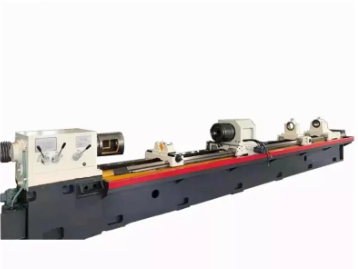
In modern manufacturing, there exists a critical precision gap. Standard CNC machining centers excel at many tasks, but they encounter their limits when the depth of a hole must exceed its diameter by a ratio of 10:1 or more. Beyond this point, issues like tool "drift," poor surface finish, and inconsistent concentricity become unavoidable. This is where a specialized solution is required. The modern Deep Hole Boring Drilling Machine emerges not just as a tool, but as a strategic asset designed for extreme length, straightness, and finishing. What was once a niche, outsourced process has now become a core competitive advantage, empowering industries to achieve unprecedented levels of performance and reliability in their most critical components. This article explores the five key industries transformed by this technology.
Key Takeaways
Critical Thresholds: Dedicated deep hole boring is essential for L/D ratios up to 100:1 or higher where concentricity is non-negotiable.
Economic Impact: Transitioning to specialized machines reduces "drift" scrap rates and eliminates secondary finishing operations.
Technology Convergence: Integration of BTA (Boring and Trepanning Association) and Gun Drilling technologies allows for versatility across materials from aluminum to Inconel.
Strategic ROI: High initial TCO is offset by "Single Setup" efficiencies and the ability to process complex, high-value workpieces.
1. Aerospace and Defense: Achieving Critical Straightness in High-Strength Alloys
The aerospace and defense sector operates on a foundation of absolute precision and material integrity. Failure is not an option when machining components like aircraft landing gear, missile actuator barrels, or gas turbine shafts. These parts are often forged from incredibly tough materials such as titanium, Inconel, and other high-nickel superalloys, which are notoriously difficult to machine.
The Challenge
The primary challenge lies in creating long, perfectly straight bores through these demanding materials. Conventional drilling methods often lead to work-hardening, where the material becomes even harder and more brittle due to the heat and stress of machining. This not only causes excessive tool wear but also introduces microscopic stress fractures that can compromise the component's structural integrity. Achieving a straight hole over several feet in such materials is nearly impossible with standard equipment.
The Revolution
Precision deep hole boring machines have revolutionized this process with a key technology: counter-rotation. In this setup, both the cutting tool and the workpiece rotate simultaneously in opposite directions. This dynamic balancing of forces cancels out gravitational sag and the natural tendency of the drill to wander. The result is a dramatic improvement in concentricity, with specialized machines capable of achieving tolerances as tight as 0.009 inches over bore depths of many feet. This level of precision ensures that components like hydraulic actuators operate smoothly and reliably under extreme loads.
Decision Lens
When selecting a machine for aerospace applications, engineers and procurement managers must look beyond basic specifications. Key evaluation criteria include:
Real-Time Torque Monitoring: Advanced sensors that detect subtle changes in cutting force are crucial. They can signal the control system to adjust feed rates or spindle speeds automatically, preventing the onset of work-hardening and catastrophic tool failure.
Vibration Dampening Systems: The machine's bed and structural components must be exceptionally rigid. Integrated dampening technologies absorb micro-vibrations that would otherwise degrade the surface finish and accuracy of the bore, especially when working with expensive aerospace alloys.
2. Energy and Power Generation: Large-Scale Stability for Massive Components
In the energy sector, from nuclear to wind power, components are often colossal. Turbine housings, massive generator frames, and heat exchanger tube sheets can weigh many tons and require complex machining operations. The sheer scale and value of these workpieces mean that any error can lead to astronomical financial losses and project delays.
The Challenge
The main difficulty in processing these large-scale parts is maintaining accuracy across multiple operations. Traditionally, a huge component like a turbine housing would need to be moved between several different machines—a boring mill for the main bore, a milling machine for flanges, and a drill press for bolt holes. Each time the workpiece is unclamped, moved, and re-clamped, the risk of introducing alignment errors increases exponentially. These small deviations can stack up, leading to parts that do not fit together correctly during final assembly.
The Revolution
The "Single Setup" advantage offered by modern multi-function boring machines is a game-changer. A single, robust Deep Hole Boring Drilling Machine can perform deep hole boring, milling, tapping, and flange facing in one continuous, uninterrupted sequence. By eliminating the need to move the workpiece, re-clamping errors are completely removed from the equation. This ensures that all machined features are perfectly aligned relative to each other, which is critical for the stability and efficiency of power generation equipment.
Evaluation Criteria
For these heavy-duty applications, the focus shifts to machine construction and material efficiency.
Bed Rigidity and Load Capacity: The machine's foundation must be engineered to support and stabilize workpieces weighing tens of tons without any flex or distortion during aggressive cutting operations.
Trepanning Capability:For large-diameter bores, trepanning is a highly efficient process. Instead of turning the entire volume of the hole into chips, the tool cuts a narrow annular groove, leaving a solid core of valuable material that can be recovered and used for other smaller components. This not only saves material costs but also significantly reduces machine horsepower requirements and cycle times compared to traditional boring.
3. Oil and Gas: Navigating Extreme Depths in Downhole Tooling
The oil and gas industry pushes the boundaries of engineering by drilling miles beneath the Earth's surface. The "downhole" tools used in these operations, such as drill collars, mandrels, and measurement-while-drilling (MWD) components, must endure immense pressure, high temperatures, and corrosive environments. Their reliability is paramount, and it begins with the quality of the bore.
The Challenge
Manufacturing downhole tooling involves creating exceptionally deep, perfectly straight bores through long sections of specialized materials, including non-magnetic stainless steels and other tough alloys. Any deviation or "drift" in the bore can cause imbalances that lead to destructive vibrations during drilling operations. Furthermore, efficiently removing chips from a hole that can be 30 feet deep or more is a significant engineering hurdle.
The Revolution
The industry has widely adopted the BTA (Boring and Trepanning Association) drilling process, also known as the Single Tube System (STS), for this task. BTA drilling is ideal for holes with diameters greater than about 1 inch. In this system, high-pressure coolant is pumped to the cutting head through the space between the drill tube and the wall of the bored hole. The coolant then forces the metal chips back through the hollow center of the drill tube, providing continuous and highly effective chip evacuation. This constant flow prevents chips from packing and breaking the tool, allowing for faster and deeper drilling.
Implementation Risk
Despite its effectiveness, the BTA process carries inherent risks, especially when creating "blind holes" (holes that do not go all the way through the workpiece). Managing chip evacuation becomes even more critical in these scenarios. A primary concern is tool breakage. If a cutting tool breaks deep inside a multi-thousand-dollar workpiece, the entire component may have to be scrapped. To mitigate this risk, modern machines are equipped with real-time thrust and torque sensors. These systems constantly monitor cutting conditions and can automatically shut down the machine if they detect a spike in force that indicates a chip jam or a dulling tool, preventing a costly failure before it happens.
4. Automotive and Heavy Equipment: High-Throughput Precision for Hydraulics
In the automotive and heavy equipment industries, manufacturing is a numbers game. The mass production of components like hydraulic cylinders, engine blocks, transmission shafts, and fuel injection systems demands a perfect balance between micron-level accuracy and rapid cycle times. Every second saved and every part produced to specification directly impacts the bottom line.
The Challenge
The core challenge is achieving consistent precision at high volumes. Hydraulic cylinders, for example, require a perfectly round and smooth internal bore to ensure a proper seal and efficient operation. Engine blocks need precisely aligned oil galleries and cylinder bores. Producing these features using multiple traditional drilling passes is slow, labor-intensive, and prone to inconsistencies. Reducing the cost-per-part without sacrificing quality is the ultimate goal.
The Revolution
This industry is at the forefront of integrating deep hole boring machines into fully automated work cells. These advanced systems often feature robotic arms for loading and unloading raw materials and finished parts, minimizing human intervention and maximizing machine uptime. The boring machines themselves are becoming smarter, equipped with AI-driven adaptive feed rate controls. These systems use sensors to analyze cutting conditions in real-time and automatically optimize the drilling speed and feed to achieve the fastest possible cycle time while maintaining the required surface finish and dimensional accuracy.
ROI Driver
The return on investment (ROI) in this sector is driven by process consolidation and speed. A single, high-speed BTA boring operation can replace several slower, conventional drilling and reaming passes. This not only slashes the cycle time per part but also reduces tooling costs, labor requirements, and the factory floor space needed for production. By transforming a multi-step process into a single, highly efficient operation, manufacturers significantly lower their cost-per-part, gaining a crucial competitive edge in a price-sensitive market.
5. Mold, Die, and Tooling: Complex Thermal Management via Deep Cooling Channels
The quality of a plastic injection molded part is heavily dependent on the quality of the mold itself. Massive, complex molds, often costing upwards of $100,000, are used to produce everything from car bumpers to medical devices. A critical feature of these molds is an intricate network of deep cooling channels (or water lines) that regulate the temperature during the injection process.
The Challenge
The primary difficulty is drilling these deep, often intersecting, cooling channels with absolute precision. Proper thermal management requires that these channels are placed exactly as designed to ensure the plastic cools evenly. If a drill "drifts" even slightly off its intended path, it can create hot spots in the mold, leading to warped parts, surface defects, and longer cycle times. Worse, a wandering drill could break through into the mold cavity or another channel, ruining the entire multi-ton workpiece in an instant.
The Revolution
CNC-controlled deep hole boring machines provide the necessary precision to tackle this challenge. Their rigid construction and advanced guidance systems allow them to drill long, straight holes at precise angles. They can also create intersecting bores without deflection and perform specialized operations like flat-bottom hole finishing, which is sometimes required for specific plug or sensor installations. This level of control gives mold designers the freedom to create more complex and efficient cooling layouts than was ever possible with traditional methods.
Technical Edge
For mold making, the surface finish inside the cooling channels is also important for preventing corrosion and ensuring efficient heat transfer. Here, STS (Single Tube System) technology, the common implementation of the BTA process, offers a significant technical edge. The burnishing effect of the guide pads on the BTA tool head produces an excellent internal surface finish as it drills. In many cases, the resulting finish is so smooth that it requires zero additional honing or polishing, eliminating a costly and time-consuming secondary operation and getting the mold into production faster.
Strategic Evaluation: Choosing the Right Deep Hole Boring Drilling Machine
Selecting the right machine is a strategic decision that extends far beyond the initial purchase price. A thorough evaluation process ensures the investment will deliver long-term value, efficiency, and a competitive advantage. This requires a deep understanding of the core technologies, total ownership costs, and future industry trends.
BTA vs. Gun Drilling
The two primary technologies in deep hole drilling are BTA drilling and Gun Drilling. The choice between them is largely dictated by the hole diameter.
| Feature | Gun Drilling | BTA (STS) Drilling |
| Optimal Diameter Range | Typically for diameters under 35mm (approx. 1.375"). Best for very small diameters. | For diameters from 12mm up to 250mm+ (approx. 0.5" to 10"+). |
| Chip Evacuation | External. Coolant is fed through the tool; chips exit via an external V-shaped groove. | Internal. Coolant is fed externally; chips are forced back through the hollow drill tube. |
| Penetration Rate | Slower, due to less efficient chip removal. | Significantly faster (5-7 times) than gun drilling in its effective range. |
| Tool Rigidity | Less rigid, making it more susceptible to drift in very deep holes. | More rigid tube design, providing better straightness and stability. |
Total Cost of Ownership (TCO)
Focusing solely on the sticker price is a common mistake. The TCO provides a more realistic financial picture. Key factors to account for include:
High-Pressure Coolant Systems: These are not optional accessories; they are mission-critical systems. They require robust pumps, chilling units, and high-capacity reservoirs, adding significant cost.
Specialized Filtration: To protect the pumps and ensure a good surface finish, multi-stage filtration systems (often down to 10-20 microns) are necessary to remove fine metal chips from the coolant.
IoT-Enabled Predictive Maintenance: Modern machines feature sensors that monitor the health of spindles, pumps, and drives. This data can predict failures before they occur, reducing unplanned downtime but often requiring a software subscription or specialized service contract.
Future-Proofing (2026 Trends)
The manufacturing landscape is evolving. To ensure a machine remains competitive, consider these emerging trends:
"Smart & Green" Machining: Environmental regulations and energy costs are driving innovation. Look for features like Minimum Quantity Lubrication (MQL) systems, which drastically reduce coolant usage, and energy-efficient drive systems.
AI-Driven Process Optimization: The next generation of machines will use artificial intelligence not just for adaptive feed rates but also to recommend optimal tooling, predict tool life, and self-diagnose process issues, further reducing reliance on operator expertise.
Shortlisting Logic
Finally, when narrowing down potential suppliers, prioritize partners over mere vendors. Look for manufacturers that offer application-specific testing—the ability to run trials on your actual parts and materials. Furthermore, robust and accessible local technical support is invaluable, especially when dealing with complex tool-path programming and process troubleshooting. A strong support network can significantly shorten the learning curve and maximize the machine's productivity from day one.
Conclusion
The role of precision deep hole boring has fundamentally shifted. It is no longer a simple process of "making a hole," but a sophisticated engineering discipline essential for ensuring structural integrity, thermal efficiency, and operational reliability in high-value components. Across aerospace, energy, automotive, and other critical sectors, this technology enables process consolidation, reduces scrap rates, and unlocks new design possibilities. For industries where failure carries catastrophic consequences, the investment in a dedicated Deep Hole Boring Drilling Machine is not merely an operational upgrade; it is the primary driver of manufacturing scalability, risk mitigation, and long-term market leadership.
FAQ
Q: What is the maximum L/D ratio achievable with a deep hole boring machine?
A: While standard CNC centers struggle beyond a 10:1 length-to-diameter (L/D) ratio, dedicated deep hole boring machines are engineered to handle ratios of 100:1, 200:1, and in some specialized applications, even higher. Their design, which includes specialized tool guidance and high-pressure coolant systems, is built specifically to maintain straightness and evacuate chips over these extreme distances.
Q: How does counter-rotation improve hole straightness?
A: Counter-rotation involves rotating both the tool and the workpiece in opposite directions. This creates a balancing effect that cancels out the forces of gravity and tool pressure which would otherwise cause the drill bit to "wander" or drift off-center. By neutralizing these deflection forces, the tool naturally follows the central axis of rotation, resulting in a significantly straighter, more concentric hole.
Q: Can these machines handle "blind holes" effectively?
A: Yes, they are highly effective at machining blind holes (holes that do not exit the other side of the workpiece). Success hinges on efficient chip evacuation. BTA/STS systems are particularly good at this, as they use coolant flow to actively flush chips back through the tool's center. Modern machines also use sensor-based depth control and torque monitoring to prevent chip packing and ensure precise final depth without tool breakage.
Q: What is the difference between BTA and STS drilling?
A: These terms are often used interchangeably. BTA stands for the Boring and Trepanning Association, which standardized the process. STS, or Single Tube System, is the most common technical name for the system itself, where a single tube is used for both structural support and internal chip removal. In essence, BTA is the name of the process, and STS is the system that executes it.
Q: What maintenance is unique to deep hole boring equipment?
A: The most critical maintenance tasks are unique to the high-pressure coolant system. This includes regularly inspecting and replacing high-pressure seals on the pressure head to prevent leaks, which can be a safety hazard and cause process failure. Additionally, maintaining the quality of the coolant filtration is paramount. Clogged filters can reduce flow, leading to poor chip evacuation and tool failure.


