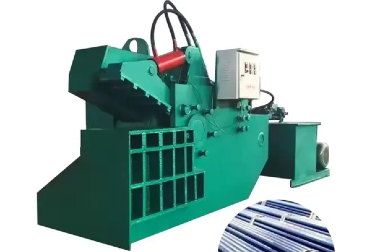
A shearing machine is one of the most essential tools in the field of metal fabrication. It is specifically designed to cut sheet metal, plates, and bars into precise dimensions using the principle of shear force rather than melting, grinding, or sawing. Due to its efficiency and cost-effectiveness, the shearing machine has become indispensable in many manufacturing industries, including automotive, construction, shipbuilding, and appliance production.
In modern metalworking, where large quantities of sheet metal require accurate and fast processing, shearing machines provide a simple yet powerful solution. Unlike advanced methods such as laser cutting or waterjet cutting, which involve higher costs and complexity, the shearing machine offers a straightforward process ideal for straight-line cutting tasks.
This article will explain in detail how a shearing machine works, starting with its fundamental principles, step-by-step working process, different driving methods, and the role of key structural components. It will also highlight the advantages and limitations of the shearing process and conclude with insights into its applications in modern manufacturing. Finally, readers will be introduced to Dezhou Shengxin Machinery Equipment Co., Ltd., a trusted supplier of high-quality shearing machines.
Overview of the Working Principle of a Shearing Machine
The fundamental principle behind a shearing machine is simple but effective: the machine cuts metal by applying shear stress that exceeds the material’s shear strength. This process relies on two blades – a fixed lower blade and a moving upper blade. When the upper blade moves downward with sufficient force against the metal sheet positioned on the lower blade, the material is sheared into two separate pieces.
The shearing process itself consists of four stages. First, the metal sheet is clamped securely in place. Next, the upper blade descends and applies pressure to the material. Once the applied force surpasses the metal’s shear strength, the material fractures along the line of contact. Finally, the cut section is released, leaving behind a clean, straight edge.
Compared with other cutting methods, shearing is faster, simpler, and more economical for straight cuts. For example, laser cutting can achieve highly precise and complex shapes but requires significant investment in machinery, energy, and maintenance. Plasma cutting, on the other hand, is effective for thicker materials but often produces rougher edges and heat-affected zones. In contrast, a shearing machine provides clean, efficient, and low-cost cutting, particularly suitable for high-volume production of rectangular or square metal pieces.
Main Working Process of a Shearing Machine
The operation of a shearing machine can be broken down into three primary steps:
1. Material Positioning and Clamping
Before cutting begins, the sheet metal must be properly positioned on the machine’s worktable. A hold-down or clamping device is used to secure the material firmly in place. This prevents unwanted movement during the cutting process and ensures accuracy.
2. Blade Movement and Shearing
Once the material is secured, the upper blade moves downward toward the stationary lower blade. As the two blades come into close proximity, they apply shear force to the sheet. The material is cut once the applied stress exceeds its shear strength, creating a clean separation.
3. Completion and Product Output
After the cutting action, the machine releases the material. The result is a cleanly cut metal sheet or strip, typically with straight edges. These pieces can then proceed to further fabrication processes such as bending, welding, or assembly.
This workflow makes the shearing machine an efficient solution for industries requiring repetitive, straight-line cuts in metal sheets.
Influence of Driving Methods on Shearing Operation
The type of drive mechanism in a shearing machine significantly impacts its performance, speed, and capacity. The three main types are:
1. Mechanical Drive
Mechanical shearing machines use a flywheel and clutch mechanism to move the upper blade. They are known for their fast operation and are typically used for cutting thin to medium-thickness sheets. While cost-effective, they may not be suitable for cutting very thick materials.
2. Hydraulic Drive
Hydraulic shearing machines rely on hydraulic cylinders to power the blades. They provide strong and stable cutting force, making them ideal for heavy-duty applications and thicker sheets. Hydraulic systems also allow smoother operation and greater control.
3. CNC Drive (Computer Numerical Control)
CNC shearing machines integrate programmable digital control systems. Operators can set cutting dimensions, angles, and repetition cycles through software. This enables high precision, automation, and efficiency, making CNC shearing machines perfect for large-scale and high-accuracy production environments.
Role of Key Structural Components in Operation
The effectiveness of a shearing machine depends on the synergy of its core components:
Upper and Lower Blades – The heart of the machine, responsible for the actual cutting. Blade quality determines the smoothness and precision of the cut.
Clamping Device – Holds the material firmly to avoid slipping or shifting during cutting. This ensures accurate and safe operation.
Drive System – Supplies the power for blade movement, whether mechanical, hydraulic, or CNC-controlled.
Control System – Can be manual, semi-automatic, or fully automated, depending on machine type. Advanced CNC controls allow for high efficiency and repeatability.
Worktable and Positioning Guides – Provide support for the material and help align it correctly for precise cutting.
These components work in harmony to ensure reliability, consistency, and efficiency in every cutting operation.
Advantages of the Shearing Process
Shearing machines provide several important advantages that make them a preferred choice for many industries:
High Cutting Efficiency
A shearing machine delivers high cutting efficiency by processing large volumes of sheet metal quickly and accurately. This makes it highly suitable for mass production industries where speed and precision are critical factors for meeting demand.
Simple Technology and Easy Operation
The shearing machine operates on a straightforward principle, making it simple to learn and control. Operators require minimal training, and the intuitive process allows them to achieve precise cuts without complex technical knowledge.
Low Operating Costs
Compared to advanced cutting technologies, the shearing machine consumes less energy and has fewer maintenance requirements. Its durable design ensures longer service life while keeping production costs low, making it an economical choice for manufacturers.
Minimal Material Waste
Using a shearing machine results in clean, straight cuts with minimal scrap. This reduces material waste and enhances overall resource utilization, ensuring higher efficiency and cost-effectiveness in metal fabrication projects.
These benefits explain why the shearing machine continues to be a cornerstone of metal processing facilities worldwide.
Conclusion
The shearing machine is a simple yet powerful tool that has stood the test of time in the metalworking industry. By using the principle of shear force with upper and lower blades, it provides fast, efficient, and economical straight-line cutting for sheet metals. Its applications span across automotive, construction, shipbuilding, home appliance manufacturing, and many other industries.
While it does have limitations—such as producing burrs and being restricted to straight cuts—the advantages of efficiency, cost savings, and ease of operation make the shearing machine indispensable in modern production. As industries continue to demand faster and more precise metal processing, innovations such as CNC control and hydraulic systems are further enhancing the capabilities of these machines.
For businesses seeking reliable, high-quality shearing machines, Dezhou Shengxin Machinery Equipment Co., Ltd. is a trusted partner. With years of expertise in designing and manufacturing advanced shearing equipment, the company provides solutions tailored to customer needs, from mechanical and hydraulic shearing machines to CNC models. Their commitment to quality, durability, and customer service ensures that clients achieve maximum efficiency and long-term value.


