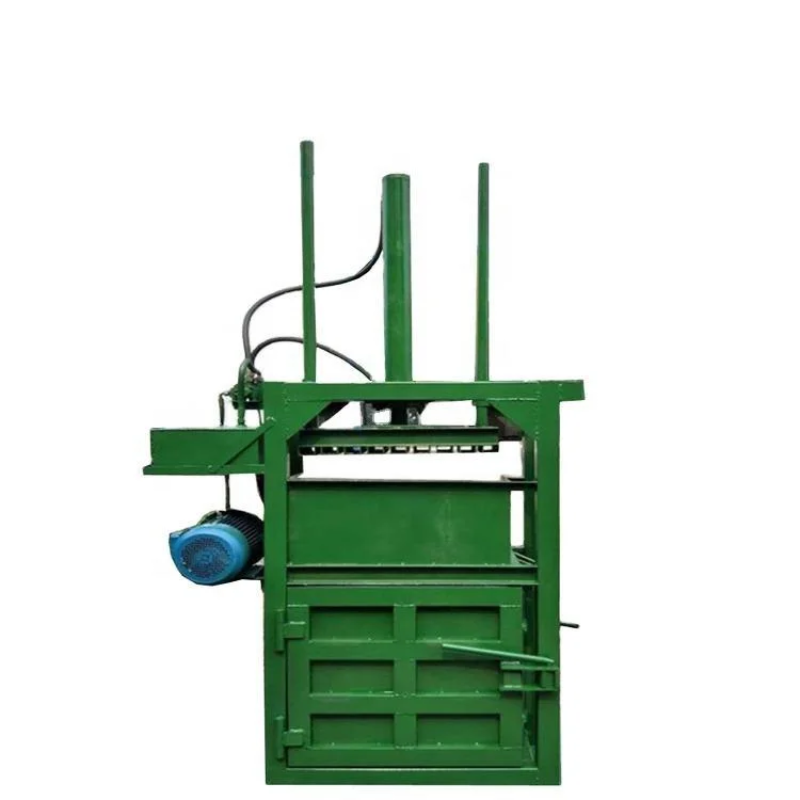
A vertical baler machine helps businesses save money quickly by pressing waste into small bales. Many small and medium businesses pick a vertical baler because it fits in small spaces. It also handles different amounts of waste. Some main benefits are:
Lower waste disposal costs because the waste takes up less space.
Less work needed because the machine is easy to use.
Better waste control by keeping recycling neat.
A vertical baler helps stores, warehouses, and recycling centers handle waste better. When companies use a baler, they save storage space. They also spend less on moving waste and make waste management better.
Key Takeaways
Cost Savings with a Vertical Baler Machine
Lower Disposal Fees
A vertical baler machine squeezes waste into small bales. This makes the waste take up less space. When waste is smaller, trucks come less often. This means businesses pay less for waste pickup. Many companies notice big savings each month after using a baler. For example, some save between 30% and 50% on waste and transport costs. The table below shows how much money a business can save every month:
| Benefit Area | Before Baler | After Baler | Improvement |
| Monthly Transport Costs | $8,000 | $3,900 | 51.25% savings |
Most businesses save about $3,200 each month on waste costs. The baler helps by making waste smaller, so there are fewer pickups. Less waste means less money spent on moving and dumping it. Some companies also use the baler to meet recycling rules. This can help them earn extra money by selling things like paper or cardboard.
Tip: Making waste smaller saves money and keeps the workplace neat and tidy.
Reduced Labor
A vertical baler makes handling waste easier. Workers do not have to spend a lot of time breaking down boxes. They also do not need to bag recyclables by hand. The baler does the hard work for them. Staff just load the waste, press a button, and the machine does the rest. This means less heavy lifting and faster work.
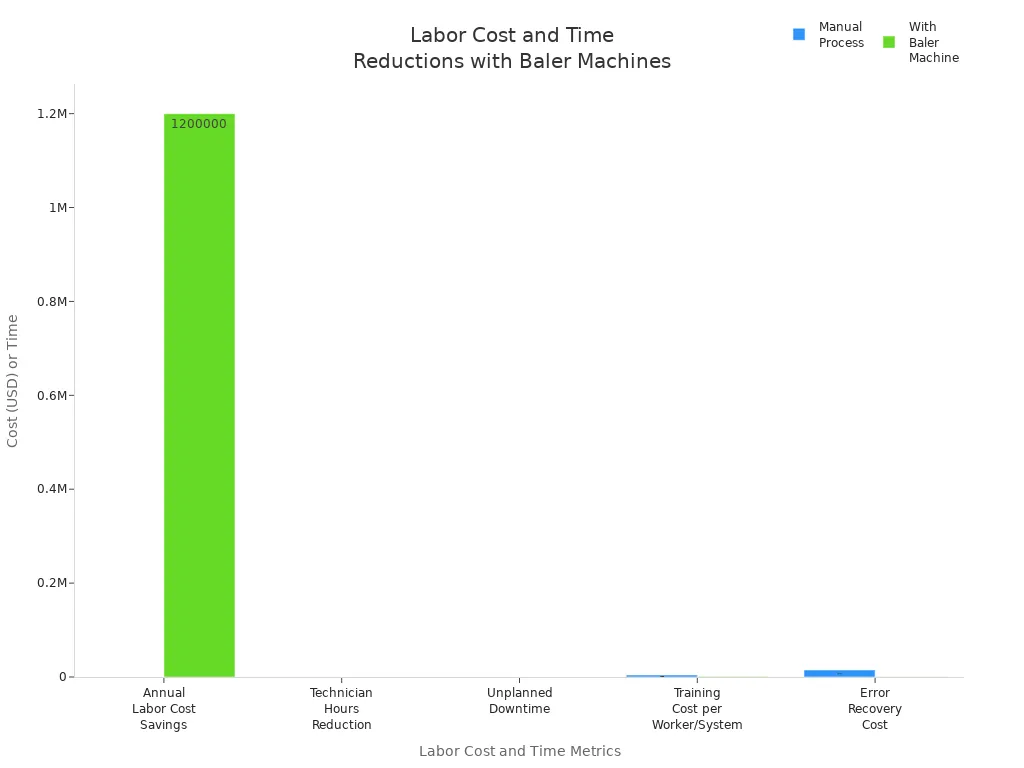
Labor costs go down a lot with a baler. With a baler, workers spend less time on waste. For example, hours spent on waste can drop from 38 to 10.6 each week. That is a 72% drop. Manual work for waste can go down by up to 91%. The table below shows these savings:
| Metric | Manual Process | With Baler Machine |
| Annual Labor Cost Savings | N/A | $1.2 million/year |
| Technician Hours Reduction | 38 hours/week | 10.6 hours/week (72% reduction) |
| Manual Labor for Waste Handling | N/A | 91% reduction |
| Unplanned Downtime | 3.7 days/year | 0.2 days/year (94% reduction) |
| Labor Cost Avoidance per Unit | N/A | $230,000/year (3-shift operation) |
Vertical balers are easy to learn. Most workers can use the machine after a short lesson. The controls are simple and safe. Any worker can help with waste, not just experts. The “bale-as-you-go” method keeps the area clean and helps everyone work better.
Space Efficiency
Many businesses do not have much room. A vertical baler is tall and slim, so it fits in small spaces. It does not need as much room as a horizontal baler. You can put it in a corner or next to other machines. This helps businesses avoid spending money to make more space.
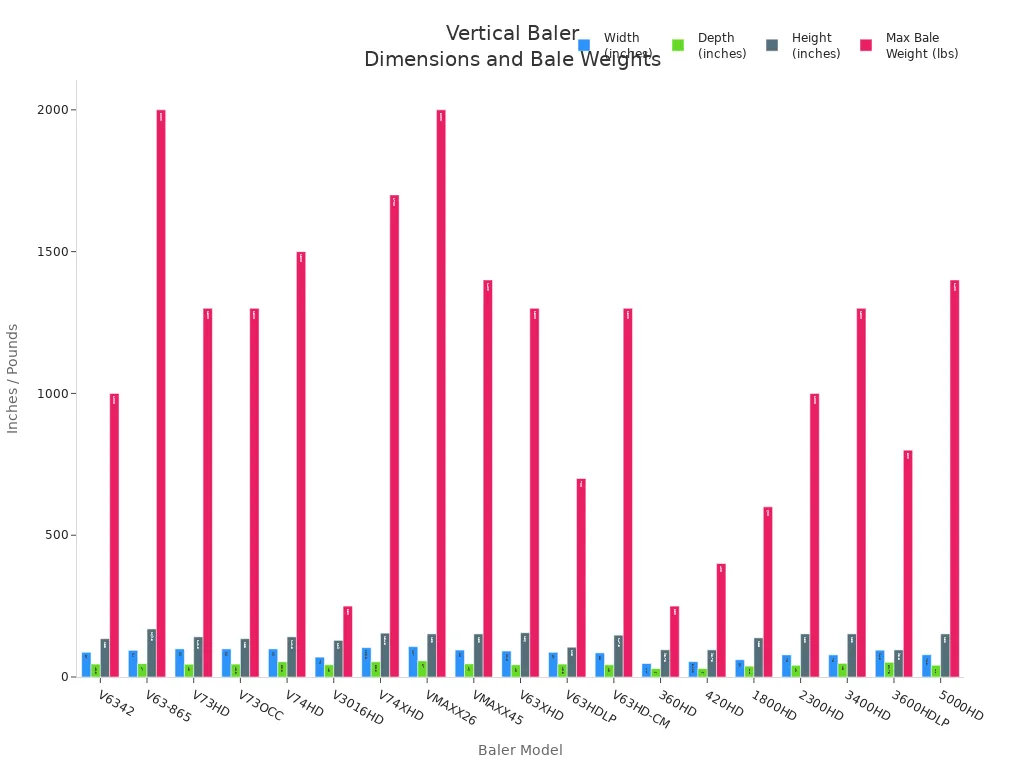
Vertical balers come in different sizes for different needs. Some are only 47 inches wide and 95 inches tall. These are good for small stores or warehouses. The table below shows the sizes of some popular models:
| Model | Baler Dimensions (WxDxH) (inches) | Nominal Bale Size (WxDxH) (inches) | Bale Weight (lbs) | Notes/Use Case |
| 360HD | 47.25 x 29.5 x 95.75 | 36 x 24 x 30 | Up to 250 | Small, limited space applications |
| V63HDLP | 87 x 45.5 x 105 | 60 x 30 x 30 | Up to 700 | Limited space baler |
| VMAXX26 | 107 x 57 x 152 | 72 x 42 x 45 | Up to 2,000 | Heavy duty, minimal space |
Stacking bales on top of each other saves space. This lets businesses store more waste in less room. It also makes the area safer and more organized. Small stores and warehouses get the most help from this space-saving idea.
Note: A vertical baler machine helps businesses handle waste, paper, and recyclables well, even when space is tight.
Fast ROI and Immediate Impact
Monthly Expense Reduction
Businesses start saving money soon after using a vertical baler machine. The machine presses waste into smaller pieces. This means companies need fewer waste pickups. They spend less money on moving and dumping trash. Workers also spend less time dealing with waste. This gives them more time for other jobs. Some companies say staff work 40-60% better. Government grants can pay for up to 45% of the machine’s price. This makes buying the machine easier.
Many grocery stores and warehouses save money in the first month. Some get a 73% return on investment in the first year.
ROI Examples
How fast a business gets its money back depends on many things. The table below lists what can change how quickly a business saves money:
| Factor | Description |
| Initial Investment & Installation Costs | The first costs depend on the baler’s type, size, and changes needed in the building. These costs affect how fast you get your money back. |
| Throughput Capacity | A baler that handles more waste works faster and helps save money sooner. |
| Labor Costs & Automation Level | Manual balers need more work from people. Automated balers need less work, so you save money faster. |
| Maintenance & Lifespan | Strong balers that do not break often save money on repairs and last longer. This helps you get your money back faster. |
| Bale Density & Transportation Savings | Tighter bales mean fewer trips to move waste. This saves money and helps you earn back your investment. |
| Energy Efficiency | Balers that use less energy cost less to run. This helps you save money faster. |
| Government Incentives | Grants and rebates can help pay for the machine. This lets you get your money back sooner. |
| Manufacturer Reputation & Support | Good companies give better service and help fix problems. This means less downtime and more savings. |
Most businesses get their money back in 12 to 18 months. Some small machines pay for themselves in 5 to 8 months. Bigger machines can do this in 3 to 4 months. Large balers may take 6 to 12 months. Some companies even get all their money back in just two months. The kind of business and how much waste they have each day matter a lot for saving money fast.
Waste Management Benefits
Recycling Revenue
A vertical baler helps businesses make money from waste. The machine presses things like cardboard, paper, plastics, and textiles into tight bales. These bales are small and easy to store or move. Many companies sell these bales and get extra money each month.
The baler makes heavy bales, so buyers pay more for each load.
Workers can tie and remove bales fast, so the job is easy.
Bales stack well, so they fit in small spaces.
Companies spend less on waste and earn money from recycling.
If workers load the baler evenly, it lasts longer. Taking care of the machine helps businesses get more money from recycling. When workers use the baler safely, the workplace stays clean and safe.
Tip: Selling bales of recycling materials can help any business make steady money.
Compliance and Sustainability
Many businesses must follow strict rules for waste. A vertical baler helps them meet these rules by making waste smaller and easier to recycle. The machine presses waste into tight bales, which helps with proper recycling.
The baler helps companies follow recycling and waste laws.
Heavy bales mean fewer trips, so trucks use less fuel.
Bales are always the same size, so tracking recycling is easier.
Good records from the baler help with reports and following rules.
Using a baler also helps the environment. Companies send less waste to landfills and show they care about the planet. Fewer pickups mean less fuel and lower costs. Businesses with a baler often avoid fines for bad waste handling.
Note: A good waste system with a baler keeps businesses following rules and helps the planet stay clean.
Success Stories
Small Business
Many small businesses pay a lot for waste pickups. They also do not have much storage space. A local grocery store got a baler to handle cardboard and packaging waste. Before, the store filled many dumpsters each week. Workers spent hours breaking down boxes and taking out trash. After getting the baler, the store cut its waste by more than half. The store needed fewer pickups and saved hundreds of dollars each month. Employees now spend less time on waste and more time with customers. The baler fits in a small storage area, so the store did not rent extra space. The manager saw the store looked cleaner and safer. The business started selling baled cardboard to a recycling company. This gave them extra money every month.
Tip: Even small businesses can save money and keep the workspace clean with a baler.
Large Operation
Big places like distribution centers and factories make a lot of waste every day. One large warehouse put in several vertical balers to help with waste. These machines helped the company in many ways. The balers made waste work automatic, so workers did not do as much by hand. Simple controls and easy care meant less downtime and lower training costs. The tall design saved floor space, so the company did not need to make the building bigger. Each baler made tight, even bales, so storage and moving waste was easier. The company made the workplace safer with built-in safety features. The balers let workers keep waste moving, so work went faster. The business made more money from recycling and paid less to dump waste.
The warehouse saw lower costs and better work right away. The balers helped the company follow safety and environmental rules, so they did not get fined. By using vertical balers, the company turned waste into money and made the business stronger.
Maximizing Savings
Choosing the Right Vertical Baler
Picking the right vertical baler can save a business money. Companies need to find a machine that fits their waste type and amount. Here are some things to think about when buying:
Make sure the machine can handle your daily waste.
Check if the baler works with your materials.
Pick a strong machine that does not break often.
Fast machines help work go quicker.
Easy controls and good safety features are important.
Machines that use less energy cost less to run.
Some balers can be changed to fit special needs.
Good service and a warranty help save money later.
Think about all costs, not just the price.
Ask about payment, delivery, and help after buying.
A trusted seller with certificates can help you go green.
Choose a baler that fits your business and waste.
If you pick the right baler and install it well, you can avoid problems like high costs or machine stops. A good baler pays for itself fast and works well.
Staff Training
Training workers is important for safe and easy baler use. Training helps workers know how to use and care for the machine. Here are some safety tips for using a vertical baler:
Teach workers to use safety checklists before starting.
Show how to load waste and stop the machine if needed.
Remind everyone to wear gloves, goggles, and safety gear.
Go over what to do if there is an accident.
Follow all safety laws and OSHA rules.
Use the safety lists from the maker.
Train workers to spot and report problems early.
Training all the time and sharing safety tips keeps everyone safe and stops accidents or machine breaks. Good training also helps workers use the machine better and makes setup easier.
A vertical baler machine helps businesses save money quickly. It makes waste smaller, so companies pay less to get rid of it. Labor costs also go down because workers do less work. Companies can earn extra money by selling bales to recycling centers.
The machine costs less to buy and run.
It makes the workplace safer and helps people work better.
Its small size is good for small businesses.
It is easy to take care of and works well.
Buying a vertical baler now helps you save money right away. You also get more value over time and a cleaner, better workplace. If you get one soon, you will see good results fast.
FAQ
How does a vertical baler machine work?
A vertical baler machine presses waste into tight bales. First, the worker puts waste inside and shuts the door. Next, they push a button to start the machine. The machine uses a strong ram to squeeze the waste.
What materials can a vertical baler handle?
Vertical balers can handle cardboard, paper, plastics, textiles, and some metals. Most companies use them for packaging waste. Always look at the manual to see what is safe to put inside.
How much space does a vertical baler need?
Most vertical balers fit in small spots. Some models are less than 50 inches wide. Businesses can put them in corners or by loading docks.
Tip: Measure your space before you pick a model.
Is training required to use a vertical baler?
Yes, workers need training. Training teaches safe use, loading, and how to stop in an emergency. Most people learn to use the machine in under an hour.


