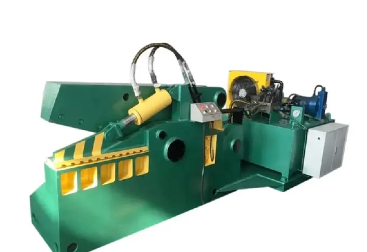
In the field of metalworking and fabrication, two common processes often come into discussion: shearing and cutting. These terms are frequently used interchangeably, but they are not the same. While both are methods of separating material, their principles, equipment, applications, and results differ significantly.
A shearing machine plays a crucial role in the shearing process, offering high efficiency and precise straight-line cuts. On the other hand, cutting encompasses a broader range of methods, from traditional sawing to advanced laser or plasma techniques. This raises an important question: what exactly is the role of a shearing machine in shearing, and how does it differ from cutting?
Shearing: Definition and Characteristics
Basic Principle of Shearing
Shearing is a fundamental process performed by a shearing machine, in which two opposing blades—an upper blade and a lower blade—apply a powerful, concentrated force to a sheet of metal. As pressure increases, the metal gradually deforms until it fractures cleanly along a straight line. Unlike thermal cutting methods, shearing belongs to the category of cold working, as it requires no heating of the material during operation. This characteristic makes the process highly efficient and cost-effective, reducing both energy consumption and material waste while maintaining high cutting precision for sheet metal and plate production.
Role of the Shearing Machine
A shearing machine is a specialized piece of equipment designed for the straight-line cutting of sheet and plate materials with remarkable precision. Depending on the machine’s design, power system, and blade configuration, it can accommodate a wide range of material thicknesses, from thin sheets used in consumer products to heavy plates required in large-scale industrial applications. Compared with other cutting technologies, shearing machines stand out for several reasons.
They deliver high efficiency, enabling manufacturers to process large volumes of material quickly and consistently. They also feature low energy consumption, since shearing is a cold-working process that does not require heating, lasers, or other high-energy cutting methods. Furthermore, shearing machines generate minimal waste, as the process involves clean, straight cuts with very little scrap produced.
Thanks to these advantages, shearing machines have become indispensable across multiple industries. They are widely applied in automotive manufacturing for body panels, in construction for steel frameworks, in shipbuilding for large plate sections, and in general mechanical engineering where precise and economical cutting is essential.
Typical Features of Shearing
Shearing provides clean, straight edges with minimal burrs, which is highly advantageous for producing sheet metal parts that will undergo further forming, welding, or assembly. This precision reduces the need for extensive secondary finishing processes, saving both time and costs. However, the process is inherently limited to straight-line cuts and is not suitable for intricate profiles, curves, or irregular designs. Because of this limitation, shearing is most commonly applied in high-volume, repetitive production tasks where speed, efficiency, and consistency are critical, making the shearing machine an essential tool in industries requiring large-scale sheet processing.
Cutting: Definition and Characteristics
Basic Principle of Cutting
Cutting refers to a broader set of processes used to separate material, either metallic or non-metallic. Unlike a shearing machine, which relies mainly on blade pressure to produce straight-line cuts, cutting can be achieved through different principles such as mechanical force, thermal energy, or advanced technology. Common cutting methods include sawing, which uses mechanical force to slice through solid materials; laser cutting, which employs concentrated light beams to achieve extremely precise and clean edges; plasma cutting, which relies on ionized gas at very high temperatures to melt and cut conductive metals; and waterjet cutting, which uses a high-pressure water stream, sometimes mixed with abrasives, to cut without heat. Each technique offers unique benefits and limitations in terms of accuracy, material compatibility, cost, and cutting speed.
Advantages of Cutting
Cutting is highly versatile, offering several key benefits that make it essential in modern manufacturing.
Flexibility: Cutting processes can create not only straight and uniform lines but also curved and highly intricate shapes, enabling the production of customized designs.
Wide applicability: Unlike the shearing machine, which is mainly suited for sheet metal processing, cutting technologies can handle a wide range of materials, including wood, plastics, ceramics, glass, and composite structures.
High precision: Advanced cutting methods such as laser and waterjet cutting allow manufacturers to achieve fine details and extremely accurate tolerances, making them ideal for industries requiring delicate or complex components.
Limitations of Cutting
Despite its advantages, cutting also has several drawbacks that must be considered when compared with the performance of a shearing machine. Some cutting methods, such as plasma or laser cutting, demand extremely high energy consumption, which not only increases operational costs but also makes them less sustainable for long-term use in large-scale production. In addition, cutting speeds may be significantly slower than those of a shearing machine, particularly when dealing with thicker or harder materials, resulting in reduced productivity. Moreover, heat-based cutting techniques generate a heat-affected zone (HAZ), which can cause microstructural changes within the material. This often leads to warping, edge hardening, or distortion of the workpiece, negatively impacting dimensional accuracy and surface quality. Compared to shearing machines, which produce clean cuts without thermal effects, these limitations highlight why shearing remains a more efficient and economical choice for industries requiring precision, speed, and cost-effective metal processing.
Key Differences Between Shearing and Cutting
Although both processes achieve the same ultimate goal—separating material—their methods, equipment, and applications vary widely. The table below summarizes the main differences:
Comparison Dimension | Shearing (剪切) | Cutting (切割) |
Processing Method | Cold working, blade pressure separates sheet | Mechanical, thermal, or advanced methods |
Equipment | Shearing machine | Sawing machines, laser cutters, plasma cutters, waterjets, etc. |
Application Range | Straight-line cuts in sheet metal | Straight, curved, or complex shapes in metals and non-metals |
Cost & Efficiency | Low cost, high efficiency, suitable for mass production | Higher cost, speed depends on method and material |
Cut Quality | Clean and straight edges, minimal burrs | High precision possible, but may cause heat effects or distortions |
From this comparison, it is clear that shearing machines excel in efficiency and straight-line processing, while cutting methods provide greater flexibility for complex designs.
Application Selection Recommendations
When deciding between shearing and cutting, manufacturers should consider the material type, production volume, cost factors, and precision requirements.
If the goal is straight-line, high-efficiency, large-scale production, the shearing machine is the best choice. It offers clean, fast, and consistent results with minimal energy consumption.
If the requirement is for complex shapes, mixed materials, or high precision, then cutting methods such as laser or waterjet cutting are more suitable.
In many production environments, shearing and cutting are used together: shearing handles the initial separation of large plates, while cutting methods refine the shapes and details.
Conclusion
Shearing and cutting are both indispensable processes in modern manufacturing, but they serve different purposes. Shearing is highly efficient, cost-effective, and ideal for straight-line cutting of sheet metals, especially when using a shearing machine. Cutting, on the other hand, provides flexibility and precision for more complex designs and diverse materials, albeit at higher cost and energy consumption.
Ultimately, companies must evaluate their material characteristics, design complexity, and production volume before choosing the right process. In practice, both methods often complement each other to deliver the best results.
For manufacturers seeking reliable and high-performance shearing machines, Dezhou Shengxin Machinery Equipment Co., Ltd. is a trusted partner. The company specializes in producing advanced shearing machines that combine robust cutting power, precision engineering, and durability.


